
In the travel industry, technology isn’t just a background utility—it’s the engine room of your entire operation. Every single booking, payment, and customer message relies on a web of digital systems all working together seamlessly. When even one of those systems flickers, the fallout is instant: lost bookings, frustrated clients, and a hit to your hard-earned reputation.
This is exactly where specialised IT services for travel companies come into play. These aren’t your generic, run-of-the-mill tech support solutions. They are purpose-built to manage the unique demands of the travel world, from keeping your booking platforms running 24/7 to integrating complex global distribution systems. A solid IT foundation isn’t a luxury anymore; it’s essential for survival and growth.
TLDR
Robust IT services are the backbone of modern travel, powering everything from seamless bookings and secure payments to personalised guest experiences. This guide breaks down the essentials like managed IT, cloud solutions, and cybersecurity. We’ll show you how to solve common industry headaches and choose the right technology partner to help your business take off.
Why Your Travel Company Needs a Technology Co-Pilot
Think of a specialised IT partner as the co-pilot for your business. Their job is to manage all the technical complexities behind the scenes, leaving you free to focus on what you do best: crafting unforgettable travel experiences for your clients.
They’re the ones making sure your website can handle the mad rush of a Boxing Day sale without crashing. They’re also the ones standing guard over sensitive client data—like passport details and credit card numbers—to keep cyber threats locked out.
The Modern Digital Hurdles for Travel Businesses
Travel agencies, tour operators, and accommodation providers all face a unique set of digital challenges that generic IT support just isn’t equipped to handle. Getting these right requires real industry-specific expertise.
- System Uptime and Reliability: Your booking engine isn’t a 9-to-5 operation; it needs to be live and ready for customers around the clock. Any downtime, especially during peak season, is money walking straight out the door.
- Data Security and Compliance: You’re trusted with a huge amount of personal and financial information. Protecting it isn’t just good business practice—it’s a legal minefield with massive penalties for getting it wrong.
- Complex System Integration: Trying to get your Global Distribution Systems (GDS), Customer Relationship Management (CRM) software, and payment gateways to talk to each other can feel like untangling a ball of yarn. Without proper integration, it’s a mess.
Ultimately, investing in the right technology is one of the smartest strategic decisions you can make. For many, exploring comprehensive IT solutions for small business is the perfect first step toward building a more resilient and competitive operation.
Your Quick Itinerary: Why a Smart IT Strategy is Non-Negotiable
In the travel business, your IT isn’t just a background utility—it’s the engine powering every single part of your operation. It handles everything from the moment a customer books a trip and pays securely, right through to delivering those personalised touches that create unforgettable experiences. Investing smartly in managed IT, cloud services, and cybersecurity isn’t just an expense; it’s one of the most powerful moves you can make to build a resilient and growing business.
This guide will walk you through the essential services you need, cutting through the jargon to show you how to solve the most common—and frustrating—industry headaches. More importantly, you’ll learn what to look for in a technology partner who can genuinely help your travel company thrive.
Strategic IT isn’t about just fixing computers when they break. It’s about creating a stable, secure, and incredibly efficient foundation so you can deliver exceptional travel experiences without constant interruptions.
This is the crucial shift you need to make: from reactive, break-fix support to a proactive strategy that keeps you ahead of the game. It’s what ensures your operations run like clockwork, your client data is locked down tight, and your team has the reliable tools they need to do their best work.
The Core Technology Stack Every Travel Company Needs
To run a modern travel business that doesn’t buckle under pressure, you need a solid technology foundation. This isn’t about chasing the latest shiny gadgets; it’s about having a core set of IT services that work seamlessly together to keep your operations running, your client data safe, and your customers happy.
Think of it as the digital engine room of your agency. Each part has a critical job to do, and if one piece fails, the whole ship is in trouble. Let’s break down the non-negotiables.
This diagram shows how a strong IT backbone supports everything your travel business does, from taking bookings to delivering an unforgettable customer experience.
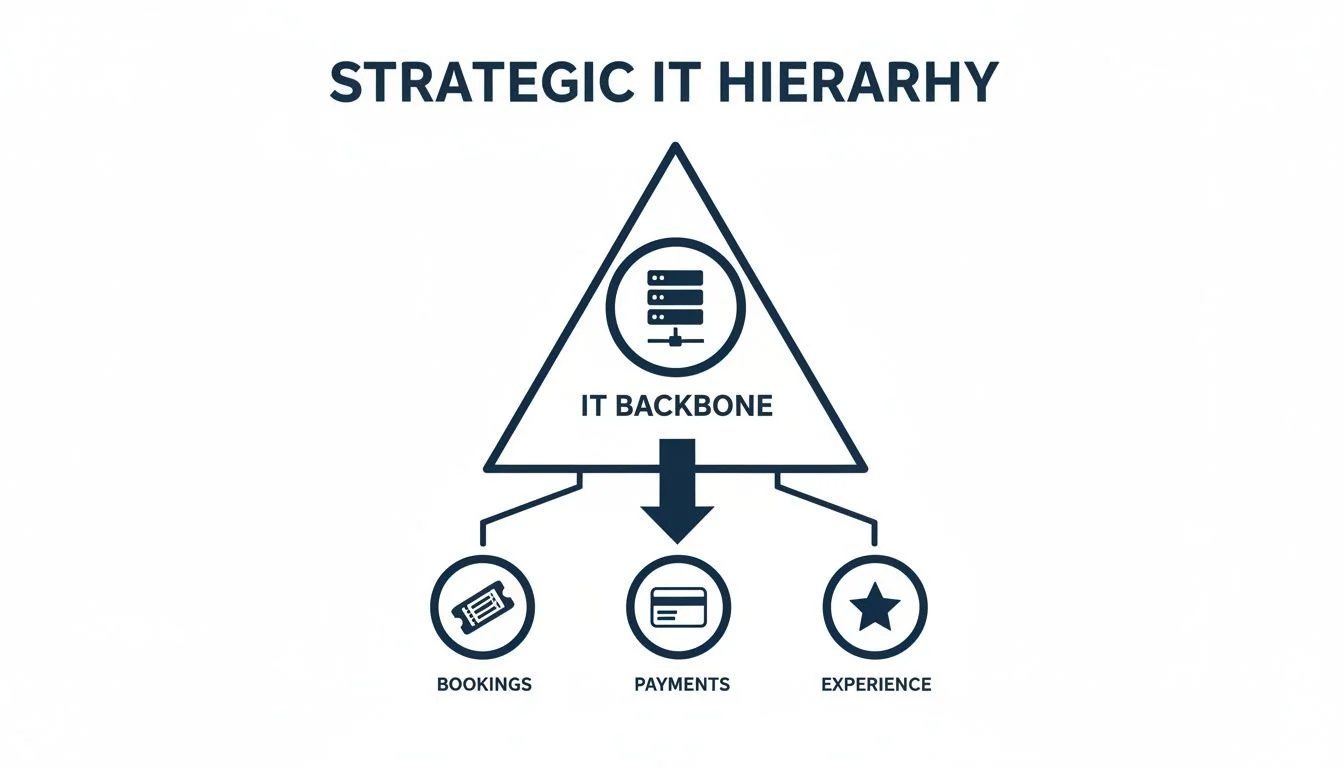
The key takeaway here is simple: your customer-facing services like bookings and payments are only as reliable as the IT infrastructure holding them up.
To give you a clearer picture, here’s a quick rundown of the essential services, what they do, and why they matter for your business.
Essential IT Services for Travel Companies at a Glance
| IT Service | Primary Function | Key Benefit for Your Travel Business |
|---|---|---|
| Managed IT Services | Proactive 24/7 monitoring and maintenance of all IT systems. | Keeps booking systems online around the clock, preventing lost sales. |
| Cloud Computing | Secure, remote access to data and applications from anywhere. | Empowers agents to work from home or on the road without missing a beat. |
| Network Management | Designing and maintaining fast, reliable digital connections. | Ensures quick access to GDS and booking platforms, avoiding frustrating delays. |
| Cybersecurity | Protecting sensitive client and payment data from threats. | Builds customer trust and prevents costly data breaches. |
Now, let’s dive a little deeper into what each of these really means for your day-to-day operations.
Managed IT Services: Your Mission Control
Imagine your entire IT setup is a busy airport. Managed IT Services act as your air traffic control tower, working 24/7 to make sure every flight—or in this case, every booking and transaction—lands smoothly. Instead of you worrying about server updates or a sudden software glitch, a dedicated team is already watching everything.
This proactive approach means problems are often spotted and fixed before they can ever disrupt your business. It’s what ensures that when a customer in a different time zone tries to book a trip at 3 AM, your systems are online and ready to go.
Cloud Computing: Your Digital Passport
Cloud Computing is like giving your entire team a digital passport. It grants them secure access to essential files, booking details, and client information from anywhere in the world, as long as they have an internet connection. No more critical documents stuck on a single computer back in the office.
This flexibility is absolutely vital in the travel industry, where agents might be working remotely, on the road, or from different branches. When your team can get what they need, right when they need it, their productivity and ability to help clients soars. To see how this works in practice, you might want to explore the specific benefits of Azure Cloud for small business in our detailed guide.
A well-managed cloud environment doesn’t just store data; it empowers your team to deliver exceptional service from anywhere, turning the world into your office.
This isn’t a luxury anymore. It’s a core requirement for any travel company that wants to be agile and responsive.
Network Management: Your Global Flight Network
Just as an airline relies on a precise network of flight paths, your business depends on a fast and stable network to connect your computers, servers, and booking software. Network Management is the service that designs, optimises, and maintains these crucial digital pathways.
A shaky network leads to slow connections, dropped video calls with clients, and infuriating delays when trying to access booking systems. Proper network management makes sure data travels quickly and securely, creating a frictionless experience for both your staff and your customers.
Cybersecurity: Your Digital Bodyguard
In the travel industry, you’re sitting on a goldmine of sensitive data, from passport details to credit card numbers. Cybersecurity is your digital bodyguard, putting multiple layers of protection in place to keep that information safe from criminals.
This goes way beyond basic antivirus software. It includes firewalls, regular security audits, training your staff to spot phishing scams, and making sure you meet compliance standards like PCI DSS for handling payments. A single data breach can shatter the customer trust you’ve spent years building.
This digital foundation is more important than ever. Australia’s online travel market hit USD 11.3 billion and is projected to skyrocket to USD 26.4 billion by 2033. This growth is driven by technology—all of which needs a powerful and secure IT backbone to function.
Solving Your Biggest Headaches with Smart Technology
Every travel business owner knows that gut-wrenching feeling of operational chaos. A double-booked tour, a payment system glitching out during a peak holiday sale, or the sheer frustration of trying to sync customer data between three different software platforms. These aren’t just minor annoyances; they’re the daily hurdles that burn through your resources, stress out your team, and chip away at the customer experience.
The good news? These common pain points are almost always solvable with the right technology strategy. Specialised IT services for travel companies aren’t just about fixing things when they break. It’s about building a proactive system where technology prevents the problems from happening in the first place, turning operational nightmares into smooth, reliable processes.
From Booking Chaos to Seamless Operations
One of the most frequent headaches is trying to manage bookings across multiple channels. An outdated system that doesn’t sync in real-time is a recipe for disaster. It’s the direct cause of overbooked flights, packed-out tours, or unavailable accommodation that your website just sold to a new client. That doesn’t just create an administrative mess—it creates deeply unhappy customers.
A modern, integrated booking system, supported by robust IT infrastructure, puts an end to this risk entirely. By making sure your Global Distribution System (GDS), Customer Relationship Management (CRM), and website booking engine all talk to each other flawlessly, you get a single source of truth.
- Real-Time Syncing: Instantly updates availability across all platforms, making double bookings a thing of the past.
- Centralised Data: Gives your team a complete view of a customer’s history and preferences, paving the way for better, more personal service.
- Reduced Manual Entry: Frees up your staff from tedious data entry, letting them focus on what they do best: sales and building client relationships.
The goal is to build a system so reliable that your team never has to second-guess its accuracy. That confidence from within translates directly into a smoother, more professional experience for your clients.
Securing Payments and Building Trust
Another major source of stress is payment processing and the notoriously strict requirements of PCI DSS (Payment Card Industry Data Security Standard) compliance. The weight of protecting sensitive financial data is immense. A single security lapse can have devastating consequences for your reputation and your bottom line.
This is where a dedicated cybersecurity strategy becomes non-negotiable. A professional IT partner can implement a multi-layered defence system to protect every single transaction. This goes way beyond just a firewall; it’s a complete approach including secure network setups, regular vulnerability scanning, and ongoing monitoring to catch threats before they can do any harm. Managing this effectively often requires a dedicated team, which is where a managed services provider (MSP) can be invaluable. You can learn more about what are msps and how they operate in our detailed guide.
Taming the Software Integration Beast
So many travel companies end up with a patchwork of different software tools to run their business. While each tool might be great on its own, getting them to work together can feel like a constant battle. Manually shifting data between your CRM, accounting software, and marketing platforms is slow, inefficient, and a breeding ground for human error.
Proper IT management is all about creating a connected digital ecosystem. Through careful integration and automation, data can flow seamlessly between your core applications. To really streamline things, travel companies should also look into smart small business automation tools. This integration work pays for itself by boosting staff productivity and giving you more accurate business insights, helping you make smarter decisions based on real-time data.
How AI Is Creating The Future Of Personalised Travel
Artificial Intelligence is quickly moving past simple chatbots and embedding itself into the very core of how travel experiences are designed and sold. For any modern travel business, AI isn’t some far-off concept anymore; it’s becoming a fundamental tool for delivering the kind of hyper-personalised journeys that customers now demand.
It’s the secret sauce to making every single client feel like they’re getting the VIP treatment.

This technology gives you the power to analyse huge amounts of traveller data—from past booking histories to current browsing habits—to figure out what your clients really want. Instead of pushing generic packages, you can suggest bespoke itineraries, unique local tours, and hand-picked accommodation that perfectly aligns with their tastes and budget.
The right IT services for travel companies put this power right at your fingertips. They integrate smart AI tools into your day-to-day workflows, building a system that doesn’t just boost customer satisfaction but also slashes the manual workload for your agents.
Moving Beyond Basic Automation
The first wave of AI in travel was all about automation, like chatbots answering the same old questions. That’s useful, sure, but the real game-changer lies in AI’s predictive smarts. Modern AI platforms can sift through patterns that a human could never hope to spot.
For instance, an AI system might notice that a client who previously booked adventure tours in Southeast Asia is now searching for family-friendly beach resorts. It can then automatically suggest destinations that offer a perfect blend of relaxation for the parents and fun activities for the kids, complete with flight options and hotels that fit their previous spending habits.
AI transforms customer data from a simple record of past trips into a predictive map of future desires. This allows you to offer the perfect holiday before the client even has to ask.
This proactive approach doesn’t just increase your chances of a sale; it builds incredible customer loyalty. Clients feel understood and valued when they receive recommendations that genuinely reflect their evolving needs. If you’re curious about how AI assistants are changing the game in business communication, our guide on http://tbourke-solutions.com.au/microsoft-copilot/ offers a deeper dive.
Real-World Applications of AI in Travel
AI isn’t just theory; it’s already being used in practical ways that deliver a clear return on investment. Travel companies are using it right now to create unforgettable, tailored experiences that make them stand out.
Here are a few examples of how AI is being used today:
- Dynamic Itinerary Planners: AI-powered tools can instantly generate a complete, day-by-day itinerary based on a client’s interests, budget, and travel dates. This saves your agents hours of painstaking research and allows for lightning-fast customisation.
- Personalised Marketing: Forget sending one-size-fits-all newsletters. AI can segment your audience and send highly targeted offers. A client who loves skiing might get a special on the Snowy Mountains, while a foodie gets an email about a wine tour in the Barossa Valley.
- Intelligent Pricing Models: AI algorithms can analyse market demand, competitor pricing, and even factors like weather forecasts to suggest the best prices for flights and packages, helping you maximise revenue.
In Australia, there’s a massive opportunity waiting to be tapped. While AI adoption for trip planning is just 17% among Australian travellers, it’s already soaring as high as 65% in other markets. That gap represents a clear path for local travel companies to invest in AI-driven IT solutions and gain a serious competitive edge.
For businesses in the accommodation sector, the possibilities are just as exciting. If you’re looking to get ahead, you can explore how to implement AI-driven direct booking strategies for short-term rentals. It’s a powerful way to reduce reliance on third-party booking sites and build a stronger, more direct relationship with your customers.
How to Choose the Right IT Partner for Your Travel Business
Picking the right technology partner is a huge decision, almost as important as choosing a new office location. You need someone who gets the unique rhythm of the travel industry—from the frantic pace of peak season to the specific software you rely on every single day. A generic IT provider might be able to fix a printer, but a specialist in IT services for travel companies will understand why your GDS uptime is completely non-negotiable.
Finding that perfect fit means asking the right questions. It’s about digging deeper than surface-level promises of “24/7 support” and looking for genuine, hands-on experience in your world. A great IT partner for your travel business won’t feel like an outside contractor; they’ll feel like a strategic part of your team, invested in helping you grow.
A Practical Vendor Selection Checklist
Before you even think about signing a contract, use this checklist to guide your conversations with any potential IT provider. Their answers (or lack of them) will tell you everything you need to know about whether they have the expertise your travel business really needs.
- Do they have proven experience with travel software? Don’t just let them say “yes.” Ask them to name the systems. Are they familiar with Global Distribution Systems (GDS) like Sabre, Amadeus, or Travelport? What about the common Customer Relationship Management (CRM) tools used in the industry? If they can’t talk the talk, they can’t walk the walk.
- What is their specific approach to PCI DSS compliance? Any provider can say they care about security. You need one who can walk you through their exact process for locking down payment systems and making sure you meet the tough requirements for handling credit card data.
- Can they provide case studies or references from other travel clients? The best proof is a happy customer. Hearing directly from another travel company about their experience is gold. It’s the single most reliable way to verify their claims.
- How do they guarantee system uptime and performance during peak periods? Your business can’t afford a system crash during a school holiday booking rush. Ask them about their proactive monitoring, what their disaster recovery plan looks like, and how they ensure your key systems stay online when you need them most.
The Value of Local Expertise
In a world that feels increasingly remote, the advantage of having a local IT partner—especially for a Melbourne-based business—is massive. When a critical system goes down, the last thing you want is to be stuck in a ticket queue for an overseas call centre. You need fast, effective help from a team that actually understands the local business landscape.
A partner just down the road can provide much faster onsite support when a problem can’t be fixed remotely. This local presence usually translates into a more personal and accountable relationship. They get the challenges you face because they operate in the same community, offering a level of service that a remote-only provider just can’t match.
Choosing an IT partner is about finding a team that can anticipate your needs, not just react to problems. They should understand the travel industry’s pressures and have the technical skill to build a resilient and secure operation.
Ultimately, investing in the right provider isn’t an expense; it’s a core part of your growth strategy. To get a better sense of how this proactive support model works, you can explore the long-term benefits of managed IT services and see how it builds a stronger, more reliable foundation for your business.
Frequently Asked Questions About IT for Travel Companies
Making the right technology decisions can feel complex. To help clear things up, here are straightforward answers to some of the most common questions travel company owners ask.
Why does my small agency need specialised IT services?
Even a small agency handles a huge amount of sensitive data and relies on booking systems being online 24/7. Basic IT support doesn’t understand the specific software like GDS or the strict PCI DSS compliance needed for payments. Specialised services prevent costly mistakes, like double bookings from unsynced systems, and protect you from data breaches that could ruin your reputation. It’s about building a reliable foundation so you can focus on your clients.
What is a realistic IT budget for a travel business?
There’s no single price tag. The cost depends on your company’s size, the number of staff, and the complexity of your systems. A better way to think about it is as an investment in revenue protection. Consider the cost of one hour of your booking system being down during peak season. A managed IT service that prevents that isn’t an expense; it’s a strategy to protect your income and reputation.
How difficult is it to move our systems to the cloud?
The thought of moving a core system can seem daunting, but a professional IT partner makes the process smooth and secure. They handle all the technical work, from planning the migration to transferring data safely, usually with minimal disruption to your daily operations. The benefit is huge: your team gets secure access from anywhere, system reliability increases, and you no longer have to worry about maintaining physical servers.
What is the most critical first step in cybersecurity?
The single most critical step is adopting a multi-layered security strategy. There is no one magic tool. Effective cybersecurity combines a strong firewall, endpoint protection on all computers, regular software updates, and comprehensive staff training. Your team is your first line of defence against phishing emails and other scams, so training them to spot threats is just as crucial as any software you install. Learn more about Australian traveller attitudes toward AI.
How Tbourke Solutions Can Help
Knowing you need specialised IT services for travel companies is the first step. Finding the right local partner to deliver them is the next, and that’s where we come in. At Tbourke Solutions, we provide the expert managed IT, robust cybersecurity, and scalable cloud solutions specifically designed for the demands of the travel industry in Melbourne. Our goal is simple: turn your technology from a source of frustration into your greatest asset.
We’re not about one-size-fits-all packages. We build a strategy around your specific needs, whether that means acting as your complete IT department or providing targeted support for a specific project. Our proactive approach is focused on preventing problems before they can disrupt your operations, ensuring maximum uptime when you need it most.
Ready to upgrade your tech and deliver unforgettable experiences without the operational headaches? Let’s start the conversation. Visit our contact page to submit a query and find out how we can help your travel business thrive.
Share This Story, Choose Your Platform!