TL;DR
For any freight or logistics business in Laverton, the day runs on data. From the telematics in your trucks crisscrossing Melbourne to the shipping manifests on your servers, everything is connected. But this digital efficiency comes with a serious risk. Strong cybersecurity isn’t just an IT problem anymore; it’s a fundamental part of keeping your operations running and your clients’ goods safe.
A single cyber incident can bring your entire business to a standstill, wreck your reputation, and cost you a fortune. It’s about protecting every link in the chain, from vehicle GPS to the client data you’re trusted with.
Your Laverton freight business is a prime target for cyberattacks like ransomware because you are a critical link in Australia’s supply chain. Effective protection requires securing all your digital systems, from fleet telematics and GPS trackers to warehouse management software, not just office computers. The most crucial first steps are implementing multi-factor authentication (MFA) to protect your accounts, training staff to spot phishing emails, and maintaining regular, tested data backups to ensure you can recover quickly from an attack.
Why Laverton’s Freight Sector Is a Prime Target
Laverton isn’t just another industrial pocket of Melbourne; it’s a critical hub in the nation’s supply chain. Your business is a vital link in that chain, handling high-value goods and even more valuable data every single day. Unfortunately, that strategic importance puts a massive target on your back for cybercriminals.
A successful attack on a Laverton freight company doesn’t just disrupt one business it can send shockwaves through the entire supply network, making you a very tempting target. The data you manage from client details to delivery routes is the new gold. To really get a handle on the security needs, it helps to understand what a freight forwarder does and the central role they play.
The Digital Assets at Risk
Take a moment to think about all the digital systems that keep your business moving. If they aren’t properly secured, each one is a potential backdoor for an attacker. The stakes are huge. A compromise in any one of these areas could bring your operations to a grinding halt.
Here’s what’s really on the line:
- Fleet Telematics and GPS Data: If these systems are breached, attackers could track your high-value cargo, reroute your trucks, or even disable them entirely. It’s a direct threat to the physical assets you’re moving.
- Client Shipping Manifests: This is confidential gold. It contains everything about your clients, their goods, and their destinations. A data breach here can easily lead to targeted cargo theft, corporate espionage, and a catastrophic loss of trust.
- Warehouse and Inventory Management Systems: Imagine your warehouse systems being completely locked down by ransomware. You can’t manage stock, process new orders, or coordinate dispatches. Your warehouse is effectively bricked.
This guide is built to give you practical, no-nonsense advice to protect these critical assets. We’re focused on clear, actionable strategies that help you build a stronger, more resilient defence against these very real threats.
If you’d like to dive deeper into securing your specific operations, check out our dedicated guide to IT services for logistics companies.
Understanding the Threats Targeting Laverton’s Freight Sector
To protect your business, you first need to know what you’re up against. For freight and logistics companies here in Laverton, cyber threats aren’t just some abstract news story; they are tangible, specific risks that can bring your entire operation to a grinding halt overnight. These aren’t random, scattergun attacks. They’re calculated moves designed to hit the unique weak points of the logistics industry.
Imagine this: you walk in on a Tuesday morning to find your entire fleet schedule, driver details, and delivery routes are locked and unreadable. A message on the screen demands a hefty payment to get them back. This isn’t a hypothetical. This is ransomware, and it’s a very real scenario that cripples businesses by turning their own operational data into a weapon against them.
Common Attacks Targeting Logistics
Cybercriminals are smart. They know the pressure points of a freight business and understand they don’t need to physically break into your warehouse when they can cause just as much chaos digitally.
- Ransomware: This is the digital equivalent of hijacking your entire fleet. Attackers encrypt your dispatch systems, customer databases, or accounting records, making them totally useless until you pay up. The financial damage from the downtime alone can be devastating, even if you don’t pay the ransom.
- Phishing Scams: These attacks usually arrive as innocent-looking emails, often disguised to look like they’re from a major client, a supplier, or even a government body like the ATO. The goal is simple: trick your staff into giving up login details for critical systems, like your freight management portal or online banking. For a closer look at these scams, read our guide on how to prevent phishing attacks.
- Supply Chain Attacks: This is a more insidious threat where attackers go after the software you trust and use every day. By infecting a fleet management tool or an accounting program at the source, they gain a backdoor into the networks of every single company that uses that software.
The Real-World Impact
Let’s make this even more concrete. A hacker could use compromised GPS data from your truck’s telematics to track and reroute a vehicle carrying high-value electronics, leading directly to cargo theft. Or picture a ransomware attack that locks up your warehouse management system right in the middle of the pre-Christmas rush, leaving you unable to process a single order.
The Australian government has put a big red flag on this. The Australian Cyber Security Centre (ACSC) recently reported that the transport, postal, and warehousing sector was the second most targeted industry for cyber incidents against critical infrastructure. This confirms that securing your Laverton freight business isn’t just good practice it’s essential. You can get all the details from the ACSC’s latest annual cyber threat report.
A single successful attack is not just an IT issue. It’s a business continuity crisis that can lead to significant financial loss, legal liability, and irreparable damage to your reputation with clients who trust you to deliver.
Practical Steps to Secure Your Freight Operations
Knowing the threats is one thing; actively defending against them is another. For a busy freight business in Laverton, security can feel overwhelming. The key is to break it down into practical, manageable layers that protect your most critical operations from the trucks on the road to the data in your office.
This diagram shows how common threats like ransomware, phishing, and supply chain attacks can create a domino effect, putting your entire business at risk.
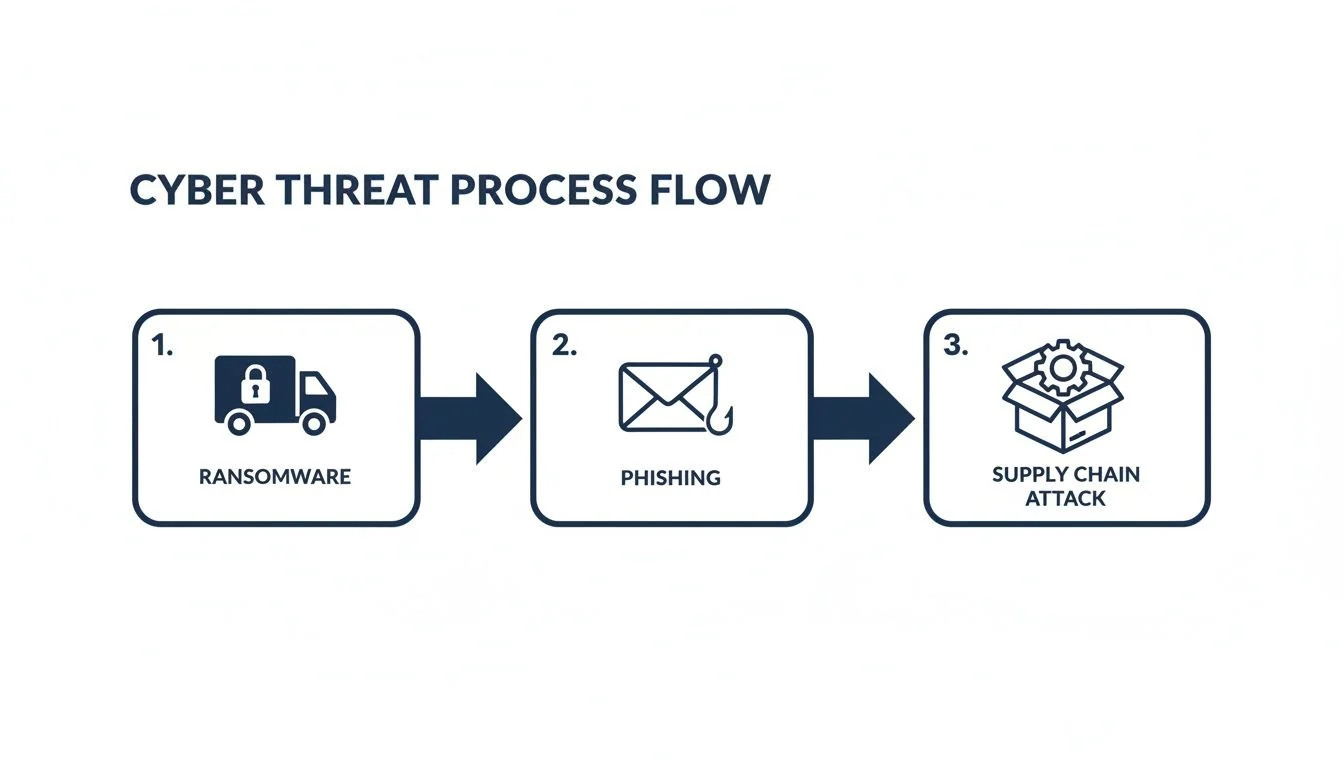
As you can see, a single weak point whether it’s an employee clicking a dodgy link or a compromised software update can quickly escalate into a major operational shutdown. Let’s get proactive.
Securing Your Operational and IoT Devices
Your Operational Technology (OT) and Internet of Things (IoT) devices are the lifeblood of your logistics work. We’re talking about everything from vehicle telematics and GPS trackers to automated warehouse scanners and security cameras.
Because these devices are connected to the internet, they are potential entry points for attackers. A crucial first step is to change the default passwords on all of them. So many devices come from the factory with simple, well-known passwords like “admin” or “password123,” which are the first things a hacker will try.
When to Get Help
As a freight business owner in Laverton, you’re an expert in logistics, not IT security. While it’s tempting to manage your own cybersecurity, the landscape is complex and constantly changing. The reality is that if you’re wondering whether you need professional help, it’s probably time to seek it. Waiting for a cyber incident to occur is a reactive strategy that often leads to costly downtime, data loss, and reputational damage.
Recognizing the signs that you’ve outgrown a DIY approach is key. If you’ve had a minor security scare, are implementing new technologies, lack dedicated in-house expertise, or are facing security questions from clients or insurers, these are clear indicators that you need professional support. A proactive consultation is an investment in your business continuity. If these challenges sound familiar, reach out to an expert via our contact page.
Fortifying Your Network and Endpoints
Your office network and every single device connected to it is the central nervous system of your business. This is where your financial records, client lists, and dispatch schedules live. Protecting it is non-negotiable.
Firewalls and Secure Wi-Fi: A good firewall acts as a digital security guard, blocking unauthorised traffic from getting onto your network. Your office Wi-Fi should also be locked down with WPA3 encryption and a strong password. It’s smart to have a separate, isolated network just for guests to use.
Endpoint Protection: Every desktop, laptop, and mobile phone that accesses your company data is an “endpoint.” Each one needs professional antivirus and anti-malware software that is always kept up-to-date to protect against the latest threats.
A regular network security assessment is vital for identifying vulnerabilities before they get exploited. Think of it as a health check for your digital infrastructure, making sure your sensitive operational data stays protected.
The Essential Eight: A Prioritised Checklist
The Australian Cyber Security Centre (ACSC) provides a fantastic starting point for any business serious about security. It’s a prioritised list of mitigation strategies known as the Essential Eight. While it might sound technical, it breaks down into common-sense actions.
The table below translates the official strategies into practical steps specifically for a freight business like yours.
The Essential Eight A Prioritized Checklist for Freight Businesses
| Essential Eight Strategy | Why It Matters for Your Freight Business | Practical First Step |
|---|---|---|
| Application Control | Prevents unauthorised software (like malware) from running on your dispatch and office computers. | Create an approved list of essential software (e.g., your TMS, accounting software, Microsoft 365) and block everything else. |
| Patch Applications | Closes security holes in software like web browsers and logistics platforms that hackers love to exploit. | Turn on automatic updates for all your software and web browsers. |
| Patch Operating Systems | Keeps Windows, macOS, and mobile operating systems on your devices secure from newly discovered vulnerabilities. | Enable automatic system updates on all computers and phones. |
| Restrict Admin Privileges | Limits the damage an attacker can do if they gain access to a user’s account. | Ensure staff use standard user accounts for daily work, not accounts with admin rights. |
| Harden User Applications | Disables risky features in programs like Microsoft Office or web browsers that can be used to deliver malware. | Configure your web browsers to block Flash, ads, and Java. Block or quarantine macros in Microsoft Office files from the internet. |
| Configure Microsoft Office Macro Settings | Macros are a common way ransomware is delivered through fake invoices or shipping documents. | Block all macros from the internet and only allow vetted macros from trusted locations. |
| Multi-Factor Authentication (MFA) | Adds a powerful layer of defence, stopping hackers from accessing your accounts even if they steal your password. | Enable MFA on your email, cloud storage (e.g., OneDrive, Dropbox), and banking services immediately. |
| Regular Backups | Ensures you can recover your critical data (like job schedules and invoices) without paying a ransom. | Implement the 3-2-1 backup rule: 3 copies of your data, on 2 different media types, with 1 copy stored off-site. |
This investment is more critical than ever. The Australian cybersecurity market is exploding, valued at USD 7.6 billion in 2024 and projected to hit USD 19.3 billion by 2033. This growth is driven by rising threats that directly impact sectors like transport, with ransomware notifications up 23% and supply chain compromises up 34%.
Key Takeaway: The single most effective security measure you can implement is Multi-Factor Authentication (MFA). MFA requires a second form of verification, like a code from your phone, before granting access. This simple step can block over 99.9% of automated attacks, even if a criminal has stolen your password.
How Tbourke Solutions Can Help
When you run a freight business in Laverton, downtime isn’t just an inconvenience it’s money walking out the door. You need a local IT partner who understands the pressures of logistics and has the experience to keep your operations secure and running smoothly. With over 20 years of hands-on IT experience, Tbourke Solutions specializes in proactive, practical support for businesses just like yours.
We don’t wait for things to break. Our approach is built on stopping problems before they start with proactive monitoring, robust security measures, and clear, no-jargon communication. As your dedicated IT department, we offer several options to secure your business:
- Managed IT Services: Think of this as your 24/7 watchtower. We provide continuous monitoring, maintenance, software updates, and security patching for your entire network. This prevents small issues from escalating into major, operation-stopping disasters.
- Dedicated Cybersecurity Services: We go beyond basic antivirus to implement robust security layers like the Essential Eight. Our cybersecurity services are specifically designed to defend against threats like ransomware and data theft that target the logistics sector.
- Strategic IT Consulting: We work with you to build a resilient tech foundation that supports your specific needs, whether it’s securing new cloud platforms, protecting fleet telematics, or ensuring you meet client and insurer security requirements.

Don’t leave your operations exposed. Let’s have a real conversation about your business and build a security plan that delivers genuine peace of mind. Reach out for a no-obligation consultation by submitting a query on our contact page.
Frequently Asked Questions
When we talk with freight and logistics owners around Laverton, the same practical questions always come up. It’s completely normal to have them. Here are the straight-talking answers you need.
How much does cybersecurity for a small freight business cost?
There’s no one-size-fits-all answer, as the cost depends on your business’s size and complexity. However, the real question is, what is the cost of not having it? A single ransomware attack can halt operations for days, leading to tens of thousands in lost revenue and recovery fees, making a proactive security investment a smart business decision. At Tbourke Solutions, we provide transparent pricing based on your specific needs, ensuring a plan that fits your budget and delivers a real return by preventing a breach.
My business is small, are we really a target?
Yes, absolutely. Cybercriminals often see small businesses as easier targets because they assume you have weaker security. Your business holds valuable consignment data, client details, and financial records. To an attacker, you’re a strategic entry point into the larger logistics network, providing a backdoor to attack your bigger clients. Protecting your business helps secure the entire supply chain.
What is the single most important security measure I can implement today?
If you do only one thing, enable Multi-Factor Authentication (MFA) on all your critical accounts (email, banking, cloud services). MFA requires a second form of verification, like a code from your phone, and can block over 99.9% of automated attacks even if a criminal has your password. The next most vital step is ongoing staff training to help your team spot and report phishing attempts.
How quickly can we recover from a cyberattack?
Recovery speed depends entirely on your preparation. A business with a tested incident response plan and reliable, off-site data backups can often be operational again within hours or days. Without a plan, you’re facing a chaotic, costly crisis that could take weeks to resolve, bleeding money the entire time. Proactive planning turns a potential catastrophe into a manageable problem with a clear checklist of who to call and what to do.
Ready to stop guessing and start building a security strategy that actually protects your Laverton freight business? The team at Tbourke Solutions is here to cut through the noise with expert advice and clear, honest solutions.
Take the first step towards securing your operations. Visit our contact page and send us a message. We’ll set up a no-obligation chat to see how we can help.
Share This Story, Choose Your Platform!