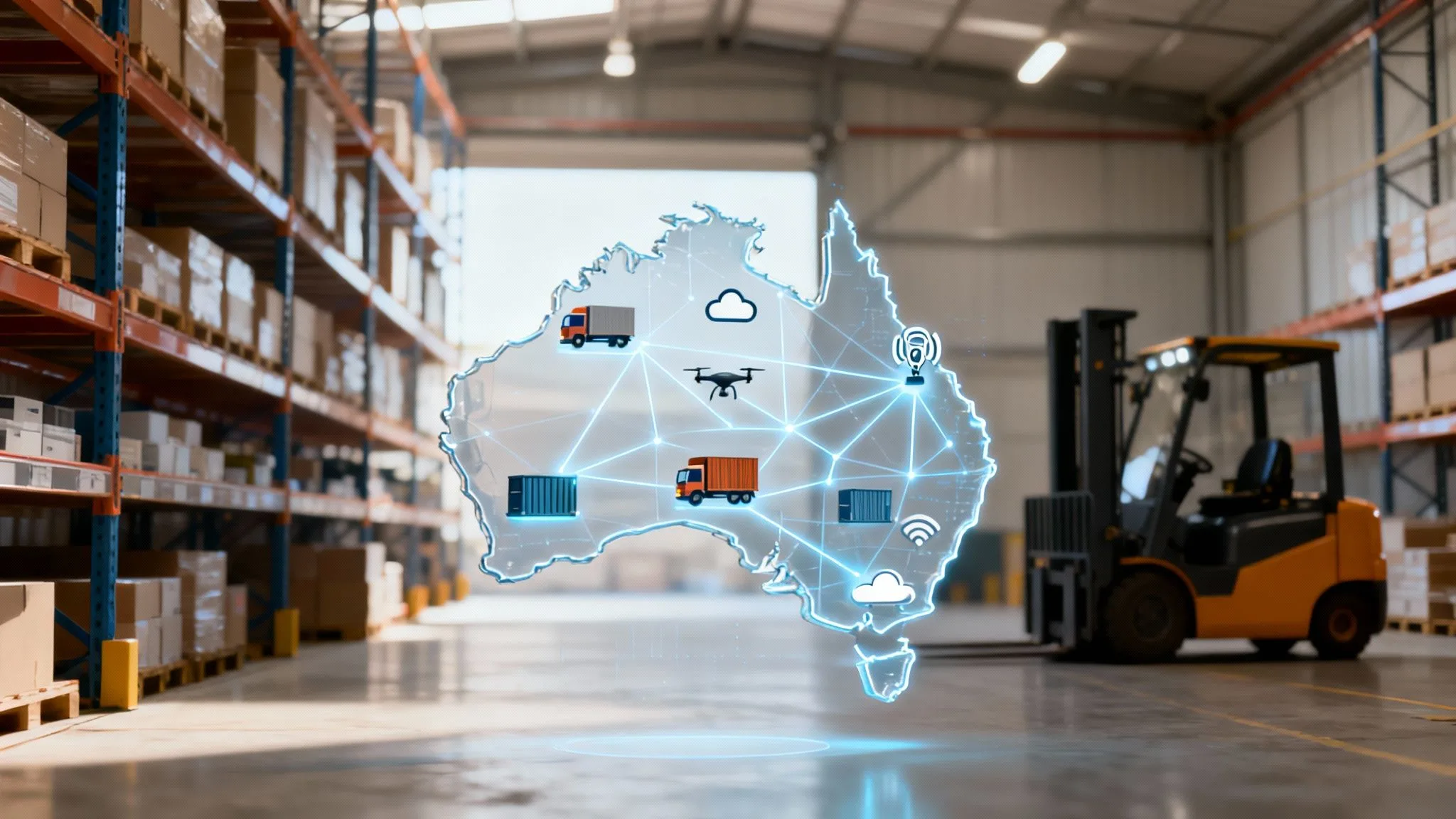
When we talk about IT services for logistics, what we’re really talking about are the specialised digital tools that manage every single moving part of your operation, from the moment stock hits your warehouse floor to the final mile drop off.
Think of it as the digital brain of your supply chain. It’s the invisible force connecting all the dots, making sure everything runs with the speed, accuracy, and efficiency you need to stay competitive.
TLDR
This guide explores the essential IT services that power modern logistics, from Warehouse Management Systems (WMS) to real time fleet tracking. We break down how these technologies drive down costs, improve customer satisfaction, and give you a competitive edge in the Australian market. You will also find answers to common questions about budgeting, implementation, and cybersecurity to help you choose the right IT partner for your business.
The Engine Room of Modern Logistics

Picture your entire logistics operation as a high performance vehicle. The technology is everything that makes it go: the engine, the electronics, the fuel system. In today’s market, IT services for logistics aren’t just an optional extra anymore; they’re the core operating system for any successful Australian supply chain.
This tech dictates every move. It’s what organises a chaotic warehouse and what ensures a package arrives safely on a customer’s doorstep. With the explosion of e commerce, ever increasing customer demands for live tracking, and the sheer challenge of Australia’s geography, logistics operators are under immense pressure. Technology is the only real answer to these challenges.
Why Technology Is Now Essential
The days of getting by with clipboards, spreadsheets, and a bit of guesswork are long gone. To run a truly effective operation, you need technology that delivers real time data and automates the repetitive, soul crushing tasks. This frees up your team to make smarter decisions and builds a far more resilient business.
The push to adopt specialised IT is coming from all angles:
- Customer Expectations: People now demand instant updates, precise ETAs, and total transparency from the moment they click “buy.”
- Operational Complexity: Juggling inventory, vehicle fleets, drivers, and warehouse staff across vast distances is impossible without powerful coordination tools.
- Competitive Pressure: The businesses using tech to shave minutes off routes and eliminate picking errors are the ones pulling ahead.
The right tech isn’t just about keeping up with the competition. It’s about building a faster, smarter, and more reliable logistics machine. It turns your raw operational data into your single most powerful asset.
Ultimately, investing in the right IT setup isn’t just a good idea, it’s critical for survival and growth. Without it, you risk being left behind, crippled by inefficiency and unable to meet the service standards your customers now take for granted. Diving into the full benefits of managed IT services can give you a clear roadmap of what’s possible.
The end goal is simple: create a seamless flow of information that perfectly mirrors the physical flow of your goods. When your digital and physical worlds are in sync, you unlock a whole new level of productivity and customer satisfaction.
A Quick Guide to Logistics IT
Let’s cut straight to it. IT services for logistics aren’t just about computers and software; they’re the digital backbone of your entire supply chain. Think of specialised tools like Warehouse Management Systems (WMS) and Transport Management Systems (TMS) designed specifically to keep your operations running smoothly. Getting this right unlocks some serious advantages, we’re talking lower operating costs, faster delivery times, and much happier customers.
This guide will break down what these essential services are, show you how to figure out what your business actually needs, and help you choose the right IT partner to get you there. Often, that partner is what’s called a Managed Services Provider, and understanding what MSPs are is a great place to start.
For a deeper dive into the specific tools that keep modern fleets compliant and efficient, another valuable resource covers topics like E-logs for trucks, a foundational piece of tech these days. Our goal is to help you build a more resilient and competitive business right here in the Australian market.
Core IT Services That Power Australian Logistics
To really get what IT services for logistics are all about, you have to look under the bonnet at the specific tech that makes a modern supply chain tick. These aren’t just abstract software tools; they’re the hardworking systems that bring order to the chaos, visibility to the blind spots, and intelligence to complex decisions.
Each piece of the puzzle plays a distinct role, but they all work together.
This shows how these core IT tools create a powerful cycle of improvement, driving down costs, enabling faster delivery, and ultimately, keeping your customers happy.
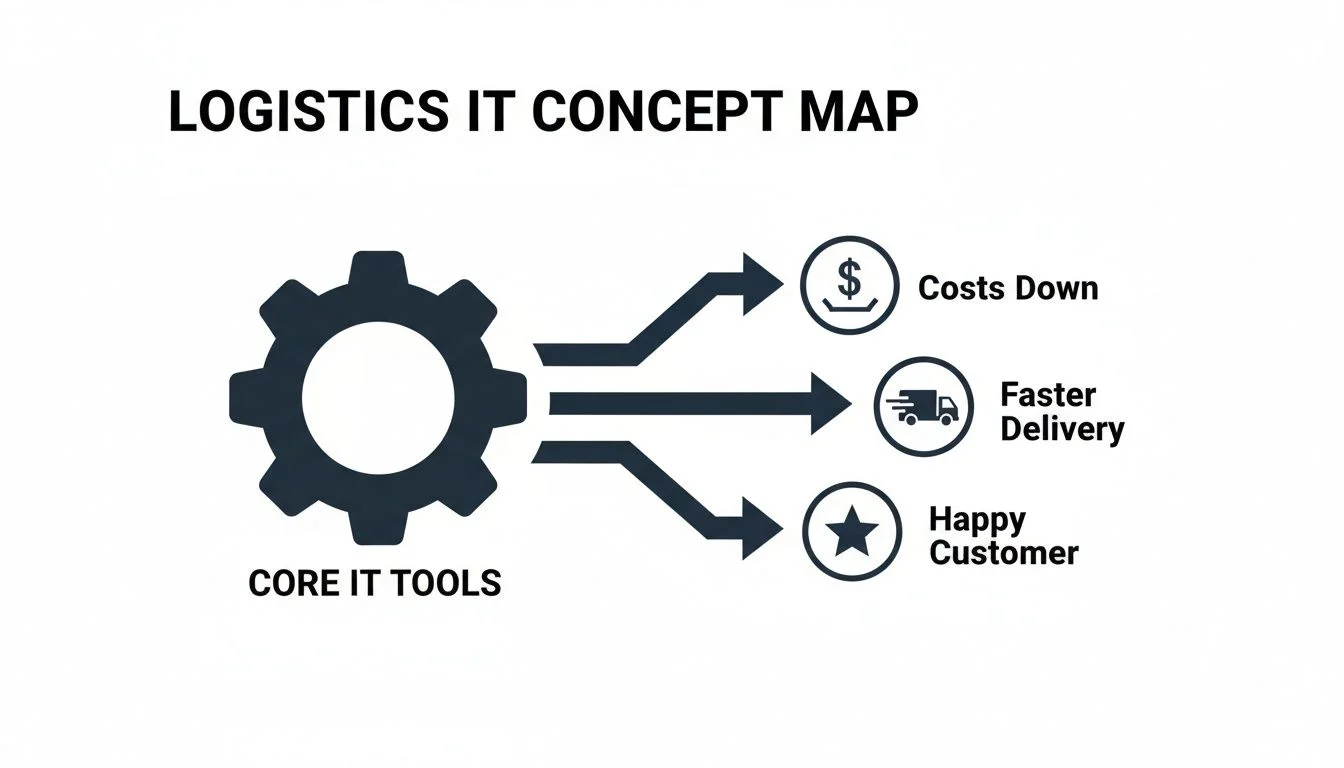
The key takeaway? These technologies aren’t isolated fixes. They’re catalysts that create massive benefits across your entire operation.
Let’s break down the essential IT solutions that should be on every logistics operator’s radar. The table below gives a quick snapshot of the key systems and what they do for your business.
Essential IT Solutions for Logistics Operations
| IT Service | Primary Function | Key Business Benefit |
|---|---|---|
| Warehouse Management System (WMS) | Controls and optimises all activities within the warehouse, from receiving to shipping. | Reduces errors, improves inventory accuracy, and speeds up order fulfilment. |
| Transport Management System (TMS) | Manages and optimises the movement of goods outside the warehouse. | Lowers freight costs through smarter routing and better carrier management. |
| Fleet Tracking & IoT | Provides real time location and condition data for vehicles and cargo. | Increases visibility, improves security, and allows for proactive issue management. |
| Cloud Computing | Hosts software and data on remote servers, providing scalable, on demand resources. | Eliminates the need for expensive on site servers and allows for operational flexibility. |
| Cybersecurity | Protects digital assets, systems, and data from unauthorised access or threats. | Prevents costly data breaches, protects customer information, and ensures business continuity. |
| System Integrations | Connects different software systems (WMS, TMS, etc.) to share data automatically. | Automates workflows, eliminates manual data entry, and provides a single source of truth. |
Each of these systems tackles a specific challenge, but when they work together, they transform how your entire operation runs.
Warehouse Management Systems for Peak Efficiency
A Warehouse Management System (WMS) is the central nervous system of your storage facility. It’s the difference between a frantic, paper based search for a pallet and a streamlined, automated process where every single item is tracked from the moment it arrives to the second it’s dispatched.
A modern WMS helps you get the most out of every square metre. It can direct a forklift operator down the most efficient pick path or automatically update inventory levels the instant an item is scanned. This drastically cuts down on human error, minimises stockouts, and seriously speeds up order fulfilment.
Transport Management Systems for Smarter Routes
If a WMS controls what happens inside your four walls, a Transport Management System (TMS) takes over once the goods are on the move. A TMS is basically the logistics brain that plans, executes, and optimises the physical movement of freight.
It automates tricky tasks like load planning, carrier selection, and route optimisation. Imagine needing to get a delivery across Sydney during peak hour; a good TMS can analyse live traffic data to find the quickest route, saving precious time and fuel. That level of control is essential for managing costs and hitting tight delivery windows.
A critical part of any modern TMS is robust container tracking and tracing systems. They give you and your customers real time visibility into a shipment’s journey, offering genuine peace of mind.
Fleet Tracking and IoT for Real-Time Visibility
Real time visibility isn’t a luxury anymore; it’s a customer expectation. GPS fleet tracking and the Internet of Things (IoT) deliver this minute by minute oversight. GPS trackers on vehicles give you a live map of your entire fleet, while IoT sensors can monitor everything from a container’s temperature to whether a door has been opened unexpectedly.
This tech allows you to give customers precise ETAs and proactively manage delays. If a truck breaks down on the Nullarbor, you’ll know immediately and can sort out a solution before the customer is even aware there’s a problem.
This constant stream of data from IoT and tracking systems isn’t just for monitoring; it’s a goldmine of information for improving future performance, identifying bottlenecks, and enhancing security across your network.
The Australian logistics market is jumping on these technologies. The digital logistics market here generated USD 515.7 million in 2024 and is projected to hit USD 1,409.8 million by 2030, a surge driven by real time tracking and automation. In fact, local providers are using IoT with machine learning to cut integration costs by up to 35%.
Cloud Computing and Cybersecurity for a Secure Foundation
Think of cloud computing as the flexible, scalable foundation that all these other services are built on. It lets you access powerful software and store massive amounts of data without the huge expense of buying and maintaining on site servers. This means you can easily scale your operations up or down during peak seasons without a massive capital investment.
Of course, with all this valuable data comes the critical need for cybersecurity. Protecting your systems from threats is paramount. A security breach could cripple your operations, compromise customer data, and wreck your reputation. Strong cybersecurity measures, from firewalls to staff training, are completely non negotiable.
System Integrations and Network Reliability
Finally, none of these systems work effectively if they’re stuck in their own silos. System integration is the digital glue that connects your WMS, TMS, accounting software, and customer portals. When systems are properly integrated, data flows seamlessly between them, eliminating the tedious and error prone task of manual data entry.
All of this relies on a robust and reliable network. A stable connection is essential, whether you’re connecting remote warehouses or just ensuring drivers can update their status from the road. For complex operations with multiple sites, looking into a solution like a Software Defined Wide Area Network is a smart move. You can learn more about it in our plain English guide to what SD-WAN is and how it helps businesses with distributed sites.
The Real-World Payoff: What Smart Logistics Tech Actually Does for Your Bottom Line
It’s one thing to know what a TMS or a WMS is, but the real question is simple: what does it do for your business? Investing in specialised IT services for logistics isn’t about collecting fancy new software. It’s about getting a tangible return on that investment through real, measurable improvements.
This payoff shows up in dramatic cost savings, happier customers, and a serious competitive advantage. Let’s break down how.
Driving Down Costs and Boosting Efficiency
One of the first things you’ll notice is how smart logistics tech finds and eliminates hidden costs. Think of it as a meticulous audit of your entire operation that runs 24/7, spotting inefficiencies you might not even know exist and giving you the tools to fix them.
This translates into significant savings in a few key areas:
- Fuel Consumption: A good Transport Management System (TMS) doesn’t just map a route. It analyses traffic, weather, and delivery schedules to plot the most efficient path, cutting down on wasted fuel and driver hours.
- Labour Costs: Instead of staff spending hours manually tracking inventory or picking orders, a Warehouse Management System (WMS) automates it. This frees your team up to handle more valuable, strategic tasks.
- Reduced Errors: Automation is your best defence against human error. Fewer incorrect shipments mean less wasted stock and a massive reduction in the expensive headache of reverse logistics.
- Maintenance Expenses: When IoT sensors on your vehicles can predict a maintenance issue before a breakdown happens on the Hume, you avoid costly emergency repairs and crippling downtime.
We’re already seeing this across the Australian logistics sector. For a business with a fleet covering our vast distances, using AI driven route analysis to achieve fuel savings of up to 15% is a game changer.
Enhancing Visibility and Customer Trust
In today’s market, “your order has shipped” is no longer enough. Customers expect to know exactly where their delivery is at every single moment, from your warehouse floor to their front door. Real time tracking isn’t a bonus feature anymore, it’s the standard.
Providing this level of visibility does more than just keep people in the loop. It builds trust. It builds confidence. It turns a one off transaction into a long term relationship. When a customer knows they can rely on you for accurate, live information, they’ll come back.
This visibility also gives your own team superpowers. Instead of reacting to an angry call about a delay, your staff can see the issue developing on their dashboard and proactively communicate a solution. This small shift from reactive to proactive customer service is a powerful way to stand out.
Making this real time data accessible is where cloud platforms shine. To see how this works for smaller operations, you can read our article on the benefits of Azure cloud for small business.
Gaining a True Competitive Edge
Ultimately, the right IT infrastructure is what prepares your business to handle pressure and grab opportunities. When peak season hits, you won’t be scrambling. Your systems will be ready to scale. Your automated processes and optimised workflows mean you can handle a huge surge in orders without a corresponding surge in stress or mistakes.
This operational resilience is a massive competitive advantage.
While other operators are struggling with bottlenecks and putting out fires, your business runs like a well oiled machine, smoothly, reliably, and efficiently. Add in data analytics, and you’re suddenly making smarter, faster decisions, spotting market trends before your competitors even know what’s happening. The right technology doesn’t just help you compete; it helps you lead the pack.
How to Choose the Right Logistics IT Partner
Picking an IT provider is as critical as choosing the right trucks for your fleet. Get it right, and they become a genuine extension of your team, offering proactive advice that keeps you moving. Get it wrong, and you’re looking at costly downtime, gaping security holes, and systems that hold your business back.
Let’s cut through the noise. You need a partner who understands the unique pressures of the Australian transport and warehousing sector. That means finding someone who speaks your language, from depot operations and pallet racking to final mile delivery, not just a generic IT helpdesk.
First Things First: Do They Actually Get Logistics?
Before you even talk about servers or software, your first job is to vet their industry experience. A provider who has already worked with other Aussie transport companies will know about the headaches you face, like dodgy network connections at remote depots or the need for rugged devices that can handle a warehouse floor.
Get straight to the point and ask them:
- Can you give me real examples of problems you’ve solved for other transport or warehousing businesses?
- Are you familiar with the software we live and breathe, like the popular WMS or TMS platforms?
- How do you handle a support call when our operations are running flat out at 2 AM, long after standard business hours are over?
Their answers will tell you everything. You’ll quickly find out if they have real world experience or if they’re just trying to apply a generic, one size fits all solution. A partner who’s been there before will anticipate your needs instead of just reacting to fires.
Can They Keep Up As You Grow?
Your logistics business isn’t standing still, so your IT solutions can’t be either. A provider who only sells you a fix for today’s problems might become a roadblock tomorrow. You need a partner who is thinking about where your business will be in two, five, or even ten years.
This is where you need to talk about scalability. Can their systems grow with you? If you open a new warehouse in another state, what’s their plan to support it? If your fleet doubles in size, can their tracking and management software handle the extra load without grinding to a halt?
The right IT partner doesn’t just solve today’s problems. They provide a technology roadmap that aligns with your business goals, ensuring your IT infrastructure is an asset that fuels growth, not a bottleneck that restricts it.
A big part of this comes down to their approach to cloud services and network infrastructure. These are the foundations that allow your business to adapt and expand without needing a complete and completely unaffordable overhaul every couple of years.
What Happens When Things Break? And How Do They Stop It From Happening?
It’s 2 AM during your busiest season, and a critical system goes down. How fast can you get someone on the phone who can actually help? The support structure of a potential IT partner is an absolute deal breaker. You have to be crystal clear on their service level agreements (SLAs), realistic response times, and whether they offer the kind of after hours support that a logistics operation absolutely demands.
Just as important is their security game. Logistics companies are prime targets for ransomware and data breaches, which means your IT partner must be your first line of defence.
Use this checklist when you’re talking to potential providers:
- Support Availability: Do they offer 24/7 support for critical issues, or will you be stuck waiting until the office opens at 9 AM?
- Local Presence: Is their support team actually based in Australia? A local team understands the context here and can provide much faster, more effective help when you need it.
- Security Measures: What specific cybersecurity protections do they put in place? Ask about advanced threat detection, firewalls, and employee security training.
- Integration Experience: Can they show you examples of successfully connecting complex systems, like linking a new WMS with your existing accounting software?
Choosing a local managed IT services provider like us in Hillside brings huge advantages in both how quickly we can respond and our ground level understanding of the Melbourne business environment. It means you have hands on support right when you need it most.
How We Put It All Together For Your Logistics Business

Understanding the theory behind IT services for logistics is one thing, but making it work for your specific business is what really counts. Here at Tbourke Solutions, we don’t just sell off the shelf services. We build genuine partnerships to solve the real world operational headaches you face every day, whether you’re based here in Hillside or running routes across Melbourne.
Our process always starts with a proper conversation. We take the time to listen and get to the bottom of your unique pain points, from spotty Wi Fi in a far flung warehouse corner to the nagging worry of keeping sensitive shipping data safe from cyber threats.
Only then do we start mapping out an actionable plan. We just don’t do ‘one size fits all’.
Crafting Your Technology Roadmap
Your plan is built around one thing: your goals. We map out a technology strategy that directly tackles the obstacles slowing you down and, more importantly, creates real opportunities for growth. It’s all about making smart, targeted investments that deliver a genuine return.
This tailored approach usually involves a few key pieces working in sync:
- Managed IT Services: We’ll proactively keep an eye on your systems to prevent downtime and provide fast, effective support the moment you need it. No more waiting around for a fix.
- Custom Cloud Solutions: We design flexible cloud setups that can scale up effortlessly during your busiest seasons and pull back when things are quieter, so you only pay for what you use.
- Robust Cybersecurity: Think of it as your digital security patrol. We implement strong defences to protect your network, shield your client data, and keep your business running securely.
- Reliable Network Infrastructure: We make sure your warehouses, offices, and vehicles stay connected and talking to each other without a hitch. Flawless communication is non negotiable.
Our specialty is building and maintaining the dependable digital backbone your entire logistics operation leans on. We handle the tech so you can get back to what you do best: moving goods from A to B, efficiently and on time.
We don’t just fix things when they break. Our goal is to be the expert partner that helps your logistics company use technology to build a foundation for sustainable, long term growth.
We know the unique demands of the Australian logistics industry inside and out. The solutions we provide are practical, affordable, and built to last. Our team is committed to becoming an extension of your own, offering straight talking guidance and support every step of the way.
Ready to see how we can help drive your business forward? The first step is a simple chat. Reach out to our team to discuss your needs by submitting a query on our contact page. Let’s start building a smarter, more resilient future for your operations today.
Frequently Asked Questions
Here are the answers to some of the most common questions logistics operators ask about implementing new IT services.
What’s a realistic IT budget for a small logistics company?
There is no single magic number, as the budget depends on your company’s size, operational complexity, and growth goals. For a small operation, an essential starter package covering security, backups, and cloud email might cost a few hundred dollars per month. A growing business with a fleet and warehouse might budget between $1,500 to $5,000+ per month for comprehensive managed IT support, advanced cybersecurity, and subscriptions to key software like a WMS or TMS. It is best to view this not as a cost but as an investment in efficiency that pays for itself.
How long does it take to implement a new system like a WMS or TMS?
The timeline depends on the system’s complexity. A simple, out of the box cloud solution could be up and running in just a few weeks. However, a more customised implementation with deep integrations into existing software should be planned for three to nine months. This process includes discovery, planning, system configuration, data migration, and team training. Rushing this process often leads to problems, so a carefully planned, phased rollout is crucial for a smooth transition.
What are the biggest cybersecurity risks we face?
The logistics industry is a prime target for cybercriminals due to the valuable data you handle. The most significant threats include Ransomware, where attackers lock your data and demand payment; Phishing Attacks, which use deceptive emails to steal login credentials; and Data Breaches, where criminals access your systems to steal confidential client or financial information. Protecting your business requires a multi layered defence that goes beyond a simple firewall, including regular staff training and advanced threat detection systems.
Can new IT services integrate with the software we already use?
Yes, and they absolutely should. A key feature of modern IT services for logistics is their ability to integrate with other business critical software, such as your accounting platform (Xero or MYOB). Proper integration creates a seamless flow of data, for instance, automatically sending order information from your WMS to your accounting software to generate an invoice. This eliminates manual data entry, reduces errors, and provides a single, accurate view of your business operations.
How Tbourke Solutions Can Help
At Tbourke Solutions, we specialise in designing and managing IT solutions that solve the real world challenges of the logistics industry right here in Melbourne. We understand that every operation is unique, so we start by listening to your specific needs before building a customised technology plan that boosts efficiency, security, and growth.
We offer a range of services tailored for logistics businesses, including:
- Proactive Managed IT Services: We monitor your systems 24/7 to prevent issues before they cause downtime, ensuring your operation keeps running smoothly.
- Strategic Cloud Solutions: We build scalable and cost effective cloud infrastructures that grow with your business, so you only pay for the resources you need.
- Layered Cybersecurity Defences: We implement robust security measures to protect your sensitive data from ever evolving cyber threats.
- Reliable Network Management: We ensure your warehouses, offices, and vehicles have stable, high performance connectivity to support your critical applications.
If you’re ready to build a smarter, more resilient technology foundation for your logistics business, we’re here to help. To start a conversation about your needs, please submit a query on our contact page.
Share This Story, Choose Your Platform!