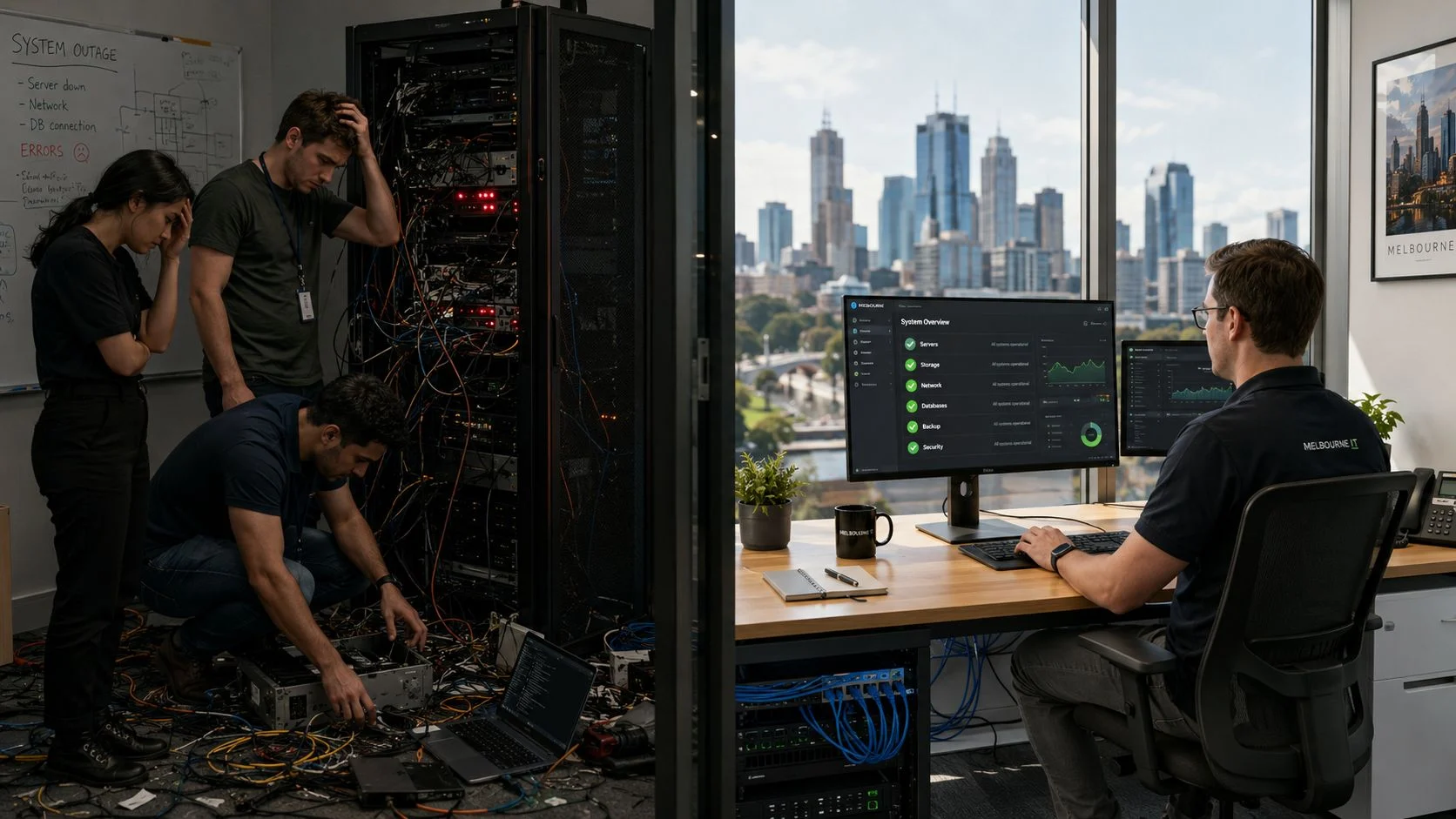
When no one owns your IT environment, your business is like a ship without a captain, drifting aimlessly toward a storm. Without someone at the helm, critical tasks get ignored, security holes start to appear, and before you know it, operational chaos is just the way things are. This lack of accountability creates the perfect storm of risk that can quietly sink an organisation.
TLDR
An unowned IT environment is a recipe for disaster. It leads directly to serious security risks, frustrating system failures, and costs that spiral out of control. When no one is responsible, essential maintenance like updates and backups gets missed, leaving your business wide open. The only way to turn your technology into a secure asset instead of a ticking liability is to establish clear ownership, either internally or by partnering with an expert.
The Uncaptained Ship Drifting in a Digital Storm

Understanding IT Ownership
So, what does “IT ownership” actually mean? It’s not just about having someone to call when a computer breaks.
True IT ownership means a specific person or team is accountable for your entire technology ecosystem, from the server in the corner to the software you use every day. This accountability is the bedrock of a stable and secure business. It guarantees someone is asking the important questions and, more importantly, acting on the answers. Without it, your technology runs on hope and assumptions, a dangerous game to play in any business.
The Consequences of No Accountability
When no single person or team is in charge, a dangerous void opens up. Critical responsibilities fall through the cracks, leading to a cascade of problems that are entirely predictable.
Think about these common scenarios:
- Security Gaps Widen: Who’s in charge of applying security patches? Without an owner, updates are applied inconsistently, if at all. This leaves your systems vulnerable to well known exploits that hackers are actively searching for.
- Data Backups Fail Silently: Everyone probably assumes the backups are running, but who actually checks them? In an unowned system, backups are often failing or incomplete, a disaster you usually only discover after you’ve already lost everything.
- Strategic Planning Disappears: Technology decisions become purely reactive. Instead of planning for growth, you’re constantly putting out fires, panic buying hardware, and dealing with downtime that could have been prevented.
An IT environment without clear ownership isn’t a cost saving measure. It’s an unmanaged risk that accumulates interest every single day, with the final bill paid in lost data, downtime, and reputational damage.
When To Get Help
If you find yourself dealing with the same tech issues over and over, feel unsure if your data is actually secure, or get the sense your technology is holding the business back, it’s a massive red flag that ownership is missing. These aren’t minor inconveniences; they’re symptoms of a much deeper problem. Don’t wait for a full blown crisis to force your hand.
You can get clarity and take back control. Reach out to Tbourke Solutions via our contact page to schedule a no obligation assessment of your IT environment.
The Hidden Costs of an Unowned Environment
The most immediate costs of an ownerless environment are often the ones you don’t see on an invoice. It’s the lost productivity from slow systems, the wasted hours employees spend trying to fix their own tech problems, and the missed opportunities because your systems just can’t keep up. These issues silently bleed resources and stifle growth.
Eventually, these hidden costs show up as big, painful expenses: emergency repair bills, data recovery fees, or even regulatory fines for compliance breaches. A clear ownership model, often provided by exploring what are MSPs, turns this unpredictable expense into a manageable, strategic investment. It’s a proactive approach that’s fundamental to protecting your business from the digital storm.
The Bottom Line: What an Unowned IT Environment Really Costs You
Let’s cut to the chase. When no one is clearly in charge of your IT, your business is running on borrowed time. It’s a recipe for disaster.
Critical tasks like security updates, daily data backups, and planning for the future don’t just happen on their own. Without a designated owner, they inevitably fall through the cracks. This leaves you wide open to everything from crippling cyberattacks and unexpected system failures to serious compliance breaches that can attract hefty fines.
This lack of accountability isn’t just a technical problem; it’s a business problem. It leads directly to wasted time, frustrated staff, and costs that spiral out of control. The constant cycle of fixing things only after they break is a losing game. As we explain in another guide, this reactive approach always ends up being more expensive than proactive management. You can learn more about why reactive IT costs more than managed IT.
Ultimately, you have to give someone the keys. Whether you appoint a person internally or bring in a trusted partner, clear IT ownership is non negotiable. It’s the only way to transform your technology from a ticking time bomb into a reliable asset that actually helps you grow.
The Domino Effect of an Unowned IT Environment

The lack of IT ownership isn’t a single, isolated problem. It’s the first domino to fall in a chain reaction that can cripple your daily operations and put your entire business at risk.
This void of accountability hits the core pillars of your organisation hard, turning abstract risks into tangible, costly failures. What happens when no one owns your IT environment is a slow but certain decay. Small, manageable issues get ignored until they snowball into major crises, each one triggering the next problem in a destructive sequence.
This is where the concept of “no ownership” stops being theoretical and starts costing you money, clients, and your hard earned reputation.
Security Failures: The First Domino to Fall
Without clear ownership, security is almost always the first casualty. Simple, routine tasks like applying software patches are overlooked, creating gaping holes for cybercriminals to exploit. A single missed update on a server can be all an attacker needs to gain access.
This isn’t just a hypothetical threat. Imagine a small Melbourne business where no one truly ‘owns’ the IT. That situation perfectly mirrors the dangers outlined in a recent cybercrime report, which saw over 84,700 incidents filed in Australia, that’s one every six minutes. For small businesses, the average cost of a breach has soared to $56,600, with Victorian SMEs being hit particularly hard.
When there’s no ownership, nobody is enforcing basic security hygiene. This leads directly to situations like the Latitude Financial breach, where attackers used stolen vendor credentials to access the data of over 14 million Australians.
Operational Chaos and Productivity Collapse
The next domino to tumble is operational disruption. When no one is responsible for the health of your systems, minor glitches quickly turn into major downtime.
Consider a sales team in Melbourne preparing for a crucial client presentation, only to find the CRM is down because a server wasn’t properly maintained. The deal is lost, not due to a poor product or strategy, but because of a preventable IT failure.
This chaos shows up in a few common ways:
- Failing Hardware: A server that is five years past its warranty suddenly fails, grinding all work to a halt. An owner would have planned for its replacement.
- Poor Data Management: Critical files are stored haphazardly across different devices with no central backup. When an employee’s laptop dies, years of work are lost forever.
- Software Conflicts: Staff install unapproved applications (“shadow IT”) that conflict with essential business software, causing constant crashes and slowing everyone down.
To put it simply, when nobody is in charge, your technology stops being a tool for productivity and becomes the biggest source of frustration. The time your team wastes fighting with their computers is time they aren’t spending serving your clients or growing the business.
Data Loss: The Point of No Return
Perhaps the most devastating domino of all is data loss. Backups are the last line of defence against hardware failure, cyberattacks, or simple human error. But in an ownerless environment, they are often a complete illusion.
Think of a school that diligently runs its backup software every night. One day, a ransomware attack encrypts their entire student records database. They turn to their backups, only to discover the process had been failing silently for months. No one was ever assigned the responsibility of verifying that the backups were actually working. The data is gone for good.
This scenario is terrifyingly common. It highlights the critical need not just for backup systems, but for someone accountable for their success. Having a solid strategy in place is essential, and you can see some practical frameworks by reviewing these disaster recovery plan examples.
Without ownership, your most valuable asset, your data, is left completely unprotected. The fallout from this single failure can be catastrophic, leading to regulatory fines, loss of client trust, and sometimes, the end of the business itself.
Recognising the Warning Signs You Need Help
It’s easy to miss the forest for the trees, especially when you’re busy running your business. The slow creep of IT issues can start to feel normal, just another cost of doing business, until a real crisis brings everything to a halt. Spotting the warning signs of an unowned IT environment is the first step to getting back in the driver’s seat.
These symptoms rarely show up as big technical failures at first. Instead, they’re the nagging, persistent business frustrations that never quite seem to go away. If any of this sounds familiar, it’s a clear signal your technology is crying out for proper ownership.
The Cycle of Recurring Problems
Does your team complain about the same IT issues over and over? Maybe it’s the printer that’s always offline, the network that slows to a crawl every afternoon, or the software that crashes for no reason. These recurring glitches are a massive red flag.
When no one truly owns the IT environment, problems get “patched” but never properly solved. A quick fix might get an employee through the day, but without anyone digging into the root cause, that same issue is guaranteed to pop up again. It’s an endless, frustrating cycle that drains productivity and morale.
The Rise of Shadow IT
Have you noticed staff using unapproved apps and software to get their work done? This is called shadow IT, and it’s what happens when the official tools are slow, broken, or just not up to the job. People will always find a way, whether it’s using a personal Dropbox to send large files or signing up for a project management tool without telling anyone.
While it shows initiative, it also creates huge security and data management risks. Suddenly, your company data is scattered across unsecured platforms you have no control over. Shadow IT is a direct symptom of an IT environment that’s failing to meet the business’s needs, forcing employees to find workarounds. It’s often a key indicator that your business has outgrown its current support model, a point we cover in more detail here: signs your business has outgrown ad-hoc IT support.
If your team constantly faces tech roadblocks and you’re spending more time reacting to problems than preventing them, it’s a clear sign that your IT environment is unowned. The question is no longer if a major failure will occur, but when.
To get a true picture of where the risks lie, a thorough assessment is crucial. Using a solid technical due diligence checklist can help guide your review and uncover those hidden problems. If that checklist starts looking uncomfortably familiar, it’s time to break the cycle. Reach out to Tbourke Solutions via our contact page for a no obligation assessment to finally regain control of your technology.
Establishing Control with Effective IT Ownership Models
Once you’ve seen the dangers of letting your IT environment run wild, the next logical step is to get it back under control. The good news is, this doesn’t have to be complicated. For most Australian SMEs, schools, and startups, the fix usually comes down to one of three practical ownership models, each designed to fit different needs, budgets, and in house skills.
Choosing the right model is all about striking a balance between your internal team and external expertise. The goal is simple: make sure someone is genuinely accountable for your technology’s performance, security, and future direction. This single decision can transform IT from a source of constant headaches into a reliable business asset.
This simple decision tree can help you see if those recurring tech issues are a sign that you need a clearer ownership model.
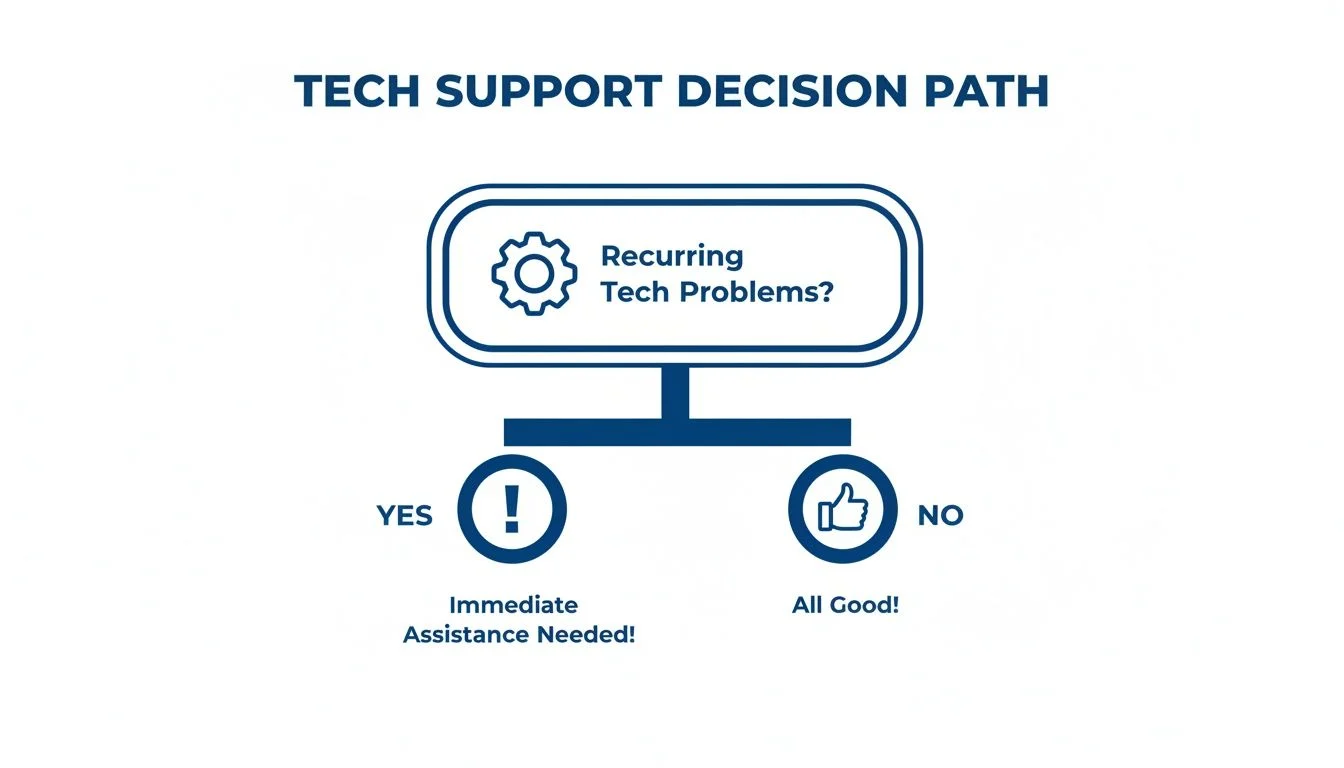
If you find yourself stuck in a loop of fixing the same technical problems over and over, that’s a massive red flag. It’s a clear signal that a more structured approach to IT management is long overdue.
The Internal Champion Model
The most straightforward approach is to nominate an Internal Champion. This is usually a tech savvy employee who takes on the responsibility for IT as part of their existing role. They become the first port of call for basic troubleshooting and the main contact for any technology vendors.
- Pros: It’s a low cost way to get started and creates a single point of contact, which is a huge improvement over having no one. This helps centralise communication and introduces a basic level of accountability.
- Cons: This person is rarely a dedicated IT professional. They don’t have the specialised tools, deep security knowledge, or the time to manage everything properly, which can easily lead to burnout and critical mistakes.
- Best For: Very small businesses or startups with simple tech needs and a tight budget. It works when the main requirement is just basic coordination, not in depth technical management.
The Co-Managed IT Model
A popular middle ground is the Co-Managed IT model. Here, your internal champion joins forces with an external expert, like us at Tbourke Solutions. Your person on the ground handles the day to day user support because they know the business inside out, while the external partner provides the heavy lifting: advanced security, strategic advice, and proactive monitoring.
This model creates a powerful partnership. You get the best of both worlds, an on site presence with intimate business knowledge, backed up by a team of specialised professionals managing the complex systems behind the scenes.
A crucial part of establishing control and defining clear IT ownership involves understanding the core differences between cloud and on-premise infrastructure, which fundamentally dictates management responsibilities.
This collaborative approach ensures that the chaos of an unowned IT environment becomes a problem of the past. Your business gets both immediate, hands on support and high level strategic oversight.
The Fully Managed Services Model
For a lot of organisations, the most effective and hassle free solution is a Fully Managed Services model. This means outsourcing all of your IT responsibilities to a dedicated partner. The managed service provider (MSP) effectively becomes your complete IT department, handling everything from cybersecurity and data backups to long term planning and 24/7 support.
This model gives you the highest level of expertise and accountability, period. It frees you and your team to stop worrying about tech and focus entirely on your core business, confident that your systems are secure, reliable, and perfectly aligned with your goals.
For a deeper look at what this involves, check out our guide on what IT services can be outsourced.
Your Questions About IT Ownership, Answered
Jumping into the world of IT can feel like a maze, especially when you first realise no one is actually in charge of your digital setup. That feeling of uncertainty brings up a lot of questions. Here are some straightforward answers to the things we hear most often from business owners facing the chaos of an unmanaged IT environment.
We’re a Small Business. Can’t We Just Manage IT Ourselves?
It’s a fair question and a common thought for any small business owner trying to keep a lid on costs. While it’s tempting to think you can “just manage it yourself,” this almost always means no one truly owns it. The daily grind of running the business takes over, and vital IT tasks are the first things to get pushed aside.
With this DIY approach, critical security updates get missed, data backups are assumed to be working but are never actually tested, and small glitches are ignored until they snowball into a full blown crisis. Professional management brings the consistency and deep expertise needed to protect your business, often for less than the cost of cleaning up after a single major security incident.
The real cost isn’t a monthly management fee; it’s the price you pay for a catastrophic failure. A single ransomware attack or unrecoverable data loss can easily cost tens of thousands of dollars, dwarfing the predictable cost of proactive IT ownership.
What’s the First Step If We Realise No One Owns Our IT?
The single best thing you can do is get a clear, unbiased picture of where you stand right now. Don’t guess where the problems are or rely on assumptions. An external IT assessment is the most effective way to identify your biggest risks without any strings attached.
This isn’t just a quick look around. It’s a professional evaluation of your entire technology setup, including:
- Security Gaps: Pinpointing vulnerabilities, unpatched systems, and weak points in your network’s defences.
- Data Backup & Recovery: Checking that your backups are actually running successfully and, most importantly, can be restored when you need them.
- Hardware and Software Health: Looking for outdated equipment and unsupported software that could fail without warning.
What you get is a data driven roadmap that lets you prioritise what needs fixing first. It takes you from a state of anxious uncertainty to one of informed action, whether that’s locking down your data immediately or updating vulnerable systems.
How Much Does a Managed IT Service Provider Cost?
The cost for managed IT services really depends on a few things, like how many people are on your team, how complex your systems are, and the level of service you need. That said, any reputable managed IT service provider (MSP) will offer predictable, flat rate monthly pricing.
This model is designed to get rid of surprise bills and turn IT into a stable operational expense instead of a series of budget busting emergencies. It is almost always far more cost effective than the alternative: paying for reactive, last minute repairs after a system fails, your data gets breached, or some other crisis hits. Proactive management is all about preventing those expensive disasters from ever happening.
What’s the Difference Between an “IT Champion” and a Managed Service?
Appointing an internal “IT champion” is a great first move away from having no ownership at all. This person becomes the go to contact for tech issues and can liaise with vendors, which is a massive improvement over total chaos.
But an internal champion, who almost certainly has another full time job to do, simply doesn’t have the specialised tools, dedicated time, or broad expertise of an MSP. A managed service provider gives you an entire team of experts with different skill sets, advanced security monitoring tools, and 24/7 coverage that one employee could never match.
It’s the difference between having one helpful person on hand and having a dedicated, fully equipped IT department at your beck and call.
How Tbourke Solutions Delivers Certainty and Peace of Mind

Knowing your IT is a mess because no one’s in charge is one thing. Actually fixing it is another beast entirely. This is where Tbourke Solutions comes in. We step into that chaos to create clarity, control, and peace of mind by taking complete ownership of your technology challenges. Our range of IT support and managed service options ensures there is a solution that fits your specific business needs, whether you need full oversight or support for an internal champion.
For over 20 years, we’ve been helping small to medium businesses, schools, and families across Hillside and the greater Melbourne area. We have a straightforward process for turning unpredictable technology from a constant headache into your most reliable business asset. We don’t do quick fixes or temporary band aids. Our goal is to build a stable, secure, and genuinely effective technology foundation that lets you get back to focusing on what you do best.
Ready to put an end to the IT uncertainty? We’re here to help you find a clear path forward.
Take the first step towards peace of mind. Reach out to our team today by visiting our contact page to submit a query and schedule your comprehensive IT assessment.
Share This Story, Choose Your Platform!