In the construction world, IT used to be an afterthought. Now, it’s the bedrock of a successful project. We’re talking about the digital framework that links the site to the office, keeps your sensitive data locked down, and makes sure everyone is on the same page. This goes way beyond just fixing a slow computer; it’s what drives efficiency and keeps you profitable.
TLDR
Specialised IT services for construction are no longer a luxury; they are essential for connecting remote job sites, protecting critical project data, and enabling real time collaboration. This guide explains why robust IT is the digital foundation for any competitive Australian construction firm. We cover the core services you need, common software integrations, and how choosing the right IT partner helps avoid costly delays and improve your bottom line.
Building a Digital Foundation for Modern Construction
Shifting from Analogue to Digital Operations
Historically, the construction industry ran on paper plans, face to face chats, and mountains of filing cabinets. Let’s be honest, it was one of the last industries to really go digital. But clinging to that old school approach is a huge liability in today’s market.
Without a solid tech foundation, construction companies are fighting daily frustrations that eat away at their profits. Disconnected job sites mean outdated information, which leads directly to rework and expensive mistakes. Worse yet, sensitive project tenders and financial data stored on insecure networks are a prime target for cyberattacks that can grind your operations to a halt.
The Real Cost of Outdated IT
The consequences of poor IT aren’t just minor annoyances. They translate into real financial losses and can seriously damage your reputation.
Picture these all too common scenarios:
- Project Delays: A site manager can’t access the latest digital blueprints on their tablet. The crew ends up working from an old version, forcing costly demolition and rebuilding. It happens more than you’d think.
- Data Breaches: A single ransomware attack locks up all your project files, client info, and financial records. Suddenly, your entire business is at a standstill until a ransom is paid or you (hopefully) recover the data.
- Inefficient Collaboration: Architects, engineers, and subcontractors are stuck emailing massive files back and forth. This chaos creates confusion, delays approvals, and dramatically increases the risk of someone making a critical error based on the wrong version.
A proper IT system acts as the central nervous system for a construction project. It guarantees that everyone from the architect in the office to the foreman on site is working from a single, reliable source of truth.
Investing in specialised IT isn’t just about fixing computers; it’s about building a resilient operational backbone for your company. It means putting in place robust infrastructure and cloud services that support modern workflows, protect your valuable assets, and give your firm a genuine competitive edge. It’s time to stop seeing IT as an expense and start treating it as a strategic investment in your efficiency and growth.
Why Your Construction Business Needs Specialised IT
Let’s cut straight to it. For any busy construction manager, IT services for construction aren’t just a ‘nice to have’ they’re the digital backbone holding your entire operation together.
Think of it as the critical link connecting a muddy, chaotic job site back to the main office. It’s what secures your sensitive project data and ensures your team can actually collaborate using complex tools like BIM without constant glitches. A good IT partner is like your digital foreman, stepping in to prevent costly downtime and keep your projects firmly on schedule.
Ultimately, they help you make more money by untangling the complex workflows that are unique to this industry. To see how this proactive approach works in practice, it’s worth understanding the core benefits of managed IT services and how they stop problems long before they start costing you.
Core IT Services That Power Construction Projects
Think of your IT infrastructure like the concrete slab and structural frame of a new build. If that foundation is weak or poorly designed, everything you build on top of it is at risk. The exact same principle applies to your construction business the core IT services you rely on are the digital framework supporting everything from tendering to final handover.
These services aren’t just background noise to keep the lights on. They are active tools that prevent expensive downtime, protect your most valuable data, and pull your office and site teams together into one efficient unit. Let’s break down the essential services that are non negotiable for any modern construction firm.
This diagram shows how a dedicated IT partner acts as the central hub, managing the flow of information and support between your head office, your active sites, and the critical data that drives every single decision.
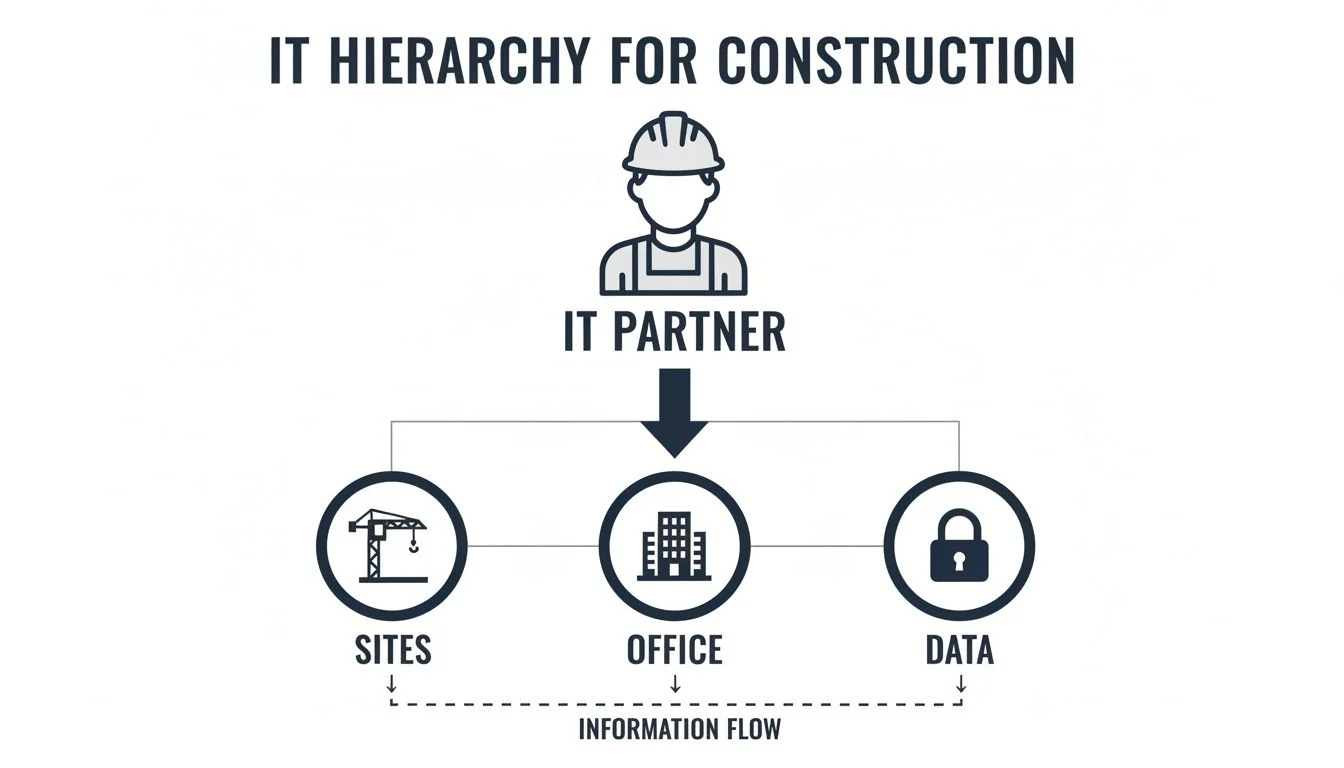
As you can see, a successful IT strategy in construction needs a unified approach. The IT partner coordinates the tech across all parts of the business to ensure things run smoothly and securely, no matter where the work is happening.
Below is a quick overview of the essential IT services every construction company should have in its toolkit. Each one plays a distinct but interconnected role in keeping your projects on track and your business protected.
Essential IT Services for Construction Companies
| IT Service | What It Is | Why Construction Needs It |
|---|---|---|
| Managed IT Support | Proactive, 24/7 monitoring and maintenance of your entire IT environment by a third-party expert. | Prevents downtime on-site and in-office, offers a single point of contact for tech issues, and keeps systems running smoothly to avoid costly work stoppages. |
| Network Management | Designing and managing reliable, rugged internet connectivity for both the main office and temporary, remote construction sites. | Ensures site managers can access cloud-based plans (like BIM models), submit daily reports, and stay connected with project stakeholders without interruption. |
| Cybersecurity | A multi-layered defence strategy to protect your network, devices, and data from cyber threats like ransomware and data theft. | Protects sensitive tender information, client financials, and intellectual property from being stolen, which could lead to huge financial and reputational damage. |
These services form the bedrock of a resilient construction operation. Let’s dig a little deeper into why each one is so critical in the real world.
Managed IT Support: Your Proactive Digital Foreman
Managed IT Support is like having a digital foreman who’s always on the job, overseeing your entire technology setup. Instead of the old “break-fix” model where you call for help only when something goes wrong, a managed service provider (MSP) proactively monitors your systems to fix problems before they can cause a work stoppage.
This preventative approach is absolutely vital in construction, where any downtime has an immediate and painful financial impact. If the server holding your project plans goes down, it doesn’t just slow one person down it can bring an entire site to a grinding halt, costing you thousands in wasted labour and pushing back key milestones.
An MSP handles all the nuts and bolts of your IT, including:
- 24/7 Monitoring and Maintenance: Keeping a constant eye on the health of your network, servers, and computers to catch and fix issues early.
- Help Desk Support: Giving your team whether they’re in the office or out on site a single number to call for any tech problem.
- Software and Hardware Management: Making sure all your software is updated, licenses are current, and your equipment is performing as it should.
Think of it this way: You wouldn’t wait for a critical piece of machinery to fail mid-pour. You perform regular maintenance. Managed IT applies that same preventative logic to your technology, ensuring it’s reliable when you need it most.
Reliable Network Management for Every Site
Construction sites are temporary, often remote, and notoriously tough environments for technology. Yet, solid internet connectivity is now completely essential for accessing cloud-based blueprints, submitting daily reports, and keeping the lines of communication open. This is where specialised network management becomes a game changer.
A standard NBN connection just won’t cut it on a dynamic construction site. An expert IT partner will design and deploy a network that’s both rugged and reliable, often using solutions like Software-Defined Wide Area Networks (SD-WAN).
SD-WAN is a perfect fit for construction because it can intelligently route your internet traffic over multiple connections (like 4G/5G and a fixed line) to guarantee a stable, fast connection, even in tricky locations. To get a better handle on this technology, you can explore our detailed SD-WAN guide, which explains how it builds resilient networks for businesses with multiple sites.
Robust Cybersecurity Solutions to Protect Your Assets
The construction industry is an increasingly juicy target for cybercriminals. You handle a huge amount of sensitive data, from confidential tender documents and client financials to employee details and architectural plans. A data breach can lead to devastating financial loss, legal trouble, and irreparable damage to your hard earned reputation.
A robust cybersecurity strategy is not optional; it’s a core business necessity. It involves building a multi layered defence to protect against a whole range of threats.
Key parts of a solid security setup for construction include:
- Advanced Firewalls: The gatekeeper for your network, blocking anyone who shouldn’t have access.
- Endpoint Protection: Securing every single device that connects to your network, including the laptops, tablets, and mobile phones used on site.
- Email Security: Filtering out the phishing scams and malicious attachments that are common gateways for ransomware attacks.
- Employee Security Training: The human element is crucial. Training your team to spot and avoid cyber threats turns them into your first line of defence.
The rapid digitisation of the Australian construction sector only highlights this need. The Australian IT services market hit USD 32.26 billion and is projected to more than double to USD 77.77 billion by 2030. This boom is heavily driven by sectors like construction embracing cloud tools and needing tougher cybersecurity compliance. IT consulting and implementation, vital for integrating tools like Building Information Modelling, already hold a 28.3% market share, showing a clear industry trend. Secure IT is the foundation that enables the adoption of powerful project tools like BIM Modeling Services, which are essential for predictable and efficient project delivery. These core IT services all work together, creating a digital foundation that doesn’t just support your projects it actively helps them succeed.
Getting Your Tech to Talk: Integrating Your Construction Workflow
Having the right software is a great start, but it’s only half the battle. The real magic happens when those tools work together seamlessly. This isn’t about adding more complexity to your day; it’s about making information flow effortlessly from the architect’s office to the foreman’s tablet on site.
When your tech works in isolated silos, you’re creating digital traffic jams. The project manager uses one system, the accountant uses another, and the site team has a third. This inevitably leads to confusion, double handling of data, and a huge risk of costly errors.
Proper integration means these different systems actually talk to each other. This creates one reliable version of the truth for every scrap of project data, killing the guesswork that eats into your profit margins.
The Key Software Driving the Industry
A few core categories of software form the digital backbone of nearly every successful construction project today. Getting your head around these is the first step.
- Building Information Modelling (BIM): This is so much more than a 3D model. BIM creates an intelligent, data rich “digital twin” of a building. It lets you spot clashes, calculate costs, and plan logistics before a single shovel hits the dirt.
- Project Management Platforms: Think of tools like Procore or Aconex as the central nervous system for your project. They handle everything from document control and RFIs to scheduling and financial tracking, giving everyone a clear, real time view.
- Collaboration and Document Management: Platforms like Microsoft SharePoint are absolutely vital for sharing plans and paperwork securely. They guarantee that everyone, from the office to the site, is working off the latest version of the blueprints, contracts, and safety docs.
The Power of a Single Source of Truth
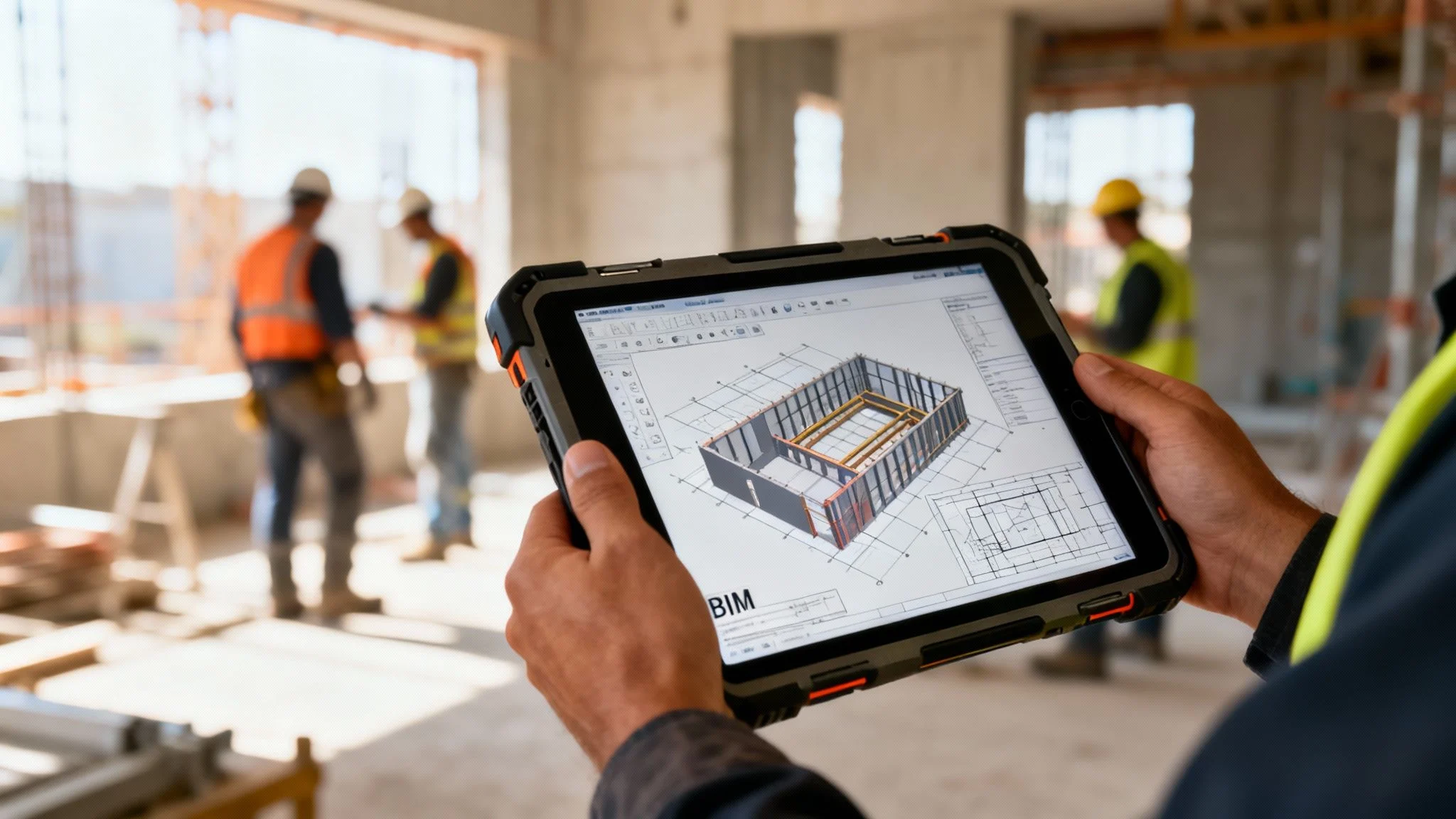
Picture this: a site manager needs to check a structural detail. Instead of chasing down a paper blueprint or making a call back to the office, they just pull up the latest BIM model on their rugged tablet. A change made by the architect that morning is already there, instantly preventing a mistake that could have cost tens of thousands to fix.
That’s the power of a single source of truth.
When your BIM software, project management platform, and accounting system are all connected, data entered once is automatically available everywhere it’s needed. A change to an architectural plan can trigger an update to the materials order list and adjust the project timeline. This level of automation is a game changer.
This cohesion ensures every decision is based on the most current and accurate information, slashing risk and leading to better project outcomes.
Overcoming the Integration Hurdles
Getting all this software to play nicely requires careful planning and the right technical know how. It’s not just about buying the software; you need a strategy to connect everything properly. This is exactly where specialised IT services for construction become essential.
The Australian construction industry is adopting tech fast. The average firm now uses 6.2 digital tools, which is a 20% increase from last year. But this also creates chaos, with many businesses juggling up to 11 different systems. Getting these platforms to work together could save a team around 10.5 work hours per week. The efficiency gains are massive.
An experienced IT partner helps you cut through the complexity. They will:
- Map Out Your Current Workflow: They’ll find the bottlenecks and figure out which software integrations will give you the biggest bang for your buck.
- Build an Integration Roadmap: They create a clear, logical plan for connecting your core applications so data flows where it needs to.
- Manage the Technical Setup: They handle the nuts and bolts of connecting different software APIs (the digital handshakes between programs) to ensure they communicate correctly.
- Provide Ongoing Support: They’re on hand to fix any issues and make sure your integrated system keeps running smoothly as your business grows.
Without this expert guidance, construction firms risk investing in powerful software that never lives up to its potential because it’s stuck on its own digital island. Getting the integration right is the final, critical step in turning your technology into a genuine strategic advantage.
Choosing the Right IT Partner for Your Firm
Picking an IT provider is a big deal for any business, but for a construction firm, the stakes are sky high. You need a partner who gets the difference between a climate controlled server room and a dusty, makeshift site office. Let’s be honest, not every IT company is built to handle the chaos of our industry, from rolling out rugged networks on active job sites to supporting the specialised software that actually keeps your projects moving.
Making the right choice means finding a team that speaks your language. They need to be just as comfortable troubleshooting a dodgy 4G connection in a remote location as they are managing your head office servers. This isn’t just about finding someone to call when a computer breaks; it’s about locking in a long term partner who makes your entire operation more efficient and secure.
Key Questions to Ask Potential IT Providers
Before you even think about signing a contract, you need to put potential partners through their paces. Their answers to these questions will quickly tell you if they genuinely understand the construction world or if they’re just trying to sell you a generic, one size fits all package.
Here are the non negotiable questions to ask:
- What’s your experience with construction specific software? Get specific. Ask them about their familiarity with platforms like Procore, Aconex, and various BIM applications. A partner who already knows the tools you use every day can deliver support that actually helps, not hinders.
- How do you handle IT for new and temporary job sites? A good answer will cover rugged hardware, reliable internet connectivity in black spots, and how they secure data on tablets and phones out in the field.
- What’s your process for on site support? When a plotter dies or the site manager’s laptop gives up the ghost, remote support just won’t cut it. You need to know they can get a technician on site, fast, to keep expensive downtime to a minimum.
- Can you give us references from other construction companies? This is the ultimate test. Speaking to their current clients in the industry is the single best way to find out if they can walk the walk.
It’s also smart to dig into their technical philosophy. Understanding how specialized IT partners select their technology stack can reveal a lot about their commitment to quality and whether their choices are a good fit for your firm.
Understanding Support and Pricing Models
The way an IT provider structures their support and pricing tells you everything you need to know about their business model. In construction, where budgets are gospel and nasty surprises can derail a project, predictability is everything.
You’ll generally come across two models:
- Break-Fix Model: You call them when something is broken. They turn up, fix it, and send you a bill for their time and any parts. It can feel cheaper at first, but this reactive approach almost always leads to longer downtime and unpredictable, often spiralling, costs when a real disaster strikes.
- Managed Services Model: You pay a predictable, fixed monthly fee for proactive monitoring, maintenance, and support. This model completely aligns their goals with yours they are financially motivated to stop problems before they happen to keep your business running without a hitch.
For any construction business, a fixed fee managed service plan is almost always the smarter choice. It gives you predictable monthly costs that make budgeting a breeze and ensures your IT partner is focused on preventing downtime, not profiting from it.
This proactive approach is the foundation of a modern, reliable IT strategy. To get a better sense of how this works in practice, it’s worth learning more about what makes a great managed IT services provider and how they can become a true partner in your success. It’s a strategic choice that delivers the stability and reliability a modern construction firm needs to grow.
Frequently Asked Questions
How do I choose the right IT service provider for my construction business?
Look for a provider with proven experience in the construction industry. Ask specific questions about their familiarity with construction software like Procore or BIM, how they handle connectivity for remote sites, and request references from other construction clients. A partner who understands your unique challenges is invaluable.
What are the most essential IT services for a construction company?
The non-negotiables are robust cybersecurity to protect sensitive data, reliable network management for both the office and job sites, and proactive managed IT support. These form the foundation for preventing costly downtime and keeping projects on track. Once these are solid, focus on data backup and collaboration tools.
Why is cybersecurity so important for construction firms?
Construction companies are prime targets for cyberattacks because they handle valuable data like project tenders, client financials, and employee information. A single data breach can lead to massive financial loss, project delays, and severe reputational damage. Strong cybersecurity is not an option; it’s a core business necessity.
How can I ensure reliable internet access on a temporary or remote job site?
Standard internet solutions often aren’t enough. A specialised IT provider will use technologies like SD-WAN, which combines multiple internet sources (like 4G/5G and fixed lines) for a stable connection. They can also deploy rugged, enterprise-grade wireless hardware designed to withstand the tough conditions of a construction site.
How Tbourke Solutions Can Help
Generic, off the shelf IT support just doesn’t cut it in the construction world. We know that. Your worksite isn’t a typical office, and your tech needs to be just as resilient and reliable as your crew.
That’s why Tbourke Solutions doesn’t offer a one size fits all solution. Instead, we deliver a practical IT blueprint designed specifically for the demanding environments of construction sites in Hillside, Melbourne, and right across Australia. We focus on proactive, preventative support that keeps things running smoothly because we understand that downtime is a direct hit to your budget and timeline.
Our specialised IT services for construction are built on a foundation of reliability and expertise. We offer:
- Managed IT Services: Proactive 24/7 monitoring and maintenance to prevent issues before they cause costly delays.
- Rugged On-Site Networks: Custom network solutions, including SD-WAN, to ensure reliable connectivity even in the toughest locations.
- Robust Cybersecurity: Multi layered security protocols to protect your sensitive tender information, client data, and project financials.
- Specialised Software Support: Hands on expertise with the critical construction management and design software you depend on daily, from Procore to BIM applications.
We believe technology should be a tool that helps you build, not another problem that gets in your way. Our goal is to handle all the IT complexities so you and your team can focus on what you do best: delivering exceptional construction projects.
Ready to build a more efficient and secure business? Let our expert team provide the reliable digital foundation your projects need. To discuss your specific needs and get a customised plan, visit our contact page and submit a query today.
Share This Story, Choose Your Platform!