
Endpoint security is the practice of securing the various entry points on a business network, such as laptops, servers, and smartphones, to protect against cyber threats. It involves monitoring these devices—known as endpoints—to detect, prevent, and respond to malicious activities. By locking down every potential access point, you create a strong defence for your entire digital environment.
At Tbourke Solutions, we deliver comprehensive endpoint security services designed to give you complete peace of mind. We don’t just install software; we provide a fully managed defence that protects every device connected to your network, ensuring your business is shielded from modern cyberattacks so you can focus on your core operations.
A Clear Definition of Endpoint Security

Picture your business network as a secure building. In the past, a simple antivirus program was like putting a basic lock on the front door. That was often enough.
Today, however, the threats are far more sophisticated. Attackers aren’t just trying to bash down the front door; they’re looking for unlocked windows, tricking employees into letting them in, or even sneaking in through the mailroom. This is why a modern understanding of endpoint security is so critical.
It’s not just about one lock anymore. It’s a complete security system for every single door and window, managed from a central control room.
From Simple Locks to Advanced Alarms
Old-school antivirus software was reactive. It waited for a known threat to show up and then tried to block it. Modern endpoint security, on the other hand, is proactive. It’s less like a simple lock and more like a high-tech alarm system complete with motion sensors, cameras, and on-site guards.
It doesn’t just wait to catch known criminals; it actively monitors for any suspicious behaviour. For example, if a program on an employee’s computer suddenly starts trying to encrypt files or access sensitive data it has no business touching, the system immediately flags it and shuts it down.
This proactive approach is the game-changer. Instead of just reacting to known viruses, modern solutions hunt for unusual activities that signal a potential attack in progress. This stops threats before they can spread and cause real damage.
To get a clearer picture, here’s a quick rundown of the foundational ideas behind modern endpoint security.
Core Concepts of Endpoint Security at a Glance
| Concept | Simple Explanation |
|---|---|
| Proactive Threat Hunting | Actively searching for signs of an attack, not just waiting for a known virus to appear. |
| Behavioural Analysis | Watching what programs do, not just what they are. If it acts like a threat, it’s treated like one. |
| Zero-Trust Principle | Trust nothing by default. Every device and user must be verified before accessing resources. |
| Centralised Management | A single dashboard to monitor, manage, and respond to threats across all devices. |
These concepts work together to create a much stronger defence than any single tool could provide on its own.
Key Functions of Modern Endpoint Security
A robust security posture relies on several key functions working in sync. These include:
- Threat Detection: Spotting everything from malware and ransomware to clever phishing attempts across all your devices.
- Active Monitoring: Keeping a constant eye out for suspicious behaviour or unauthorised access attempts, 24/7.
- Rapid Response: Giving you the tools to instantly isolate a compromised device and neutralise a threat on the spot.
- Centralised Management: Allowing your IT team (or us!) to see and control the security of all endpoints from one single screen.
At Tbourke Solutions, we believe securing these entry points is the absolute foundation of a resilient business. Our approach to cybersecurity services ensures every single device is a hardened target, giving you the confidence that your entire network is secure.
Why Endpoint Security Is Non-Negotiable for Australian Businesses
For Australian businesses, treating endpoint security as an optional extra is a gamble you just can’t afford to take. In today’s world, a single compromised laptop or smartphone can quickly spiral into a catastrophic data breach, leading to serious financial loss and damaging your reputation for years to come.
This isn’t just theory. Unsecured endpoints are the front door for cybercriminals. Attackers actively hunt for these weak spots—an employee’s unpatched computer at home, a server without proper threat detection, or a mobile phone connected to dodgy public Wi-Fi—to get a foothold into your entire network.
The Real-World Risks Facing Local Companies
The threats hitting Australian organisations are targeted and incredibly damaging. Ransomware attacks can bring a business to its knees in minutes, locking up critical files and demanding huge payments to get them back. At the same time, clever Business Email Compromise (BEC) scams are tricking staff into sending money to criminals, resulting in direct financial theft.
Investing in robust endpoint protection isn’t just an IT cost anymore—it’s a core part of business survival. A single successful attack can halt your operations, destroy customer trust, and lead to regulatory fines, making a proactive defence absolutely essential.
These attacks aren’t slowing down; they’re getting more frequent and sophisticated. The constant threat of ransomware has caused the Australian endpoint security market to grow rapidly. In fact, it’s forecast to expand at a rate of 9.35% each year through 2033, reaching an estimated value of USD 894.19 million. This growth is being driven by businesses realising they need advanced tools for real-time threat detection and prevention. You can read more about these Australian market trends over on the IMARC Group’s website.
Securing Your Business from the Ground Up
Protecting every single device is the foundation of good security. Without it, all your other security measures can be easily sidestepped. This is where a proactive strategy makes all the difference. Instead of just reacting after a breach, a solid security plan ensures every endpoint is monitored, patched, and defended against both known and brand-new threats.
At Tbourke Solutions, we get that managing this can feel overwhelming. That’s why we provide comprehensive support that turns endpoint security from a headache into a business advantage. Our approach makes sure your business is protected from the ground up, so you can focus on what you do best. To see how this fits into a complete IT strategy, check out our guide on IT managed services. We help make your technology a source of strength, not a vulnerability.
The Core Components of a Modern Endpoint Security Solution
A strong endpoint security strategy is built with layers of technology working together, much like a fortress has multiple lines of defence. It’s no longer enough to rely on basic antivirus software and firewalls. Today’s threats require a more active and intelligent approach to keep your business safe.
To truly understand what endpoint security is, we need to look past the basics and explore the advanced tools that make a real difference. These components work in concert to provide visibility, detection, and rapid response capabilities, forming a resilient shield against modern cyberattacks.
This image highlights some of the most common threats that modern endpoint security solutions are designed to stop.
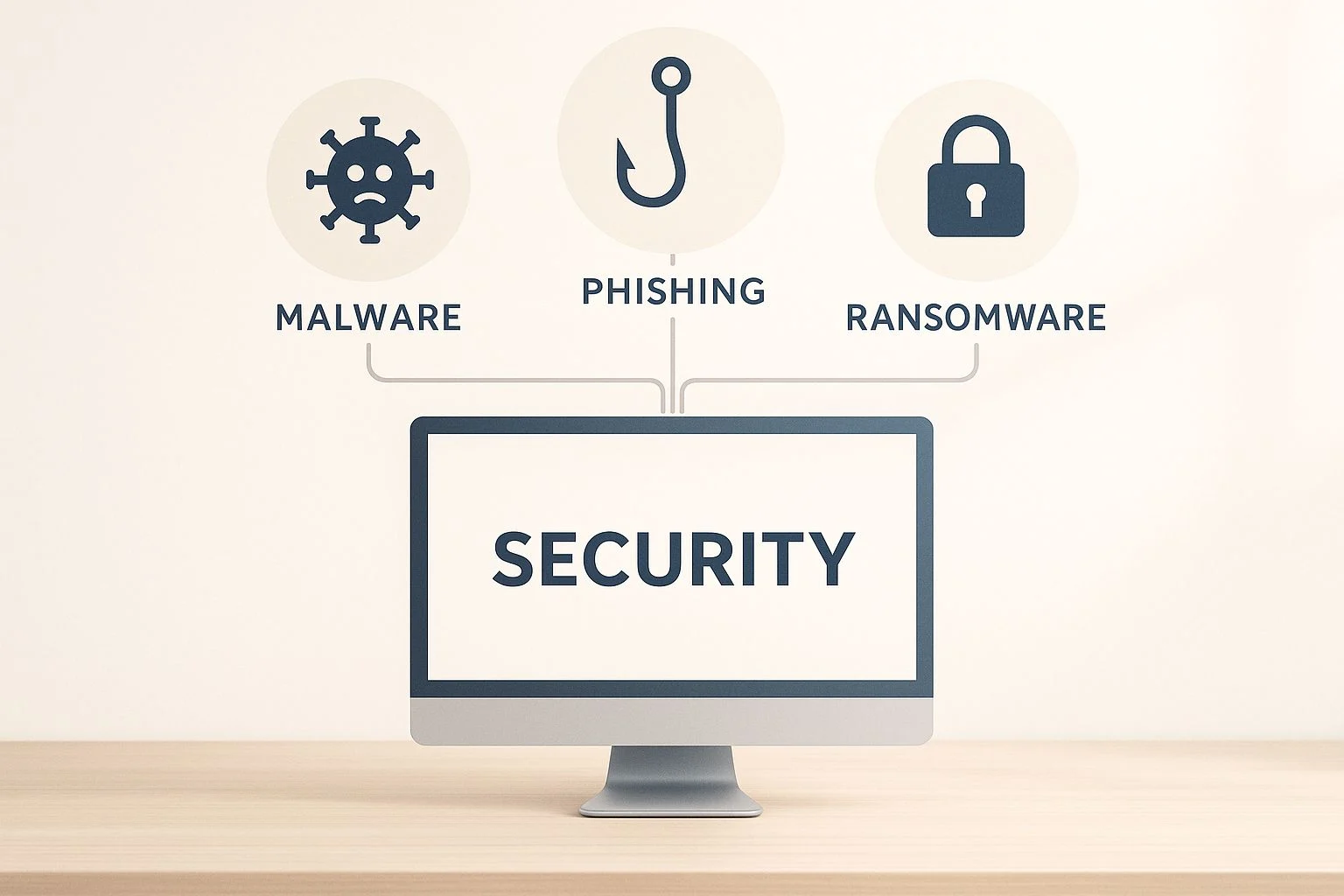
As you can see, threats like malware, phishing, and ransomware are constant risks, making layered endpoint defences essential for any business.
Endpoint Detection and Response (EDR)
Think of Endpoint Detection and Response (EDR) as your digital security guard and surveillance system rolled into one. While traditional antivirus is like a bouncer checking a list of known troublemakers at the door, EDR constantly patrols the entire building, looking for any suspicious activity.
It records everything happening on your devices—every file opened, every program run, and every network connection made. If it spots unusual behaviour, like an application trying to encrypt files unexpectedly, it raises an immediate alarm. This allows security teams to investigate the threat, see exactly how it got in, and swiftly neutralise it before it causes widespread damage.
The real power of EDR lies in its visibility. It moves beyond simply blocking known threats to actively hunting for the unknown, giving you the context needed to shut down an attack in progress.
Next-Generation Antivirus (NGAV)
This isn’t your old, signature-based antivirus. Next-Generation Antivirus (NGAV) uses artificial intelligence and machine learning to predict and prevent attacks before they can execute. Instead of just looking for known virus files, NGAV analyses file characteristics and program behaviours to determine if something is malicious.
This proactive approach means NGAV can stop brand-new, never-before-seen malware, including zero-day exploits that traditional antivirus would miss.
Extended Detection and Response (XDR)
If EDR is your on-site security team, Extended Detection and Response (XDR) is the central command centre that connects to every security system in your entire organisation. XDR goes beyond just endpoints.
It gathers and correlates data from multiple sources:
- Endpoints (laptops, servers)
- Networks (firewalls, routers)
- Cloud Applications (Office 365, Google Workspace)
- Email Systems
By piecing together information from all these areas, XDR can spot complex attacks that cross different parts of your IT environment. This bigger picture allows for a more coordinated and effective response to sophisticated threats.
Traditional vs. Modern Endpoint Security Tools
The tools we use to protect our devices have evolved significantly. What was once enough is now just a single piece of a much larger puzzle. This table shows how endpoint security has matured from basic prevention to intelligent, proactive defence.
| Security Tool | Primary Function | Key Advantage |
|---|---|---|
| Traditional Antivirus | Scans files for known virus signatures. | Simple, low-resource protection against common malware. |
| Firewall | Blocks unauthorised network traffic. | Controls access to the network based on predefined rules. |
| NGAV | Uses AI to predict and block new malware. | Stops zero-day threats and fileless attacks. |
| EDR | Monitors all endpoint activity for threats. | Provides deep visibility to hunt and respond to attacks. |
| XDR | Unifies security data across the entire IT environment. | Correlates alerts to detect complex, multi-stage attacks. |
As you can see, modern tools don’t just replace older ones; they integrate and build upon them, creating a much stronger defensive posture.
At Tbourke Solutions, we integrate these core components to create a security posture that is both strong and manageable. We understand that implementing these measures can be complex, which is why we’ve outlined some foundational steps in our guide on 5 essential cybersecurity measures for Melbourne small businesses in 2025. Our goal is to provide a unified defence that protects every entry point to your business.
Common Threats and How Modern Defenses Stop Them
To really get your head around what endpoint security does, you first need to understand the enemy. Cyber threats aren’t just technical glitches; they are calculated attacks designed to steal your data, grind your operations to a halt, and extort money. For Australian businesses, a few key threats consistently cause the most damage.
Understanding how these attacks actually work shows you exactly why modern defences are so critical. It’s a constant battle where attackers relentlessly probe for weaknesses, and your endpoint security is the main line of defence holding them back.
Business Email Compromise (BEC)
Imagine this: an attacker gets into a manager’s email account. They don’t immediately steal data or announce their presence. Instead, they just sit there, quietly observing communication patterns and learning how your business talks.
Eventually, they send a perfectly convincing email to your finance team, impersonating that manager and authorising a large, urgent payment to a fraudulent account. This is a classic Business Email Compromise (BEC) attack, and it’s devastatingly effective.
The latest threat intelligence shows just how big this problem is for local organisations. A recent report revealed that BEC attacks are the single most common incident affecting Australian businesses. Alarmingly, 75% of these attacks successfully bypassed multi-factor authentication (MFA), making endpoint and email access incredibly critical vulnerabilities. You can dig into more of these local threat trends in the CyberCX 2025 Threat Report.
- How Defences Stop It: This is where modern endpoint solutions with EDR (Endpoint Detection and Response) come in. They can spot unusual activity linked to a compromised account, like logins from strange locations or suspicious commands being run, even if the attacker has the right password. It provides a crucial safety net for those times when MFA isn’t enough.
Ransomware and Malware
Ransomware is a nasty type of malicious software (malware) that encrypts all your files, making them completely inaccessible. The attackers then demand a ransom, usually in cryptocurrency, to give you the key to unlock them.
A single infected laptop connecting to your network is all it takes. From there, the infection can spread like wildfire, locking down servers and crippling your entire business in a matter of minutes.
Ransomware doesn’t just hold your data hostage; it brings your operations to a grinding halt. The goal is to create maximum pressure, forcing you to pay quickly to avoid catastrophic downtime and financial loss.
- How Defences Stop It: This is the job of Next-Generation Antivirus (NGAV). Instead of just looking for known virus signatures, NGAV uses behavioural analysis to identify and block ransomware before it can start its dirty work. It spots the malicious actions that are characteristic of a ransomware attack, stopping even brand-new variants in their tracks. For more info on building a resilient defence, check out our guide on how to prevent data breaches.
At Tbourke Solutions, we don’t just deploy tools and walk away; we build a defence-in-depth strategy. By understanding the real-world threats you face, we implement tailored endpoint security that actively protects against BEC, ransomware, and other attacks, making sure your business stays secure and operational.
The Hidden Dangers of Unmanaged Devices
What you can’t see can absolutely hurt you. In any organisation, one of the biggest vulnerabilities isn’t a sophisticated external attack—it’s the unmanaged endpoint, the device operating in the shadows of your network.
These aren’t just company-issued laptops. It could be an employee’s personal phone checking work emails, a forgotten server tucked away in a closet, or a smart TV connected to the office Wi-Fi.
Each of these devices creates a dangerous security blind spot. Without proper oversight, they become undefended backdoors for attackers to waltz right into your system. A single unpatched, unmonitored device can make your entire cybersecurity investment worthless.
This reinforces a golden rule of IT security: effective protection starts with complete visibility. You simply cannot protect what you cannot see, making endpoint management a foundational requirement for genuine security.
The Problem of Shadow IT
There’s a name for this phenomenon: “Shadow IT”. It covers any hardware or software being used without the IT department’s knowledge or approval, and it’s a massive headache for businesses.
These unmanaged devices almost always lack critical security updates and proper configurations, turning them into low-hanging fruit for attackers. For instance, that old, out-of-service computer still plugged into the network might seem harmless, but it’s a ticking time bomb.
The scale of this issue is huge. Security gaps are a major challenge, with about 54% of Australian cybersecurity experts admitting that over 20% of their company endpoints are unmanaged and vulnerable. Worse still, an estimated 90% of cyberattacks and 70% of data breaches start at a compromised endpoint, highlighting these devices as the primary way attackers get in. You can discover more insights about these endpoint security statistics on ElectroIQ.
A single unmanaged device is like leaving a back door unlocked with a sign inviting intruders in. It doesn’t matter how strong your front door is if attackers can find an easier way to get inside.
At Tbourke Solutions, we help businesses get full visibility over their entire network. Our approach ensures every single device—managed or previously unmanaged—is accounted for, monitored, and protected. We eliminate these dangerous blind spots so there are no undefended entry points for attackers to exploit, giving you real confidence in your organisation’s security.
How Tbourke Solutions Delivers Proactive Endpoint Security
Knowing what endpoint security is and actually managing it are two very different things. It’s one thing to understand the concept, but it’s another challenge entirely to implement it effectively. This is where a partnership can turn a difficult chore into a genuine strategic advantage. We don’t just sell you software and leave you to figure it out.
At Tbourke Solutions, we deliver endpoint security as a fully managed service. This means we combine industry-leading Endpoint Detection and Response (EDR) and Extended Detection and Response (XDR) technologies with our own expert oversight. This approach gives us the complete visibility needed to see every single device connected to your network—no exceptions.
From Reactive Alerts to Proactive Defence
Our entire service is built on a proactive foundation. We don’t just sit back and wait for an alert to tell us something is wrong; we actively hunt for threats before they get a chance to cause damage. Think of us as an extension of your own team, dedicated to fortifying your defences around the clock.
Our managed approach is built on a few key pillars:
- 24/7 Expert Monitoring: Our team keeps a constant watch over your endpoints. We’re the ones analysing alerts and investigating suspicious activity so you don’t have to.
- Rapid Incident Response: The moment a credible threat is detected, we act. Our first move is to isolate the affected device to neutralise the attack before it can spread across your network.
- Complete Visibility: We make sure every single endpoint is accounted for. This closes the dangerous blind spots that unmanaged or forgotten devices create.
With Tbourke Solutions, you get more than just technology; you gain a dedicated security partner. We handle the complexity of threat detection and response, giving you the peace of mind to focus on what you do best—running your business.
A Partnership for True Security
Ultimately, our goal is to make robust security simple and accessible for your business. We manage the entire process for you—from deployment and configuration to continuous monitoring and rapid response. This ensures your endpoints are always protected against the latest threats.
You get all the benefits of a seasoned security operations centre without the immense cost and resources required to build one yourself.
A Few Common Questions About Endpoint Security
When you’re digging into endpoint security, a few questions always seem to pop up. Here are the answers to some of the most common ones we hear from local businesses, designed to clear up the jargon.
Is Standard Antivirus Enough Anymore?
While a traditional antivirus program is a decent starting point, it’s just not enough to keep a business safe on its own these days. Most antivirus software relies on spotting known threats—like a security guard with a list of known troublemakers. The problem is, modern cyber attacks are designed specifically to look like someone new and harmless.
A proper endpoint security solution works differently. It uses behavioural analysis to watch for suspicious activity, not just known threats. It’s smart enough to spot a brand-new attack that an old-school antivirus would completely miss.
How Does Endpoint Security Protect Staff Working from Home?
Endpoint security is non-negotiable if you have people working remotely or in a hybrid setup. As soon as an employee logs in from their home office, their laptop or PC effectively becomes the new frontline for your company’s security.
Modern endpoint solutions are cloud-managed, which is just a fancy way of saying they protect devices no matter where they are. This lets us enforce security policies, block threats, and handle any incidents on a device in a home office just as easily as if it were sitting on a desk in your building.
What’s the Difference Between EDR and XDR?
This is a great question, and the names sound confusingly similar.
EDR (Endpoint Detection and Response) is all about the endpoint—your laptops, servers, and desktops. Think of it as having high-definition security cameras focused on each individual device, watching everything that happens on it and ready to respond to threats.
XDR (Extended Detection and Response) takes a much bigger-picture view. It pulls in security data from your endpoints plus other areas like your network, cloud apps (like Microsoft 365), and email systems. By connecting the dots between all these different sources, XDR can spot complex, coordinated attacks that might look like isolated, minor issues to other tools. It gives you a single, unified way to see and stop threats across your entire IT environment.
Understanding these differences is key to building a strong defence. At Tbourke Solutions, we demystify the process by managing your entire endpoint security strategy for you, ensuring every device is protected with the right tools. Secure your business by visiting us at http://tbourke-solutions.com.au/.
Share This Story, Choose Your Platform!