
Choosing a phone system for a small business can feel like a daunting technical decision, but it’s more straightforward than you might think. Forget the clunky, inflexible landlines of the past. Today’s systems are built to be powerful, affordable, and incredibly flexible, giving your business a professional edge and helping you keep up with customers.
This guide is your roadmap to modernising your communications, ensuring you can support your team, serve your clients better, and set your business up for growth.
TLDR: What You Need to Know
This guide explains why a modern Voice over IP (VoIP) phone system is the best choice for small businesses, offering significant cost savings and powerful features compared to traditional landlines. We break down the essential features you need, like auto-attendants and mobile apps, and provide a clear overview of budgeting and pricing. By the end, you’ll understand how to select a system and a local provider that will help your business communicate more effectively and grow.
Why Your Phone System Is More Than Just a Dial Tone
In today’s market, your phone system is the central hub for customer conversations and team collaboration. It’s not just about making and taking calls anymore; it’s a strategic tool that directly impacts your efficiency, professional image, and, ultimately, your bottom line. We’re seeing countless Australian businesses finally ditching their outdated copper landlines for modern solutions that support remote work and create a far better client experience.

The Short Version: What You Really Need to Know
Don’t have time to wade through all the details? Here’s the bottom line.
For most small businesses, a Voice over Internet Protocol (VoIP) phone system is the smartest, most budget-friendly way forward. It’s not uncommon to see savings of up to 75% compared to a traditional landline setup, and you get a level of flexibility old-school phones just can’t match.
These systems run over your internet connection, unlocking genuinely useful features like forwarding calls straight to your mobile, sending voicemail transcripts to your email, and adding new users without needing a technician to visit. Growing your team becomes a simple click, not a complicated project.
When you’re looking at different providers, zero in on the features you’ll actually use every day. A reliable mobile app is a must-have, and if you use a CRM, finding a system that integrates with it will save you a ton of admin time.
Finally, consider partnering with a local expert. Having someone who can provide personalised setup and is there to call when you need help makes a huge difference in the long run.
Understanding Your Business Phone System Options
Picking the right phone system for a small business can feel like a minefield of jargon and technical specs, but it really boils down to a few key choices. Let’s cut through the noise and look at what makes the most sense for a modern, agile business like yours.
The Old Guard: Traditional Landlines and PABX
For decades, the standard setup was a traditional landline, often hooked up to an on-premise Private Automatic Branch Exchange (PABX) system.
Think of this like a big, heavy filing cabinet bolted to the floor in your office. It does its one job—making and receiving calls—reliably enough, but it’s completely disconnected from the digital tools you use every day. It’s expensive to buy, costly to maintain, and utterly inflexible.
These systems run on old copper wiring and lock you into rigid, long-term contracts. Need to add a new team member? Want your staff to work from home? Get ready for a slow, costly, and complicated process. For a dynamic small business, that kind of rigidity is a major handicap.
The Modern Solution: Voice over IP (VoIP)
The real game-changer for small businesses has been Voice over Internet Protocol, or VoIP. A VoIP system simply runs over your internet connection, transforming your business communications from a fixed utility into a flexible, powerful software tool.
If a landline is that clunky filing cabinet, then a VoIP system is like Google Drive. It’s accessible from anywhere with an internet connection, you can add new users with a few clicks, and it’s packed with smart features that help your team work better, not just harder.
This diagram shows how a central VoIP system powers a whole host of essential business features that were once out of reach for small businesses.
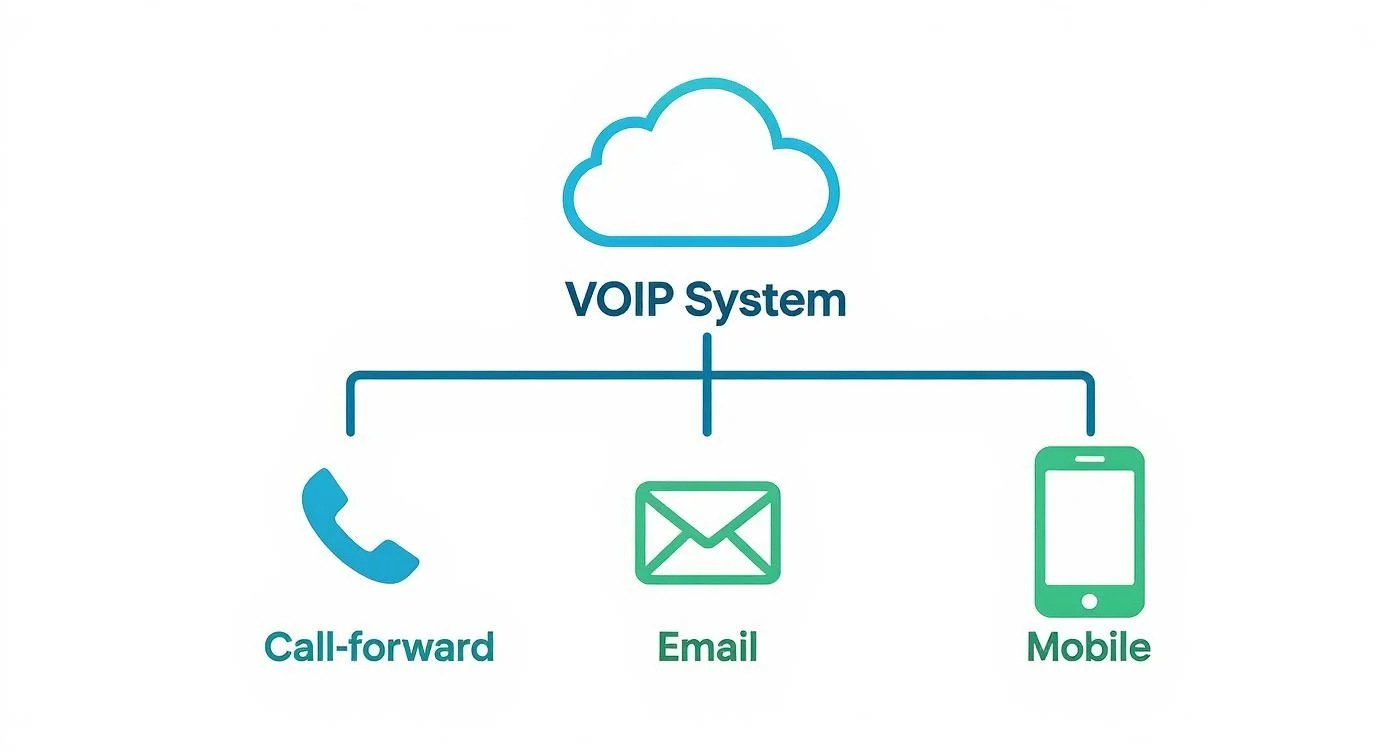
As you can see, the core technology enables a suite of tools that are built for a modern, mobile workforce.
Why VoIP is the Clear Choice for Small Businesses
VoIP is more than just a different way to make calls; it’s a fundamental upgrade to how your business operates. The benefits are huge, especially when you look at your budget and how your team gets work done.
For a small business, every dollar counts. Switching from a traditional phone line to a VoIP system isn’t just a minor tweak—it’s a strategic move that can significantly reduce operational costs while simultaneously boosting your team’s capabilities.
Small businesses across Australia have jumped on VoIP because of this powerful mix of cost-effectiveness and flexibility. Industry analysis shows that businesses making the switch typically see average savings of 50% to 75% on their monthly phone bills compared to their old landline systems.
This is exactly why VoIP has become the standard for any small business looking to compete. It offers a level of functionality that was once only available to massive enterprises, all at a price point that makes sense for a small business.
To see how this technology works in the real world, you can learn more about our 3CX VoIP PBX solutions. It’s a perfect example of a powerful, modern phone system for a small business.
The Must-Have Features for a Modern Business Phone System
A modern business phone system is so much more than just a way to make and take calls. Think of it as the central hub for your communications—a powerful tool built to streamline your operations, sharpen up customer interactions, and give your team the freedom to work from anywhere.
The days of being tied to a desk phone are long gone. Features that were once exclusive to massive corporations are now affordable and accessible for small businesses, and they’re changing the game.
This shift is all about mobility and efficiency. It’s no surprise that cloud-based phone systems are taking off among Australian small businesses. With VoIP now seamlessly integrated into mobile apps, a staggering 74% of employees use their mobiles for business calls. It’s a clear sign of how much we now rely on flexible and remote work.
Core Features That Drive Efficiency
To get real value from your investment, there are a few features that are simply non-negotiable. These are the tools that make a tangible difference to your daily grind.
- Auto-Attendant: This is your digital receptionist, greeting callers with a professional, pre-recorded message and directing them to the right place (“Press 1 for sales, Press 2 for support”). It ensures every call is answered professionally, even when you’re out of the office.
- Advanced Call Forwarding: Never miss a lead again. This feature lets you route calls from your business number to any other device, like your mobile. It’s an absolute must for tradies on a job site or consultants meeting with clients. You’re always reachable.
- Voicemail-to-Email: A simple but brilliant tool. It transcribes voicemails into text and sends them straight to your email inbox, along with the audio file. You can quickly scan messages, prioritise who to call back, and share info with the team without dialling into a clunky voicemail box.
Tools for Smarter Communication
Beyond the basics, a quality phone system for a small business should offer tools that give you real business intelligence and help you deliver a better customer experience.
For instance, a consulting firm could use call analytics to see how many calls are coming in and how long clients are waiting. This data provides a clear picture of communication patterns, flagging areas where you can improve team performance and make sure clients aren’t left hanging.
A phone system should do more than just connect calls; it should connect you with opportunities. Features like CRM integration and call recording transform every customer interaction into a chance to build stronger relationships and gather crucial business insights.
Advanced Features for Growth
As your business grows, so will your communication needs. A modern system should be ready to scale with you, offering features that support more complex workflows and better team collaboration.
- Call Recording: With consent, recording calls is a fantastic tool for quality control and staff training. It lets you review customer conversations, confirm details, and provide practical feedback to your team.
- CRM Integration: This one’s a true game-changer. When you connect your phone system to your Customer Relationship Management (CRM) software, a client’s entire history pops up on your screen when they call. It makes for a far more personal and efficient conversation.
- Mobile and Desktop Apps (Softphones): This gives your team the power to make and receive calls from your business number on any device—laptop, tablet, or smartphone. It’s essential for supporting remote and hybrid teams, ensuring you always present a professional front, no matter where your staff are. Many systems also integrate with collaboration platforms like Microsoft Teams. You can learn more about how to get the most out of Microsoft Teams phone integration.
How to Budget for Your New Phone System
Figuring out what a new phone system will actually cost your small business is a big deal, but it doesn’t need to be a headache. Once you get your head around the different pricing models and what drives the cost, you can build a realistic budget and avoid nasty surprises later on.
The first thing to grasp is the massive shift from old-school, on-premise systems to modern cloud-based solutions. It really boils down to a classic business dilemma: a big upfront purchase versus a predictable monthly bill.
An on-premise PABX system is a major capital investment. You’re buying all the physical gear—the server, the handsets, the wiring—which can easily run into thousands of dollars before you’ve even made a single call. Think of it like buying a company car outright; you own it, but you’re also on the hook for all the maintenance and repairs.
Cloud-based VoIP systems flip that model on its head. Instead of one huge bill, you pay a manageable monthly subscription for each person using the phone. It’s a predictable operational expense, just like your accounting software or Microsoft 365 subscription. You’re paying for a service, not a hunk of metal in the comms cabinet.
Breaking Down Per-User Pricing
For most small businesses, the per-user, per-month model is the way to go. It’s incredibly flexible, letting you scale your costs up or down as your team grows or changes. You only ever pay for what you need, which is a huge advantage when you’re trying to manage cash flow.
Here in Australia, this kind of system is surprisingly affordable. The average cost for a cloud-based phone system for a small business typically starts from around $25 to $50 per user per month. This has been a complete game-changer, giving small operators access to powerful features that were once reserved for big corporations. You can get more details on VoIP system costs on centraltelecoms.com.au.
So, what pushes your price towards the $25 or the $50 mark? A few key things:
- Included Call Minutes: Some plans throw in unlimited local and national calls, while others cap you at a certain allowance. If your team is on the phone a lot, an unlimited plan almost always works out cheaper.
- Advanced Features: The basic plans will nail the essentials, but you might pay a bit more for premium tools like connecting to your CRM, getting deep-dive call analytics, or advanced call recording for compliance.
- Support Levels: The price can also reflect the level of support you get. A cheaper plan might just offer email support, whereas a premium one could include a dedicated account manager and 24/7 phone help for when things go wrong.
Watching Out for Hidden Costs
While VoIP systems are generally very transparent, it pays to be aware of extra costs that might not be on the glossy brochure. Asking the right questions upfront will save you a world of pain down the track.
A great phone system should offer financial clarity, not hidden fees. Your provider should be upfront about all potential costs, from setup and hardware to ongoing support, ensuring your budget stays on track.
Make sure you get clear answers from any potential provider on these points:
- Setup or Onboarding Fees: Is there a one-off charge to get everything configured and show your team how to use it?
- Handset Costs: Will you need to buy new IP phones? Or can you rent them? Some providers even offer free or discounted handsets if you sign a contract.
- Number Porting Charges: Is there a fee to bring your existing business number across to the new system?
- Contract Terms: Are you signing up for a flexible month-to-month service, or is there a discount for committing to a 12 or 24-month term?
Getting a handle on these details is a crucial part of budgeting. This is where working with a managed IT services provider can be a huge help. They can look at how your business actually operates and find a plan that delivers real value without the hidden extras. You can explore the benefits of managed IT services to see how having a proactive partner can help keep your tech spending under control.
Why a Local Provider Makes All the Difference
Picking the right technology is a huge first step, but it’s only half the battle when it comes to a phone system for small business. Who you partner with to install and support it will make or break your experience. It’s easy to default to the giant, national telcos, but they often push one-size-fits-all solutions that just don’t fit the reality of running a small business.
A local managed IT provider plays a completely different game. They offer a personalised service that’s built on actually understanding your business and the local market you operate in. It’s the difference between being a number in a call centre queue and being a valued partner.

Hands-On Onboarding and Custom Configuration
One of the biggest wins you get with a local partner is the hands-on setup. They’ll take the time to learn your unique workflows—how you answer calls, who needs to be in which call group, what your reception team needs—and build the system around you. This isn’t about ticking boxes on a generic template; it’s about creating a communication tool that genuinely makes your business run smoother.
Instead of leaving you with a user manual and a login, a local team makes sure everything is dialled in correctly from day one. This proactive approach stops problems before they start and ensures you get real value from your investment right away. To see what this looks like in practice, check out the benefits of dedicated small business IT solutions in Melbourne.
Accessible and Expert Support
Let’s be honest, when your phones go down, you need help now. With a big telco, that usually means fighting through an automated phone menu, waiting on hold for ages, and finally speaking to someone in an overseas call centre who has no idea who you are.
A local provider is the complete opposite. You get direct access to experts who know your system inside and out because they’re the ones who set it up. Problems get solved faster and with far less frustration because you’re talking to someone who’s invested in your success.
The real value of a local IT partner isn’t just in the technology they provide, but in the peace of mind that comes from knowing expert, personalised help is just a quick phone call away.
Your Provider Selection Checklist
Before you sign on the dotted line with any provider, you need to ask some hard questions. A good local partner will have clear, straightforward answers ready to go.
Use this checklist to vet any potential providers:
- Onboarding and Training: What does your setup process actually involve? Will you provide hands-on training for my team so everyone feels confident using the new system?
- Support Structure: If we have an issue, who do we call? What are your response times, and is your support team actually based locally?
- Security and Compliance: How do you protect your VoIP platform from cyber threats? Can you help us meet any specific compliance rules for our industry?
- Local Experience: How long have you been working with businesses in our area? Can you share case studies or references from other local small businesses you’ve helped?
Choosing a provider is a long-term decision. By prioritising local expertise and genuine support, you’re not just buying a phone system—you’re investing in a partnership that will help your business grow.
Get the Right Communications Partner for Your Business
Figuring out the world of business phone systems shouldn’t feel like you’re going it alone. Choosing the right technology is one part of the puzzle, but the real secret to success is partnering with an expert who actually understands how your business operates day-to-day.
At Tbourke Solutions, that’s exactly what we do. We build communication strategies from the ground up, specifically for Australian small businesses. We start by listening—really listening—to understand your unique challenges and where you want to go. This lets us design a phone system for your small business that genuinely makes your workflow smoother and adds real value.
Your Local Technology Ally
Our team handles the entire switch for you. We’ll seamlessly port your existing numbers, set up all the hardware and software, and even train your staff so everyone feels confident from day one. We make sure the whole process is smooth, with zero disruption to your business.
As your local partner, we don’t just set it and forget it. We provide ongoing support and security monitoring to keep your communications crystal clear and completely reliable. This hands-on, local approach is a core part of what we do as a dedicated managed IT services provider.
Partnering with a local expert means you get more than just technology; you gain a team that is genuinely invested in your success, offering proactive support that giant telcos simply can’t match.
Ready to see how a better, more efficient phone system could work for your business? Reach out for a no-obligation chat. Just submit a query on our contact page, and our friendly team will be in touch.
Frequently Asked Questions
What is the best type of phone system for a small business?
For most small businesses, a cloud-based VoIP (Voice over Internet Protocol) system is the best choice. It offers the most flexibility, a rich feature set, and significant cost savings compared to traditional landline systems. Because it runs over your internet connection, it easily supports remote work and can scale up or down as your business needs change.
Can I keep my existing business phone number?
Yes, absolutely. You can transfer your current business number to a new VoIP provider through a process called ‘number porting’. Your new provider will handle the entire process, ensuring a seamless transition with no downtime, so your customers can continue to reach you on the number they already know.
What happens if my internet connection goes down?
Modern VoIP systems have built-in failover protections. If your primary internet connection fails, calls can be automatically rerouted to pre-set mobile numbers or a backup landline. Additionally, employees can use mobile apps on their smartphones to continue making and receiving calls over their 4G/5G data connection, ensuring business continuity.
How much does a phone system for a small business cost?
The cost is typically based on a per-user, per-month subscription model. In Australia, prices generally range from $25 to $50 per user per month. The final price depends on the number of users, the features included (e.g., call recording, CRM integration), and the volume of included calls.
How Tbourke Solutions Can Help You
Choosing the right phone system is a critical decision, but you don’t have to make it alone. At Tbourke Solutions, we specialise in providing tailored communication solutions for small businesses. We take the time to understand your specific needs and design a system that not only saves you money but also enhances your productivity and professional image.
Our services include:
- Expert Consultation: We help you navigate the options to find the perfect VoIP system for your budget and workflow.
- Seamless Implementation: We manage the entire setup process, including porting your existing number, configuring hardware, and training your team.
- Ongoing Local Support: As your local IT partner, we provide fast, reliable support to ensure your communication is always running smoothly.
Ready to upgrade your business communications? Contact us today to discuss your options. You can reach our team by submitting a query on our contact page.
Share This Story, Choose Your Platform!