
Understanding the Power of Network Segmentation
Let’s start with an analogy. Imagine your business network is a big, open-plan office. It’s great for collaboration, but it also means a single security slip-up—like a lost keycard or a dodgy visitor—can put the entire space at risk. Everyone and everything is exposed.
Now, picture that same office neatly divided into secure, access-controlled departments: Finance, Sales, Operations. That’s the core idea behind network segmentation.
By splitting your network into smaller, isolated zones (or segments), you create a structure that is fundamentally more secure and efficient. If a threat gets into one segment, it’s walled off and unable to spread across the whole organisation. This approach swaps a fragile, single-perimeter defence for a much more resilient, layered security model. For businesses asking what network segmentation is, the simplest answer is this: it’s a critical security practice that contains threats and protects your most valuable data by dividing your network into secure, manageable parts. At Tbourke Solutions, we specialise in implementing this strategy to fortify businesses against modern cyber threats.
Why It Is a Foundational Security Strategy
For a small or medium business, running a “flat” unsegmented network is a huge gamble. It’s like leaving every door in your building unlocked. A minor breach can quickly spiral into a catastrophic event as threats move freely from one area to another. Network segmentation is the perfect countermeasure. It enforces a “least privilege” principle, ensuring different parts of the network can only access the resources they absolutely need to function—and nothing more.
Here’s why it works so well in practice:
- Containing Security Breaches: A virus on a device connected to the guest Wi-Fi can’t jump across to infect your critical business servers. The segments act as digital bulkheads.
- Improving Network Performance: By separating high-bandwidth traffic (like video conferencing) from essential business applications, you prevent digital traffic jams and keep everything running smoothly. No more laggy apps when the sales team is on a big call.
- Simplifying Compliance: Isolating systems that handle sensitive data, like customer payment information, makes it dramatically easier to meet strict regulatory standards like PCI DSS.
This proactive approach isn’t just a niche idea; it’s rapidly becoming standard practice. The momentum here in Australia is undeniable. Data from the 2025 Cisco Cybersecurity Readiness Index shows that nearly 47% of Australian companies are planning to implement network segmentation in the next 12 months. Another 33% are set to follow within two years, proving just how critical this strategy is for building resilient networks. You can explore the full findings in the Cisco Cybersecurity Readiness Index report for Australia.
Key Benefits of Network Segmentation at a Glance
To put it simply, segmenting your network delivers tangible benefits that strengthen your security posture and improve day-to-day operations. The table below breaks down the most significant advantages.
| Benefit | Business Impact |
|---|---|
| Enhanced Security | Contains threats within a single segment, preventing lateral movement and minimising breach impact. |
| Improved Performance | Reduces network congestion by isolating traffic, ensuring critical applications run smoothly. |
| Simplified Compliance | Makes it easier to protect sensitive data and meet regulatory requirements like PCI DSS. |
| Better Access Control | Enforces the “least privilege” principle, limiting user access to only necessary resources. |
| Increased Visibility | Allows for easier monitoring of traffic flows between segments, helping detect anomalies faster. |
Ultimately, these benefits combine to create a more robust, efficient, and defensible network for your business.
How Tbourke Solutions Can Help
Putting network segmentation in place might sound complicated, but it doesn’t have to be a headache. At Tbourke Solutions, we specialise in designing and building robust security solutions that are a perfect fit for small and medium businesses.
We start by getting to know your business—how you operate, what your critical assets are, and where your risks lie. From there, we map out a customised segmentation strategy that bolsters your defences without getting in the way of your workflow. Our deep expertise in network infrastructure ensures your business is protected from the inside out, turning a complex security concept into a practical and powerful defence you can rely on.
Exploring the Core Benefits of a Segmented Network
Beyond just putting up a basic digital fence, network segmentation brings real, tangible advantages that strengthen your entire business. It turns a vulnerable, open-plan network into a resilient, high-performing, and compliant digital environment.
Let’s break down four key benefits with some real-world scenarios.

1. Superior Breach Containment
Think of your network like a ship. On a flat, unsegmented network, a single leak can quickly flood the entire vessel, causing it to sink. Network segmentation acts like digital bulkheads, containing any breach to a single compartment. A minor incident doesn’t have to become a catastrophe.
If malware infects a workstation in the marketing department, segmentation stops it from spreading sideways to the finance department’s servers or the company’s critical databases. This containment drastically reduces the potential damage and scope of any attack. It’s a critical first step, and our guide on how to prevent data breaches offers more strategies to protect your business.
This isolation minimises business disruption, protects your most valuable data, and buys your security team crucial time to find and neutralise the threat before it escalates.
2. Improved Network Performance
Not all network traffic is created equal. A flat network treats every data packet the same, which leads to digital traffic jams where low-priority activities choke critical business functions. For instance, a team running a huge data backup could slow down the entire network, affecting everything from your point-of-sale systems to customer service calls.
Network segmentation fixes this by creating dedicated lanes for different types of traffic. You can isolate bandwidth-hungry devices, like video conferencing gear or security cameras, from your core business applications.
This separation ensures your essential systems always have the resources they need to operate at peak performance. The result is a faster, more reliable experience for both your staff and your customers.
By directing traffic more efficiently, a properly designed segmented network doesn’t just secure your assets—it makes your day-to-day operations run smoother. It’s about building a smarter, not just safer, network.
3. Granular Access Control
A core principle of modern cybersecurity is giving users and devices access only to what they absolutely need to do their jobs. This is known as the principle of least privilege, and network segmentation is the perfect tool for enforcing it.
It allows you to create specific zones for different user groups, departments, or device types, each with its own set of access rules. For example, you can ensure only authorised finance team members can access accounting software, while contractors on the guest Wi-Fi are completely walled off from all internal company resources.
This granular control is a fundamental building block of a Zero Trust security model, which assumes no user or device is trustworthy by default. The importance of such models is driving huge investment in security. The Australian network security market, which leans heavily on products that support segmentation, was valued at around USD 1.1 billion in 2024 and is projected to hit USD 4.1 billion by 2033. You can read more about the growth of the Australian network security market to understand these trends.
4. Simplified Compliance
For many businesses, meeting regulatory standards like the Payment Card Industry Data Security Standard (PCI DSS) or health information privacy laws is a massive headache. These regulations demand strict controls over how sensitive data is stored, processed, and accessed.
Network segmentation makes proving compliance far less complex and costly.
By creating a highly secured and isolated segment just for systems that handle regulated data—like payment terminals or patient record databases—you effectively shrink the scope of your audit. Instead of having to prove your entire network is compliant, you only need to focus on that specific, protected zone. This not only simplifies the audit process but also dramatically reduces the risk of non-compliance penalties.
At Tbourke Solutions, we help businesses design and implement network segmentation strategies that deliver all these benefits. We translate complex security concepts into practical, effective solutions that protect your data, optimise your performance, and help you meet your compliance obligations with confidence.
Common Ways to Implement Network Segmentation
So, you know your network needs some dividers. That’s the first step. But how do you actually build those digital walls? Understanding the different methods is key to picking the right approach for your business. There are really three main ways to get it done, each with its own strengths.
Virtual Local Area Networks (VLANs)
The most common starting point for many businesses is using Virtual Local Area Networks, or VLANs. Imagine your entire office is on one big, open-plan floor, all sharing the same wiring. A VLAN acts like invisible walls, logically splitting that single floor into separate, secure departments—like Finance, Sales, and Operations.
Even though everyone is physically connected to the same network, devices in the Finance VLAN can’t just see or chat with devices in the Sales VLAN. You have to set up specific rules to allow that. It’s a pretty cost-effective and straightforward way to introduce basic separation and get a handle on your traffic flow.
Firewall-Based Segmentation
For a much tougher approach, you have firewall-based segmentation. Here, physical or virtual firewalls act as heavily armed security checkpoints between your network segments. Think of them as the security guards stationed at the entrance to each department, actively checking the ID of everyone who tries to enter or leave.
These firewalls don’t just separate traffic; they scrutinise it. They can enforce detailed security policies, block anything that looks suspicious, and keep a log of all traffic moving between your newly created zones. This gives you a much higher level of security than VLANs alone because every single connection gets inspected.
The Rise of Microsegmentation
The most granular and advanced method is microsegmentation. This modern technique is especially powerful in complex environments like data centres and the cloud. Instead of creating large segments for entire departments, microsegmentation essentially assigns a personal bodyguard to every single application or workload.
This ultra-fine level of control means you can isolate individual servers or applications from everything else around them, even if they’re sitting on the same physical hardware. It enforces a true “Zero Trust” model by creating a secure bubble around each critical asset. This is absolutely crucial for organisations managing complex systems, which is where our dedicated cloud and Azure services can help you get it right.
Microsegmentation is the ultimate expression of the “least privilege” principle. It ensures that if one workload is compromised, the breach is contained to that single unit, unable to move sideways and infect anything else.
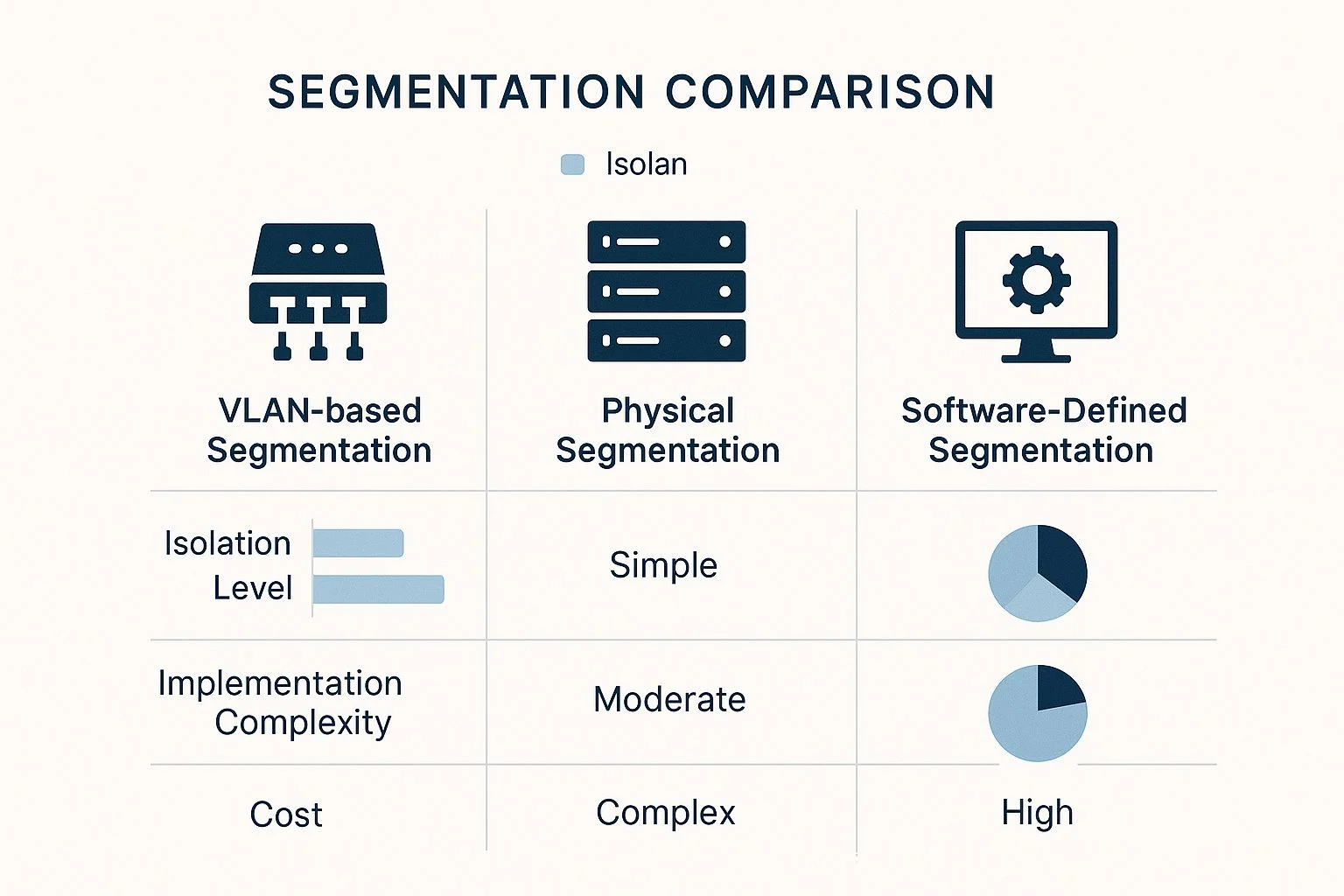
To get a clearer picture of how these methods stack up, here’s a quick comparison.
Comparison of Network Segmentation Architectures
Choosing between these options isn’t always straightforward. This table breaks down the main differences to help you see which approach might fit your business needs, budget, and technical comfort level.
| Architecture | Best For | Complexity | Primary Benefit |
|---|---|---|---|
| VLANs | Small to medium businesses needing basic separation of departments (e.g., Finance from Guest WiFi). | Low | Cost-effective and easy to implement using existing network hardware. |
| Firewall Segmentation | Businesses with high-security or compliance needs that require strict access controls and traffic inspection. | Medium | Strong security with detailed policy enforcement and visibility between segments. |
| Microsegmentation | Cloud-native environments, data centres, and organisations adopting a Zero Trust security model. | High | Extremely granular control that contains threats at the individual workload level. |
Ultimately, the best choice depends on what you’re trying to protect. For many businesses, a hybrid approach often works best—using VLANs for broad separation and then deploying firewalls or microsegmentation to guard the crown jewels.
How Tbourke Solutions Can Help
Trying to decide between VLANs, firewalls, and microsegmentation can feel overwhelming. At Tbourke Solutions, we cut through the jargon. We’ll take a look at your unique business setup, pinpoint your highest-risk areas, and design a practical network segmentation strategy that gives you maximum protection without getting in the way of your day-to-day operations.
We help you choose and implement the right tools for the job, making sure your network is secure from the inside out.
Practical Segmentation Use Cases for Your Business
Knowing the theory behind network segmentation is one thing, but seeing it in action is where you really understand its value. For most businesses, this isn’t about a massive, complex overhaul. It’s about making smart, targeted changes that give you immediate security wins.
Let’s look at a few common situations where segmentation makes a real, tangible difference.
Creating a Secure Guest Wi-Fi Network
This is one of the simplest yet most effective moves you can make. When a client, contractor, or visitor connects to your Wi-Fi, their device is a complete unknown. Without segmentation, you’re letting them onto the same digital playing field as your critical business systems.
A dedicated guest segment completely walls off this visitor traffic. It provides them with internet access but blocks any and all connection attempts to your internal servers, employee computers, or sensitive company files. It’s a simple digital barrier that stops a potentially compromised visitor’s laptop from becoming a launchpad for an attack on your core network.
Securing Point-of-Sale Systems
If your business takes in-person payments, securing your Point-of-Sale (POS) systems isn’t optional—it’s essential. These devices handle sensitive cardholder data, making them a prime target for cybercriminals. The good news is that segmentation makes complying with standards like the Payment Card Industry Data Security Standard (PCI DSS) much, much simpler.
By putting all your POS terminals, payment processors, and related gear into their own isolated network segment, you dramatically shrink the scope of your compliance audit. This “payment zone” has incredibly strict rules, only allowing communication with essential payment gateways and blocking everything else. Should another part of your network be compromised, attackers will hit a digital dead end long before they can ever reach your payment systems.
A dedicated POS segment doesn’t just protect customer data; it safeguards your business’s reputation and helps you avoid the severe financial penalties that come with data breaches and non-compliance.
Establishing a Protected Server Zone
Your servers are the heart of your business operations. They hold everything from customer databases and financial records to your core applications. Leaving them sitting on a flat, open network is an unnecessary gamble. A common best practice is to create a dedicated server zone—often called a Demilitarised Zone (DMZ) if the servers need to be accessible from the internet.
Think of this segment as a high-security vault for your most critical digital assets.
Access is locked down tight, with firewall rules dictating exactly who and what can communicate with these servers. For example, general staff computers would be completely blocked from directly accessing a database server, which severely limits the potential for unauthorised access or data leaks.
Isolating a Development Environment
Innovation often involves a bit of trial and error, but testing new software on your live production network is like trying to fix the engine on a moving car. One little bug or vulnerability in an app you’re testing could bring down your entire day-to-day operations. This is where a development segment is invaluable.
You can create a completely separate “sandbox” for your developers to work in. This segment can be set up to mirror your live network but remains totally isolated from it.
- Safe Testing: Developers can build, test, and even try to break new software without putting your business operations at risk.
- Realistic Conditions: The environment can be configured to mimic your production network, so you know the applications will work as expected when they go live.
- Containment: Any crashes, bugs, or security holes found during testing are trapped inside the sandbox, preventing any collateral damage.
Implementing these use cases might feel like a complex project, but it doesn’t have to be. At Tbourke Solutions, we specialise in analysing your business needs and putting practical network segmentation strategies in place that provide maximum protection with minimal disruption. We help you build these digital walls, ensuring each part of your business is secure, efficient, and resilient.
How We Implement Network Segmentation at Tbourke Solutions
Thinking about network segmentation can feel like a huge, complicated project. But you don’t have to go it alone. At Tbourke Solutions, we partner with small and medium businesses to build security from the inside out, turning a powerful concept into a clear, manageable strategy that protects your critical assets without getting in your way.
Our approach is built on a proven, four-step process designed to deliver the protection you need, the way you need it.
Step 1: Comprehensive Network Assessment
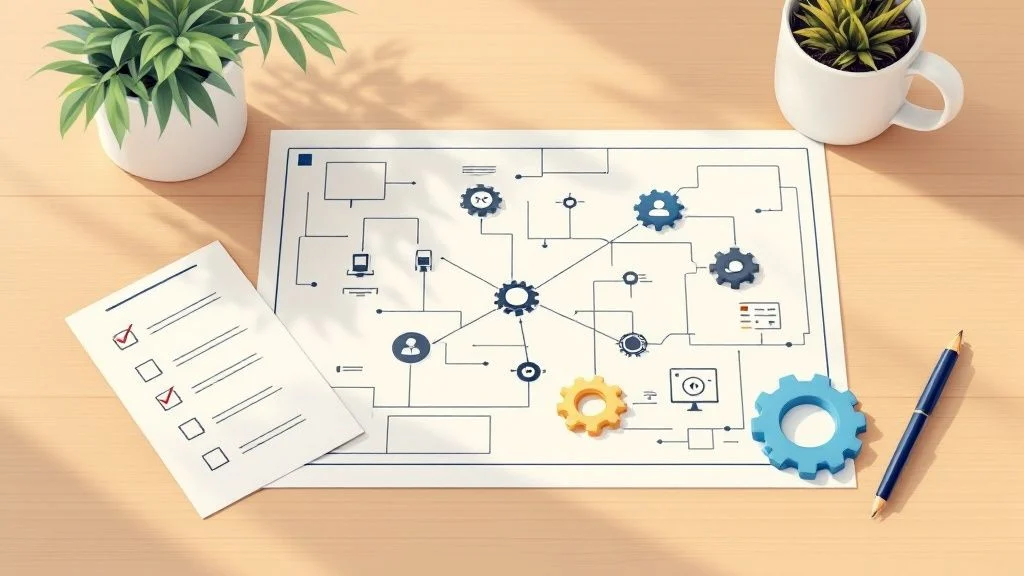
Before we can build any walls, we need a detailed blueprint of your current setup. Our process always starts with a Comprehensive Network Assessment. This isn’t just a quick look—it’s a deep dive to map your entire infrastructure, identify your most critical assets, and understand the natural flow of data across your business.
We pinpoint which systems hold sensitive information, how your teams access data, and where your current vulnerabilities are. This foundational step ensures our strategy is based on how your business actually works, not on some generic template.
A successful network segmentation strategy isn’t about isolating everything; it’s about isolating the right things. Our assessment gives us the clarity to make smart, impactful security decisions that protect what matters most.
Step 2: Strategic Design and Planning
With a clear map of your network, we move to the Strategic Design phase. This is where we architect a segmentation plan that lines up perfectly with your security requirements and business goals. We don’t do one-size-fits-all solutions.
Maybe your priority is locking down payment systems for PCI DSS compliance, creating a safe sandbox for developers, or just isolating the guest Wi-Fi from everything else. Whatever it is, we design a solution that fits. We’ll outline the proposed segments, the rules governing traffic between them, and the best tech for the job, giving you a clear roadmap before we touch a single cable. To see how this fits into our broader security philosophy, feel free to explore our full range of cybersecurity services.
Step 3: Implementation and Configuration
Once you’ve approved the plan, our expert team handles the full Implementation and Configuration. We know downtime is a major concern for any business, which is why we meticulously plan the rollout for minimal disruption to your daily operations.
We’ll get the necessary hardware and software configured, establish the access control rules, and test every segment to make sure it’s working exactly as intended. Our goal is a seamless transition that strengthens your security without interrupting your team’s productivity.
Step 4: Ongoing Management and Monitoring
Network security isn’t a “set and forget” task. The final piece of our service is Ongoing Management and Monitoring. Your business is always evolving, and so are the threats you face.
We actively monitor your network segments to spot any unusual activity, ensure policies are being enforced correctly, and make adjustments as your business grows or new threats emerge. This continuous oversight ensures your network stays secure, optimised, and ready for whatever comes next. With Tbourke Solutions, you get a long-term partner dedicated to keeping your business safe.
Answering Your Questions About Network Segmentation
Stepping into the world of network segmentation often brings up a few key questions. It’s a powerful security strategy, but you need clarity before you commit. Below, we’ve answered some of the most common queries we hear from businesses, giving you straightforward advice to help you move forward with confidence.
How Difficult Is Implementing Network Segmentation?
Honestly, the complexity really depends on what you want to achieve. Getting started with the basics can be surprisingly simple.
A classic first step is setting up a separate guest Wi-Fi network. Most businesses can manage this without a huge effort, and it immediately isolates unknown visitor devices from your core operations. Simple, but effective.
Of course, more advanced approaches like microsegmentation—where you secure individual applications—are more involved. The trick is to take it one step at a time. You don’t have to overhaul your entire network overnight.
Instead, start by identifying and isolating your most critical assets. Think payment processing systems or servers holding sensitive customer data. This phased strategy delivers immediate security wins while you build out your segmentation over time. Partnering with an expert like Tbourke Solutions can also turn a complex project into a clear, manageable plan.
Will Network Segmentation Slow Down My Network?
This is a very common myth, but the reality is just the opposite. When it’s done right, network segmentation actually improves network performance.
Think of a flat, unsegmented network as a single-lane road. All your traffic, from critical business data to casual web browsing, is stuck in the same queue. This creates digital traffic jams and slows everything down.
Segmentation works by creating multiple, dedicated lanes for different types of traffic. It cuts down on unnecessary broadcast traffic within each segment, so devices only see the data that’s relevant to them.
By directing data flows more efficiently, segmentation ensures that your most important applications get the bandwidth they need to run smoothly. It’s not a bottleneck; it’s a smart traffic management system that speeds things up.
What Is the First Step to Get Started?
The best place to start is by getting a crystal-clear picture of what you have right now. You can’t protect what you can’t see. A thorough network audit or assessment is the essential foundation for any segmentation project.
This process involves mapping out every single device connected to your network—from servers and computers to printers and security cameras. It also traces how data flows between these devices, pinpointing vulnerabilities that need to be addressed. This audit gives you a detailed blueprint to build your strategy on.
Bringing in an IT security specialist for this initial phase is a smart move. For example, the team at Tbourke Solutions can conduct a professional assessment to provide an expert roadmap tailored to your business needs. This ensures your journey starts on solid ground.
While segmenting the network is crucial for controlling traffic, you also need to secure the devices themselves. You can learn more about protecting your computers and servers in our guide on what is endpoint security. Combining strong endpoint protection with a well-designed segmented network creates a powerful, multi-layered defence against modern threats.
Share This Story, Choose Your Platform!