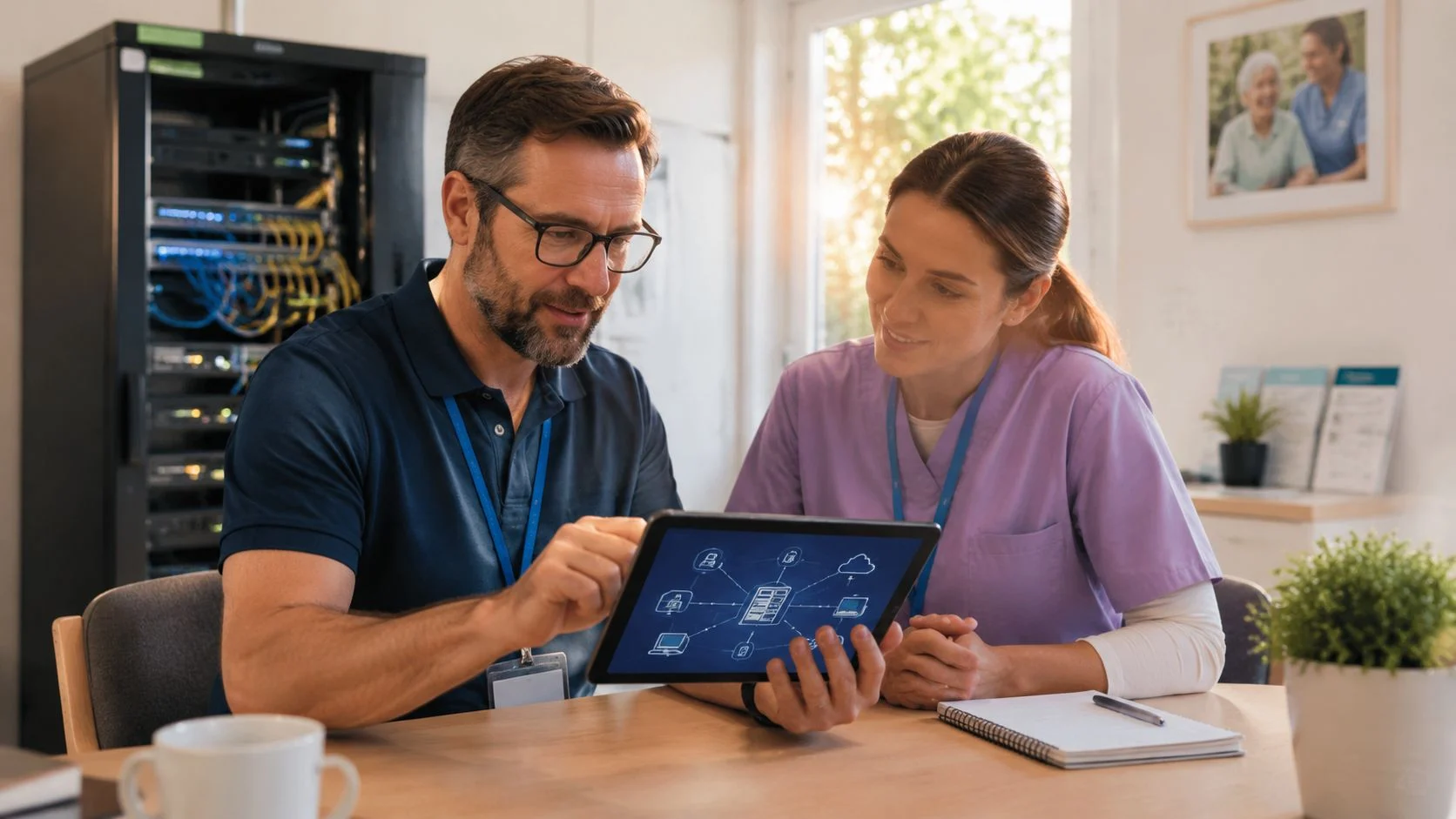
Finding the right IT support for aged care providers in Caroline Springs has become essential, not just for keeping the lights on but for meeting tough new regulations and genuinely improving resident care. It’s about partnering with someone who gets the unique pressures of the aged care sector—ensuring your systems are reliable, completely secure, and running smoothly.
TL;DR
The aged care sector in Caroline Springs is rapidly adopting technology to manage strict compliance demands and ongoing workforce shortages. Effective IT support is no longer a simple “fix-it” service; it is now a core component for improving resident outcomes, enhancing operational efficiency, and maintaining compliance. For navigating these complex changes, partnering with a local, specialised IT provider is non-negotiable.
The Digital Shift in Aged Care for Caroline Springs
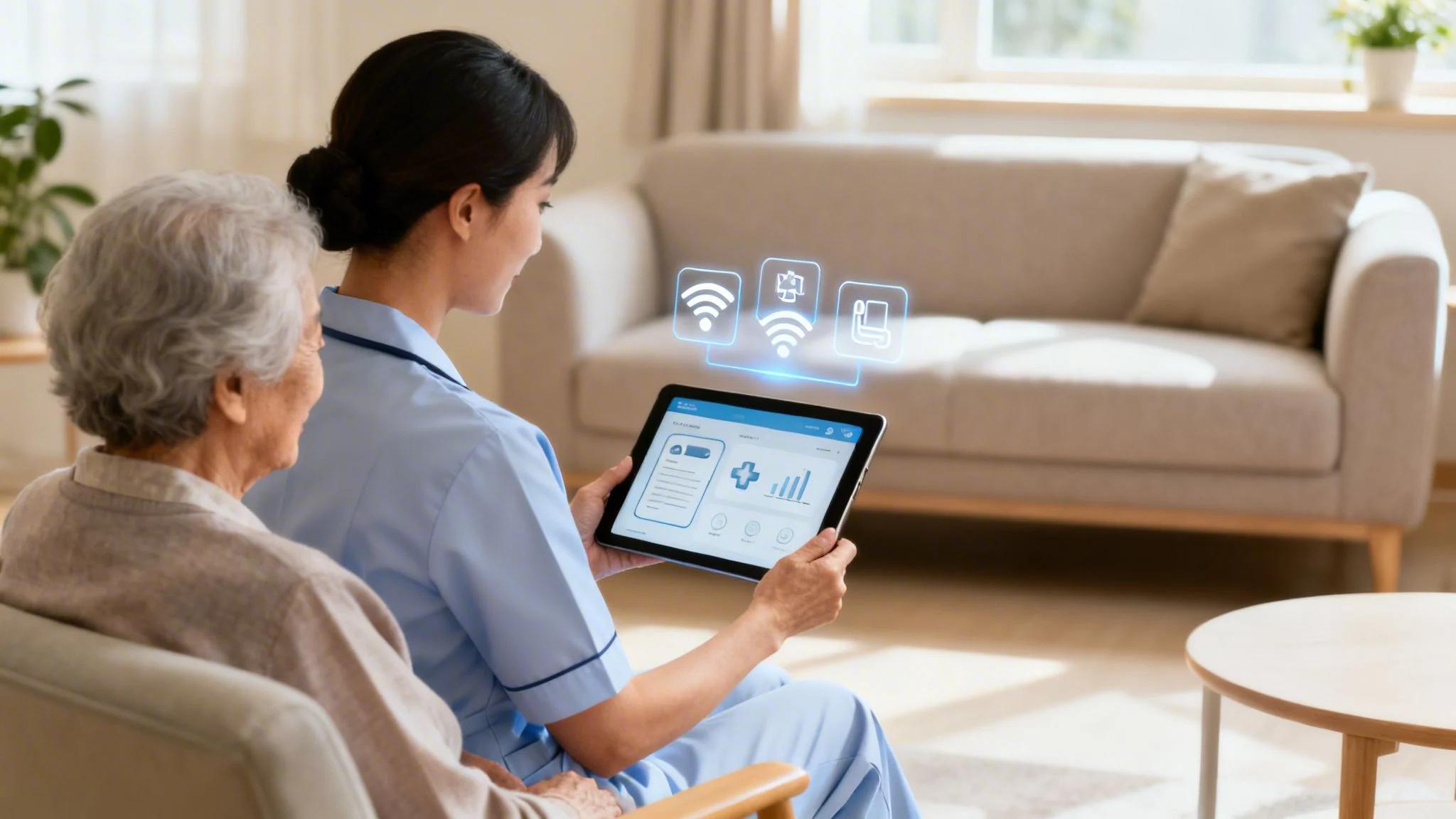
The aged care industry is in the middle of a massive transformation. We’re seeing providers finally move away from mountains of paperwork and clunky manual systems, embracing digital tools to manage everything from resident care plans to staff rostering. This isn’t change for the sake of it; it’s driven by a real need to lift the quality of care while juggling an increasingly complex day-to-day operation.
For facilities in and around Caroline Springs, this means technology has stopped being an optional extra. It’s now central to how you function.
Why Technology Is Now Non-Negotiable
The push to modernise is coming from all sides. Ever-growing regulatory demands, especially from the Aged Care Quality and Safety Commission, require rock-solid record-keeping and secure data management. At the same time, workforce challenges mean efficiency has never been more critical.
The right technology hits these problems head-on. It helps by:
- Automating time-consuming admin tasks, freeing up your staff to focus on what matters: caring for residents.
- Providing secure, reliable platforms for managing sensitive personal and health information.
- Opening up new models of care, like telehealth consultations and remote monitoring.
Technology in aged care is about empowerment. It empowers carers with the right information at the right time, and it empowers residents by giving them better, more responsive support.
This massive shift means that IT support isn’t just about fixing a printer or a slow computer anymore. It’s about building a robust, secure, and utterly dependable digital foundation for your entire facility.
The Need for Specialised Local Support
Choosing an IT partner is a huge decision. A generic, one-size-fits-all provider might know tech, but a specialist understands your world. They know the specific clinical software you rely on, the heavy compliance burdens you face, and the unique daily workflows of an aged care environment.
Having a local provider right here in the Caroline Springs area adds another critical layer of assurance. When an issue can only be solved on-site—and it will happen—a nearby team can get there fast, minimising disruption to your residents and staff. For aged care providers, finding the right IT partner isn’t just a technical choice; it’s a strategic investment in the quality of your care and the future of your facility.
Core IT Services Every Aged Care Facility Needs
To provide exceptional care in today’s world, a modern aged care facility runs on a backbone of essential IT services. These aren’t just fancy extras; they are fundamental tools that directly affect resident safety, make life easier for your staff, and keep your entire operation stable. Getting a handle on these core services is the first, most important step for any provider looking to build a reliable IT foundation.
Here’s a breakdown of the key services that truly matter.
Clinical Information System (CIS)
Think of a Clinical Information System (CIS) as your facility’s digital brain. It’s the central, secure place where all resident information is stored—everything from care plans and medication charts to progress notes and incident reports. A well-run CIS means every authorised staff member has instant access to accurate, up-to-date information, which is non-negotiable for making safe and timely care decisions.
Workforce Management and Rostering
Beyond resident care, several software platforms are crucial for keeping things running smoothly behind the scenes. Workforce management software, for example, helps automate rostering, track staff certifications, and manage payroll. It might sound administrative, but it saves countless hours, reduces human error, and frees up your managers to focus on what they do best: leading their care teams.
Telehealth Platforms
Similarly, telehealth platforms have become an absolute necessity. They enable remote consultations with GPs and specialists, cutting down on the stress and logistical headaches of transporting residents to off-site appointments. It’s a win-win: residents get faster access to medical care, and your staff can coordinate it all with far less disruption.
Secure and Reliable Connectivity (Wi-Fi)
In this day and age, reliable internet is as essential as water or electricity. For aged care providers, this means much more than just providing a fast Wi-Fi password to staff. It’s about creating a secure, segmented network that can handle several critical jobs at once:
- Resident and Guest Wi-Fi: Giving residents a secure way to connect with family and enjoy online entertainment.
- Corporate Network: A protected network for staff to safely access the CIS, email, and other operational tools.
- Medical Device Network: A separate, highly secure network for things like remote patient monitors or smart beds to operate without any interference.
Data Protection and Cybersecurity
With all this digital information flying around, you have a massive responsibility to protect it. Automated data backup and disaster recovery is not optional. This ensures that if a system fails, you get hit by a cyber-attack, or even face a natural disaster, your facility’s critical data can be restored quickly, minimising any disruption to resident care.
A strong cybersecurity posture is your first and last line of defence. It protects sensitive resident data from threats, ensures compliance with privacy laws, and builds trust with families who place their loved ones in your care.
This means putting multi-layered security measures in place—like firewalls, antivirus software, and crucially, regular staff training on how to spot phishing scams. To learn more about building a robust defence, you can explore our service on IT managed services.
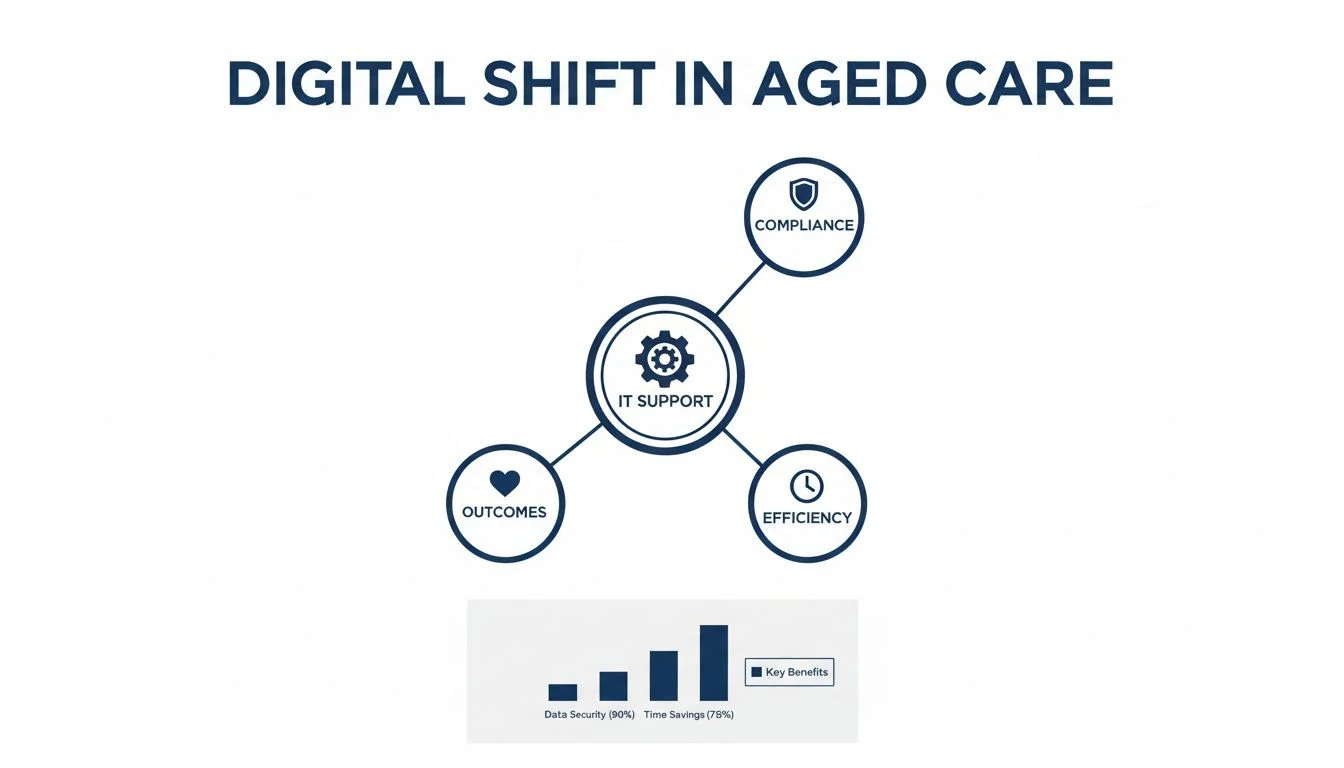
This diagram shows how all these pieces connect. Robust IT support is the central gear that drives improvements across the entire facility, from compliance and efficiency to better resident outcomes.
To make it even clearer, here’s a simple table showing how each service directly benefits both the people you care for and the people who care for them.
Essential IT Services for Aged Care Providers
| IT Service | Primary Function | Benefit to Residents | Benefit to Staff |
|---|---|---|---|
| Clinical Information System (CIS) | Centralises all resident health and care information. | Ensures consistent, accurate care based on the latest information. | Provides instant access to care plans, reducing errors and saving time. |
| Telehealth Platform | Enables remote video consultations with doctors and specialists. | Improves access to medical care with less travel stress. | Simplifies appointment coordination and allows for quicker medical input. |
| Workforce Management | Automates staff rostering, payroll, and compliance tracking. | Ensures appropriate staffing levels for safe and consistent care. | Reduces administrative workload and simplifies shift management. |
| Secure Wi‑Fi Networks | Provides segmented internet access for residents, staff, and devices. | Allows residents to stay connected with family and the outside world. | Enables reliable access to work tools and secure device operation. |
| Data Backup & Recovery | Automatically backs up critical data and enables fast restoration. | Guarantees continuity of care even if systems go down. | Protects against data loss, ensuring records are always available. |
| Cybersecurity | Protects networks and data from unauthorised access and threats. | Safeguards personal and medical information, maintaining privacy. | Builds trust and ensures compliance with data protection laws. |
Ultimately, investing in these core IT services isn’t about technology for technology’s sake. It’s about creating a safer, more efficient, and more connected environment for everyone in your care community.
When to Get Help
If you’re feeling overwhelmed by the sheer complexity of compliance, or if you have a nagging doubt about whether your current systems are up to scratch, that’s a clear signal to get professional guidance. Struggling with data silos, fearing a data breach, or finding it a nightmare to generate compliance reports are all triggers to seek expert help. Don’t wait for an audit or a security incident to force your hand. Proactive support is always the smarter, and cheaper, choice in the long run. If these issues sound familiar, reach out by submitting a query via our contact page.
Navigating Complex Compliance and Data Security
For any aged care provider, handling resident data isn’t just another administrative chore. It’s a profound responsibility, wrapped in a tangle of regulations. Getting compliance right is about more than just avoiding fines; it’s about earning and keeping the trust of your residents and their families. It’s proof that you take the security of their most sensitive information seriously.
This duty is overseen by several key Australian regulatory bodies, each with its own rulebook. Understanding what’s required is the first, non-negotiable step toward building a secure and compliant IT environment for your facility.
Key Regulations You Must Know
The Australian aged care sector operates under a strict legal framework designed to protect some of our community’s most vulnerable people. For providers in suburbs like Caroline Springs, these aren’t just suggestions—they are mandatory.
The main ones you need to have on your radar are:
- The Aged Care Act 1997: This is the bedrock legislation. It sets the rules for funding, regulation, and the quality of care expected across the industry.
- The Privacy Act 1988: This Act dictates how organisations, including yours, must handle personal information. Crucially, it includes the Notifiable Data Breaches (NDB) scheme, which legally requires you to report any eligible data breaches.
- Aged Care Quality and Safety Commission (ACQSC): The ACQSC is the enforcer. They set the Quality Standards that every provider must meet, and many of these standards relate directly to information management, governance, and resident privacy.
Securing resident data is the digital equivalent of ensuring their physical safety. A breach in data security can be just as damaging as a failure in clinical care, eroding trust and exposing your facility to significant legal and financial risk.
Data Interoperability and Digital Strategy
The Australian government’s Aged Care Data and Digital Strategy for 2024-2029 sends a crystal-clear message about the future. It puts a huge focus on data interoperability—the ability for different IT systems to talk to each other and share information without friction. A key goal here is enabling secure information sharing with platforms like My Health Record.
This is where many facilities hit a wall. Inconsistent clinical data and systems that don’t communicate are persistent problems in Australian aged care. The good news is that specialised IT support for aged care providers in Caroline Springs from local experts is helping to bridge these gaps. As research shows, poor data sharing often leads to duplicated effort and risks during care transitions.
The Essential Eight and Practical Security
To give organisations a clear roadmap, the Australian Cyber Security Centre (ACSC) developed the Essential Eight maturity model. Think of it as a baseline of practical security strategies designed to make it much, much harder for attackers to break into your systems.
Implementing these eight strategies is an actionable way for aged care providers to seriously lift their security game. You might be interested in our detailed breakdown of the ACSC Essential Eight and what it means for your facility.
Finally, remember that data security extends to the physical hardware itself. When IT assets and medical equipment reach the end of their life, you can’t just toss them out. For guidance, healthcare providers can explore resources on HIPAA-compliant medical equipment disposal services to see how to protect patient information even during disposal. Properly decommissioning old hardware is a critical, yet often overlooked, part of a complete data security plan.
We’ve all been there. A computer runs a bit slow, the Wi-Fi drops out during an important handover, or a printer just refuses to cooperate. It’s tempting to write these off as minor glitches, just another part of the daily grind in a busy aged care facility.
But how do you know when these small frustrations are actually warning signs of a much bigger, more dangerous problem lurking beneath the surface?
Ignoring the red flags of an overloaded or outdated IT system can lead to serious operational headaches, compliance breaches, and a direct impact on the quality of resident care. Recognising these triggers early is the key to getting professional help before a small issue snowballs into a full-blown crisis.
The Warning Signs You Can’t Ignore
If you find yourself nodding along to any of the points below, it’s a clear signal your current IT setup just isn’t cutting it anymore. These aren’t just hiccups; they are signs of systemic issues that need an expert eye.
- Frequent System Downtime: Are your clinical information systems (CIS) or rostering platforms regularly offline? Every minute your systems are down is a minute your team can’t access critical resident information, which directly compromises care.
- Constant Staff Complaints: When your team consistently voices frustration about slow networks, crashing apps, or technology that makes their jobs harder instead of easier, it’s time to listen. Their productivity—and morale—is on the line.
- Cybersecurity Worries: Do you lie awake at night wondering if your residents’ sensitive data is truly safe? A nagging lack of confidence in your cybersecurity is a massive red flag. The legal and reputational fallout from a breach can be devastating.
- Slow and Unreliable Network: If staff struggle to access files from the server, or telehealth calls with specialists constantly drop out, your network is a roadblock to providing great care, not an enabler.
Proactive IT management is always more cost-effective than calling for help in an emergency. Investing in a stable, secure system prevents the high cost of downtime and protects you from the far greater expense of a data breach or compliance failure.
When to Make the Call
If you’re seeing these warning signs, it’s time to act. It can be tough to distinguish between an everyday IT annoyance and a systemic problem that needs professional intervention, but you don’t have to make that call alone.
When frequent downtime, constant staff complaints, and security fears become the new normal, it’s a clear sign you need expert support. Many businesses in this situation turn to managed IT services in Melbourne to proactively resolve issues before they impact operations.
A professional assessment can identify risks, improve system performance, and ensure your IT environment is properly managed long-term. Learn more about how our managed IT services in Melbourne can support your business.
For a no-obligation chat, you can also submit a query via our contact page.
How to Choose the Right Local IT Partner
Picking an IT provider is a massive decision, one that directly shapes your facility’s efficiency, compliance, and the quality of care you deliver. This isn’t just about finding someone to fix a computer when it crashes; it’s about bringing a strategic partner into your corner.
Think of it like this: for a serious heart condition, you wouldn’t go to a general GP. You’d seek out a cardiac specialist. It’s the same for aged care IT—you need a team with deep, specific expertise in your field, because generic IT support just doesn’t understand the pressures you’re under.
Aged Care Specialisation Is a Non-Negotiable
A provider who has lived and breathed the aged care sector brings a wealth of knowledge that you simply can’t put a price on. They already know the clinical software you depend on, the strict rules of the Aged Care Quality and Safety Commission, and the critical importance of protecting resident data under the Privacy Act.
This specialisation means they solve problems faster and design more effective solutions because they aren’t learning the ropes on your time. They walk in with a ready-made understanding of your day-to-day challenges. You can see this focused approach in our own managed IT services for Caroline Springs, which we’ve built from the ground up to meet the specific demands of local healthcare providers.
The Value of a Local Presence
When a critical system goes offline, you can’t afford to be in a queue for a technician who is hours away. Choosing a local partner in the Caroline Springs area means you get feet on the ground, fast, when you need it most. A provider just around the corner, like our team in Hillside, can fix physical hardware or network meltdowns quickly, minimising disruption for your staff and residents.
The pressure on local facilities is enormous. With government investment in aged care set to hit $39.2 billion in FY25, demand is rocketing, yet the waitlist for Home Care Packages has spiked by a staggering 41% year-over-year. As KPMG’s analysis points out, this strain means providers in growth areas like Caroline Springs must use technology to slash their administrative workload. A local IT partner who gets this and can make those efficiencies happen is a true game-changer. You can dig deeper into the 2026 Aged Care Market Analysis on KPMG’s website.
Proactive Support Over Reactive Fixes
The old “break-fix” model—where you wait for something to break before calling for help—is an outdated and dangerously risky way to manage IT in an aged care setting. A modern, proactive Managed Service Provider (MSP) watches over your systems 24/7, spotting and fixing potential issues long before they can cause downtime.
This preventative approach is what keeps your systems stable, secure, and always ready. It transforms your IT from a reactive cost centre into a strategic asset that supports seamless, uninterrupted care. For more general advice on evaluating service providers, other resources covering strategies for choosing professional partners can offer useful frameworks, even if they aren’t specific to IT.
To help you tell the difference, we’ve put together a quick checklist. This table breaks down what you get from a generic IT provider versus what a specialised partner brings to the table.
IT Support Checklist for Aged Care Providers
| Evaluation Criteria | Generic IT Provider | Specialised Aged Care MSP (e.g., Tbourke Solutions) |
|---|---|---|
| Industry Knowledge | General understanding of business IT. | Deep expertise in aged care regulations, software (e.g., CIS), and workflows. |
| Response Time | May offer remote support; on-site can take hours or days. | Fast on-site support from a local team for critical hardware/network issues. |
| Support Model | Often reactive “break-fix” – you call when something is broken. | Proactive 24/7 monitoring to prevent problems before they disrupt care. |
| Compliance & Security | Basic security offerings. May not understand APP or Aged Care Quality Standards. | Specialised in securing sensitive resident data and ensuring compliance with the Privacy Act. |
| Software Familiarity | Learns your clinical and rostering software on your time. | Arrives with experience in platforms like iCare, LeeCare, and other industry standards. |
| Strategic Input | Fixes immediate problems. | Acts as a strategic partner to improve efficiency and resident outcomes through technology. |
As you can see, the difference is night and day. A generic provider might keep your computers running, but a specialist helps your entire facility run better.
A truly valuable IT partner doesn’t just sell you technology; they provide peace of mind. They become an extension of your team, dedicated to ensuring your systems empower your staff to deliver the best possible care.
Ultimately, choosing the right IT support for aged care providers in Caroline Springs comes down to finding a partner who ticks all the boxes: specialised knowledge, a local team, proactive service, and clear, honest pricing. That combination is the key to building a reliable and secure digital foundation for your facility.
How Tbourke Solutions Can Help
Choosing the right IT partner means finding a team that understands your mission and provides the right tools so you can focus on delivering exceptional resident care. At Tbourke Solutions, we turn your IT from a daily stress into a powerful, silent asset. With over 20 years of experience and a base right here in Hillside, we are deeply familiar with the needs of aged care facilities in Melbourne’s west. We bridge the gap between complex technology and the practical realities of your day-to-day operations.
Our services are designed specifically for the aged care sector:
- Proactive Managed Services: We monitor your systems 24/7 to fix issues before they disrupt care, eliminating surprise downtime.
- Specialised Cybersecurity: We implement multi-layered security to protect sensitive resident data and ensure you meet your obligations under the Privacy Act.
- Strategic IT Consultancy: We provide expert, real-world advice to help you make smart, future-focused technology decisions, whether it’s a new CIS or planning for growth.
Our goal is to make your technology reliable and invisible, allowing you to focus completely on your residents. As a local partner, we offer transparent pricing and are on-site quickly when you need us. To discuss how we can help your facility, submit a query through our contact page to arrange a no-obligation consultation.
Frequently Asked Questions
Here are answers to some common questions we receive from aged care providers about IT support.
Why is specialised aged care IT support so important?
A generic IT company can fix a computer, but a specialised partner understands the aged care environment. They know your clinical software, the strict ACQSC compliance rules, and the critical importance of uninterrupted workflows. This sector-specific knowledge means faster problem solving and solutions that actually work for your facility, turning technology into an asset, not a headache.
How much should we budget for IT support?
Viewing IT as a simple cost is a mistake. A true Managed Service Provider (MSP) should deliver a clear return on investment by improving efficiency, reducing costly downtime, and protecting you from the financial disaster of a data breach. Instead of a one-size-fits-all price, a good provider offers transparent, tailored pricing that turns your IT budget into an investment that pays for itself through better productivity and risk protection.
How disruptive is switching to a new IT provider?
Switching providers can feel daunting, but a professional MSP manages the entire process with meticulous planning to ensure a seamless transition. A well-planned migration should happen invisibly in the background with zero impact on your team or residents. At Tbourke Solutions, we manage the whole migration with clear communication, working around your schedule so your team can stay focused on providing excellent care.
Ready to turn your IT into a strategic advantage? To take the first step towards a more secure and efficient future, submit a query through our contact page for a no-obligation consultation.
Share This Story, Choose Your Platform!