
When it comes to IT, the insurance industry is a whole different ball game. You can’t just apply a generic, one-size-fits-all approach and hope for the best. Specialised IT services for insurance are non-negotiable for protecting sensitive client data and navigating the maze of regulatory compliance.
Think of it like a bank vault. You wouldn’t hire a general-purpose security guard; you’d bring in a specialist who understands high-stakes security protocols and the specific threats banks face. Your IT should be no different.
TL;DR: Your Quick Guide to IT for Insurance
Specialised IT services are essential for any modern insurance agency, providing a critical defence against cyber threats and ensuring you meet strict regulatory compliance standards. This guide covers the core services you need, from robust cybersecurity and data protection to efficient cloud solutions and disaster recovery. Investing in the right IT partner is not just a cost, but a direct investment in your agency’s security, operational efficiency, and long-term reputation.
Why Generic IT Just Doesn’t Cut It for Insurance Agencies

The Unique Pressures on Australian Insurers
An off-the-shelf IT solution simply can’t grasp the immense pressures facing Australian insurance agencies. The industry is governed by a complex web of regulations, including the SOCI Act and APRA standards, which dictate exactly how client data must be managed, stored, and protected.
Generic IT providers often lack the deep industry knowledge to navigate these requirements, leaving you dangerously exposed to massive compliance risks and eye-watering financial penalties. Sure, they might know how to secure a network, but do they understand the data sovereignty laws that restrict where you can store critical client information? It’s a costly gamble to take.
A Strategic Asset for Growth and Survival
The Australian IT services market is booming, and there’s a good reason why. The financial, banking, and insurance sectors now account for about 18.1% of the total market share. This growth isn’t just about keeping the lights on; it’s driven by the urgent need for airtight regulatory compliance and sophisticated risk management.
This trend highlights a crucial point: tailored IT is no longer a luxury but a core strategic asset. It’s about so much more than fixing a broken printer. It’s about building a resilient, secure infrastructure that protects client trust, guarantees compliance, and gives you the agility to compete with the wave of new insurtech startups.
This is where professional IT managed services come in, acting as a proactive partner in your agency’s success. Think of it as your best policy for building a future-ready practice.
Building Your Agency’s Digital Fortress
To run a resilient and trustworthy insurance business today, you first have to build a digital fortress. This isn’t about just one piece of software; it’s about laying a solid foundation of proactive IT management, tough cybersecurity, and airtight compliance. Each element works together, creating an infrastructure that not only protects your agency but actually helps it grow.
Think of Managed IT Services as your dedicated technology crew on the ground. Their job isn’t just fixing things when they break; it’s to stop them from breaking in the first place. Through constant monitoring and proactive maintenance, they keep your systems humming along smoothly, preventing those frustrating disruptions that can cost you clients and revenue.
Unpacking Core Cybersecurity Threats
Beyond simple upkeep, a real digital fortress needs specialised defences. The Australian insurance sector faces a unique storm of cyber threats, from clever phishing attacks designed to steal client login details to ransomware that can freeze your entire operation in its tracks.
These aren’t abstract problems; they are daily realities for businesses like yours. A single successful breach can lead to devastating financial losses, permanent damage to your hard-earned reputation, and serious regulatory fines. Good cybersecurity is your front line against all of it.
A multi-layered approach is the only way to go, including:
- Advanced Endpoint Protection: Securing every single device connected to your network, from office desktops to the laptops your team uses on the road.
- Network Security: Putting up strong digital walls with firewalls and monitoring tools to block anyone who shouldn’t be there.
- Employee Security Training: This is a big one. Equipping your team to spot and report suspicious activity turns your staff into a human firewall.
Navigating Compliance and Data Protection
For insurance agencies in Australia, compliance is non-negotiable. Getting your head around regulations like the Security of Critical Infrastructure (SOCI) Act and standards set by the Australian Prudential Regulation Authority (APRA) is a fundamental part of doing business. These rules dictate exactly how you must handle, store, and protect sensitive client data.
The diagram below breaks down the core pillars supporting a modern insurance agency’s IT framework, putting cybersecurity and compliance right where they belong—at the centre.
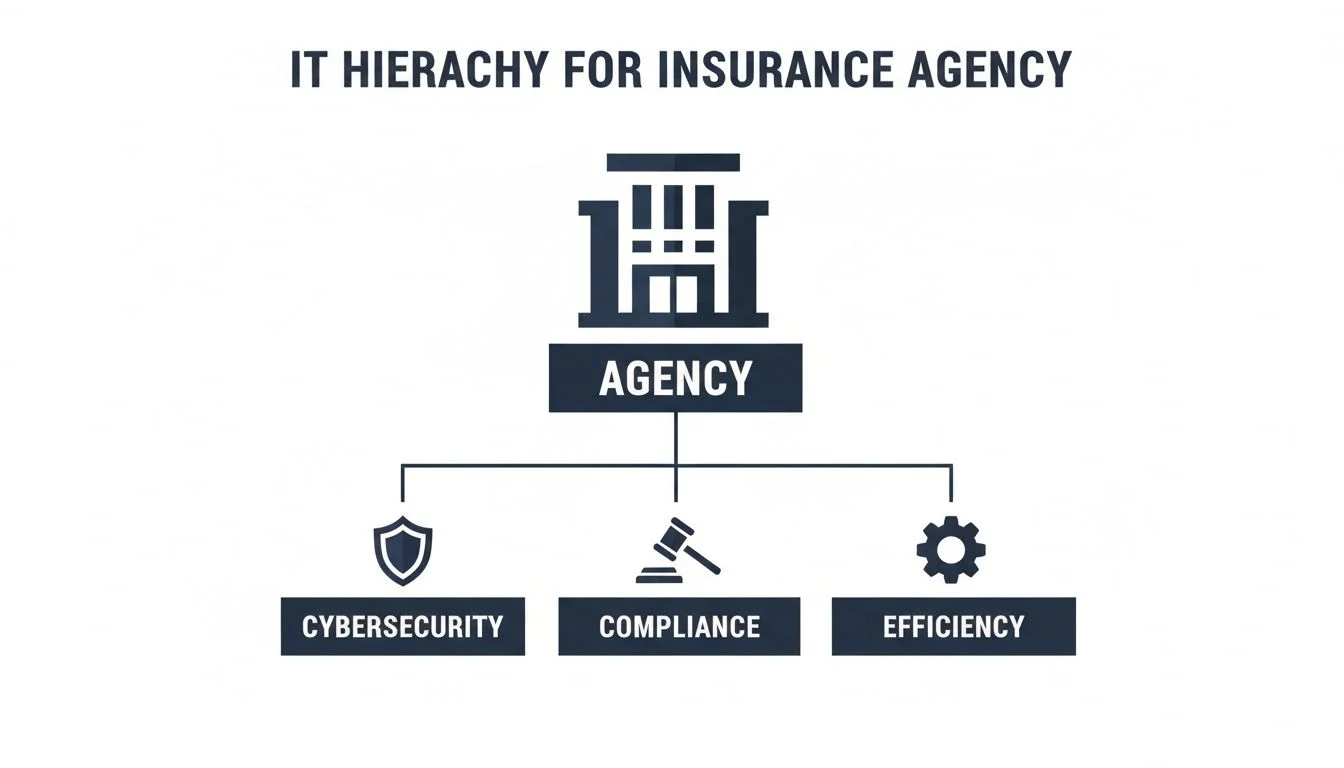
As you can see, a secure and efficient agency is built upon the foundational layers of strong cybersecurity and unwavering compliance. Specialised IT partners help you implement the right controls to meet these obligations, ensuring robust security compliance with standards like HIPAA, PCI DSS, and ISO 27001.
A key part of this strategy involves sticking to recognised frameworks that provide a clear blueprint for mitigating cyber threats. You can learn more about how to protect your agency by following the guidelines in our guide on the ACSC Essential 8.
These frameworks aren’t just suggestions; they are proven roadmaps for safeguarding your digital assets and, most importantly, your clients’ trust.
To help clarify how these services fit together, here’s a quick summary of the core IT functions and their benefits for an insurance agency.
Essential IT Services for Insurance Agencies
| IT Service Area | Primary Function | Key Benefit for Insurance Agencies |
|---|---|---|
| Managed IT Services | Proactive system monitoring, maintenance, and user support. | Minimises downtime, improves operational efficiency, and provides expert help when needed. |
| Cybersecurity | Defending against threats like malware, phishing, and ransomware. | Protects sensitive client data, prevents financial loss, and safeguards agency reputation. |
| Compliance & Data Protection | Adhering to industry regulations (e.g., APRA, SOCI Act). | Avoids heavy fines, ensures legal data handling, and builds client trust and confidence. |
| Cloud Solutions | Migrating and managing applications and data in the cloud. | Enhances accessibility for remote teams, improves scalability, and reduces hardware costs. |
| Disaster Recovery | Planning and implementing data backup and system recovery protocols. | Ensures business continuity after a disaster, preventing catastrophic data loss. |
Ultimately, building this digital fortress is about much more than just defence. It’s about creating a stable, secure, and efficient environment where your agency can truly thrive.
By partnering with an IT provider who genuinely understands the specific challenges of the insurance industry, you can turn your technology from a potential headache into one of your greatest assets. This is the blueprint for creating an IT infrastructure that protects and empowers your agency for years to come.
How Modern Technology Drives Growth and Efficiency
Once you have a secure IT foundation, you can finally shift your focus from playing defence to going on the offence. This is where modern technology stops being a cost centre and starts becoming a powerful engine for growth. It’s the key that unlocks real efficiency, transforming how you operate and serve your clients.

Upgrading to the Cloud
Think of your current on-site server as a traditional, messy filing room. To find anything, someone has to physically be there, sifting through cabinets. And there’s always the nagging risk of fire, flood, or hardware failure.
Migrating to the cloud is like upgrading that chaotic room to a secure, instantly searchable digital archive.
Your team can access critical policy information and client files from anywhere, anytime—perfect for supporting remote work or meetings on the road. This move also drastically cuts your reliance on expensive, ageing hardware, saving you a fortune on maintenance and upgrades down the line.
Ensuring Business Continuity with Disaster Recovery
What would happen if your office had a fire, a flood, or a crippling cyberattack that locked down your systems tomorrow? For an insurance agency, losing access to client data and the ability to process claims is nothing short of catastrophic. This is where a robust Disaster Recovery plan comes in.
A good disaster recovery strategy is, funnily enough, the ultimate insurance policy for your own agency. It involves creating secure, off-site backups of all your critical data and systems.
In the event of an incident, this allows you to get back online quickly, often within minutes or hours instead of days or weeks. It guarantees you can continue serving your clients and operating your business with minimal disruption, no matter what happens.
To see how this works in the real world, you can explore some practical disaster recovery plan examples that show how businesses prepare for the unexpected. It’s a proactive approach that’s non-negotiable for a modern, resilient agency.
Unlocking Efficiency Through System Integrations
One of the biggest drags on productivity in any insurance agency is manual, repetitive data entry. Just think about how often your team has to copy and paste information from your policy management platform over to your CRM, or vice versa. These small, tedious tasks add up, creating friction and slowing down client service.
System integrations are the fix. By connecting your different software platforms, you create a seamless, automatic flow of information between them.
The benefits are immediate:
- Eliminate Double Entry: When a client’s details are updated in one system, they automatically update everywhere else. No more manual sync-ups.
- Speed Up Service: Your team gets a complete, unified view of each client, allowing them to answer queries and process claims much faster.
- Reduce Human Error: Automation minimises the risk of typos and other costly mistakes that come with manual data transfer.
This interconnected approach means you can handle more business with less friction. A fantastic example of this in action is automated claims processing, where modern tech directly boosts efficiency and keeps customers happy.
The Australian general insurance market is set for massive expansion, forecasted to grow from USD 18.15 billion to USD 33.03 billion by 2032. This growth is heavily driven by insurers investing in IT to improve operations and customer engagement. As the industry moves away from clunky legacy systems, adopting modern IT is becoming essential to meet rising customer expectations and navigate increasing regulatory complexity.
Choosing the Right IT Partner for Your Agency
Picking the right IT provider is one of the most important business decisions you’ll make. This isn’t just about finding someone to fix your computers when they break; it’s about handing over the keys to a partner who will protect your most sensitive client data, your operational stability, and your regulatory standing. You need a provider who genuinely understands the unique pressures of the Australian insurance industry, not just a generic tech vendor.
This choice has a direct and immediate impact on your agency’s security and day-to-day efficiency. A partner who gets the nuances of IT services for insurance can proactively defend against industry-specific threats and ensure your systems meet compliance demands from day one, not as an afterthought.
Essential Questions to Ask Potential IT Providers
Before you even think about signing a contract, you need to interview any potential provider thoroughly. Treat it like you’re hiring a key team member, because that’s exactly what they’ll be. Their expertise—or lack of it—will directly affect your business.
Start with these critical questions to cut through the sales pitch and gauge if they’re a good fit for your insurance agency:
- Industry Experience: “Can you give me real-world examples of how you’ve helped other insurance agencies navigate APRA standards or the SOCI Act?”
- Software Familiarity: “What’s your experience supporting common insurance software like our policy management system or agency CRM?”
- Data Sovereignty: “What are your policies on data sovereignty? Can you guarantee that all our client data will be stored exclusively within Australia?”
- Security Protocols: “How do you stay on top of the latest cyber threats specifically targeting the financial and insurance sectors?”
These questions force them to move beyond generic IT jargon. Their answers will quickly tell you whether they are truly equipped to handle the complexities of your business or just hoping to learn on the job.
Your Evaluation Checklist
A structured process is the best way to compare providers objectively. Use this checklist to weigh your options based on what actually matters for an insurance agency. Vague promises won’t cut it; you need concrete commitments and proven experience.
Before diving in, remember the goal is to find a team that feels like an extension of your own—proactive, knowledgeable, and invested in your success.
IT Provider Evaluation Checklist for Insurance Agencies
| Evaluation Criteria | What to Look For | Why It Matters |
|---|---|---|
| Industry-Specific Testimonials | Ask for references or case studies from other Australian insurance professionals they’ve worked with. | This is the best proof they understand your world and have a track record of delivering results for businesses just like yours. |
| Guaranteed Response Times (SLAs) | Look for a clear Service Level Agreement (SLA) defining guaranteed response and resolution times. | When your systems are down during a busy claims period, you need a guarantee of fast, effective support—not just a vague promise. |
| Security Certifications | Ask about their certifications, like ISO 27001, and their familiarity with frameworks like the ACSC’s Essential Eight. | This shows a formal commitment to security best practices and a deep understanding of the Australian cybersecurity landscape. |
| Proactive Monitoring | Enquire about their approach to proactive maintenance and system monitoring, rather than just reactive “break/fix” support. | The best IT partners prevent problems before they can disrupt your business, ensuring you stay online and operational. |
After you’ve done your homework, you’ll have a much clearer picture of who can truly meet your needs. Don’t settle for a simple helpdesk; aim for a genuine partner.
Finding the right partner means finding a team that functions as an extension of your own. They should be a proactive force for security and efficiency, not just a reactive helpdesk.
This approach ensures you select a Managed Services Provider (MSP) that’s aligned with your agency’s long-term goals. If you’re new to this model, understanding what are MSPs and how they operate is a crucial first step. A great MSP should be a strategic asset, empowering your agency to thrive in a competitive market.
Frequently Asked Questions (FAQ)
Here are answers to some of the most common questions insurance professionals ask when considering their technology needs.
How do IT services improve security for an insurance agency?
Specialised IT services implement a multi-layered security strategy. This includes advanced firewalls, endpoint protection on all devices, regular security patching, and proactive monitoring to detect threats before they cause damage. For insurance agencies, this is critical for protecting sensitive client data like policy details and financial information, preventing breaches that can lead to significant financial loss and reputational damage.
Why is data compliance so important for insurance brokers?
Insurance brokers in Australia must adhere to strict regulations like the Privacy Act, APRA standards, and the SOCI Act. These laws govern how client data is collected, stored, and protected. Non-compliance can result in severe penalties, including hefty fines and legal action. A knowledgeable IT partner ensures your systems and processes meet these legal requirements, safeguarding both your clients and your business.
Can managed IT services help my agency work remotely?
Yes, absolutely. A key benefit of modern IT services is enabling secure and efficient remote work. This is typically achieved through secure cloud solutions, which allow your team to access policy management systems, client files, and communication tools from anywhere. An IT partner will set up secure VPNs, manage device security, and ensure your team can be productive without compromising data protection.
What’s the difference between a break-fix IT service and managed IT services?
A break-fix service is reactive; you call them when something is broken, and they charge you to fix it. This model can lead to unpredictable costs and significant downtime. Managed IT services are proactive. For a predictable monthly fee, they constantly monitor, maintain, and secure your systems to prevent problems from happening in the first place, ensuring your agency runs smoothly and securely.
How Tbourke Solutions Can Help Your Insurance Agency
At Tbourke Solutions, we understand that insurance agencies need more than just IT support; you need a strategic technology partner. We provide specialised IT services for insurance that focus on robust security, unwavering compliance, and operational efficiency. We handle the complexities of your technology so you can focus on what you do best: serving your clients.
Our services are designed to address the specific challenges of the insurance industry:
- Managed IT Services: Proactive monitoring and maintenance to keep your systems running smoothly and minimise downtime.
- Cybersecurity Solutions: A multi-layered defence strategy to protect your sensitive client data from ever-evolving threats.
- Cloud Services: Secure and scalable cloud solutions that enable flexible remote work and reduce reliance on costly on-premise hardware.
- Compliance and Data Protection: Expert guidance to ensure your IT infrastructure meets all Australian regulatory requirements, including APRA and SOCI Act standards.
Ready to build a more secure and efficient agency? The next step is a simple conversation. Visit our contact page to submit a query and let’s discuss how we can tailor a solution that fits your specific needs.
Share This Story, Choose Your Platform!