
In the high-stakes world of finance, generic IT support isn’t just inadequate, it’s a gamble you can’t afford to take. Specialised IT services for finance aren’t just a helpdesk; they are the bedrock of your security, client trust, and regulatory compliance, acting as a core part of your risk management team.
This guide unpacks why this distinction is absolutely non-negotiable for Australian financial firms.
TLDR
This guide explains why financial firms need specialised IT services beyond generic support. We cover the core requirements: advanced cybersecurity to protect sensitive data, strict adherence to Australian regulations like those from ASIC, and proactive management to ensure constant operational uptime. We also outline the risks of inadequate IT and provide a checklist for choosing the right partner to build a secure, compliant, and efficient foundation for your firm.
Why Specialised IT Is a Necessity in Finance
The financial industry operates under immense pressure. On one side, you have sophisticated cyber threats trying to get in, and on the other, stringent regulatory oversight from bodies like ASIC watching your every move. A generic IT provider might be great at fixing a printer, but a specialist understands the unique digital vulnerabilities that financial firms live with every day, from protecting sensitive client data to ensuring total operational uptime during market hours.

For these reasons, your entire IT strategy must be built around robust cybersecurity, unwavering data integrity, and constant operational resilience. These aren’t just buzzwords; they are the pillars that support your firm’s reputation and bottom line.
The Foundation of Financial IT
A proactive approach to technology is essential for both survival and growth. This means getting the foundations right from day one, focusing on a few key areas:
- Advanced Cybersecurity: This goes way beyond standard antivirus. It means implementing defences that can anticipate and block threats designed specifically to target financial data, like ransomware and clever phishing attacks aimed at accessing client portfolios.
- Regulatory Adherence: Your digital infrastructure must be configured to meet strict Australian financial regulations. Getting this wrong can lead to costly fines and serious legal trouble. Understanding this landscape is critical; mastering compliance in the financial services industry is a non-negotiable part of the game for any modern financial firm.
- Data Protection: Safeguarding client information is everything. This involves layers of protection, including strong encryption, secure access controls, and absolutely reliable backup systems to maintain both data privacy and integrity at all times.
Ultimately, choosing the right IT partner is one of the most critical business decisions a financial firm can make. It directly impacts your ability to operate securely, maintain the hard-won confidence of your clients, and stay on the right side of the law.
Your Quick Guide to Financial IT Essentials
If you’re a busy leader in the finance world, you know time is money. So, let’s get straight to the point: protecting sensitive client data, meeting strict Australian regulations, and keeping your systems online aren’t just ‘nice-to-haves’, they’re non-negotiable. This is why a rock-solid IT strategy is so essential.
Without strong defences covering cybersecurity, cloud management, and disaster recovery, your firm is wide open to serious financial, legal, and reputational damage. A huge part of this defence is aligning with established government frameworks. A great starting point is learning more about the ACSC Essential 8, which sets a clear baseline for cyber resilience in Australia.
This guide will break down the crucial services you need and show you how to find an IT partner who genuinely gets the unique pressures of the financial industry. Think of it as your roadmap to building a secure, efficient, and compliant foundation for your firm’s future.
The Core IT Services Every Financial Firm Needs
Let’s move past the big picture and get into the practical, on-the-ground IT services that form the digital backbone of any modern financial firm. This isn’t just about installing software or setting up a network; it’s about building an interconnected system designed to protect, maintain, and grow your business in a fiercely regulated environment.
Think of these services not as individual tools, but as layers of a sophisticated bank vault, each one reinforcing the others.
The demand for these specialised services is surging. Australia’s IT services market, which is absolutely vital for the financial sector, was valued at $33.3 billion in 2024. It’s forecast to more than double by 2033, hitting nearly $79.7 billion, all driven by the need for better cloud solutions and rock-solid cybersecurity.
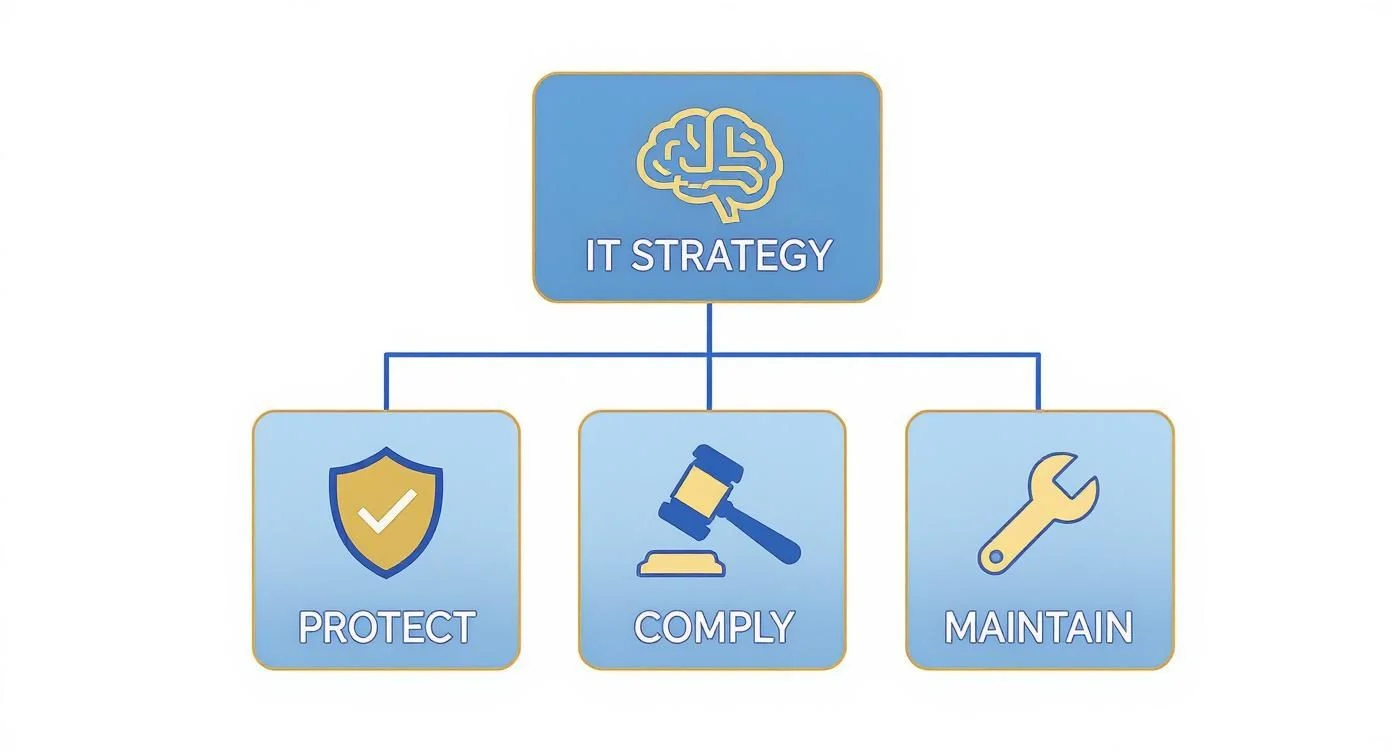
This really brings home the core idea: a successful IT strategy is a constant cycle of protecting assets, making sure you’re compliant, and actively keeping systems tuned for peak performance.
To help clarify what these essential services are and why they matter so much, here’s a quick summary.
Essential IT Services for Financial Firms at a Glance
| IT Service | Primary Function | Why It’s Critical for Finance |
|---|---|---|
| Advanced Cybersecurity | Defends against targeted cyberattacks like ransomware and data theft. | Protects sensitive client financial data and prevents costly breaches. |
| Regulatory Compliance | Ensures IT systems meet strict APRA and ASIC data handling standards. | Avoids heavy fines, maintains licencing, and builds client trust. |
| Proactive Managed Support | Monitors, maintains, and optimises IT systems to prevent downtime. | Maximises operational uptime where every minute counts financially. |
| Secure Cloud Solutions | Provides flexible access to data and applications in a protected environment. | Enables secure remote work and scalable operations while meeting data sovereignty rules. |
| Disaster Recovery | Creates reliable data backups and a plan to restore operations quickly. | Guarantees business continuity and client service during unexpected events. |
| Identity & Access Management | Controls who can access specific data and systems. | Prevents unauthorised access and internal threats, a key compliance requirement. |
Let’s take a closer look at each of these building blocks.
Advanced Cybersecurity Defences
For any financial firm, cybersecurity isn’t just about running an antivirus scan. It’s about building a multi-layered fortress that can stand up to targeted attacks designed to steal client data or shut you down.
This means having several key components working in concert:
- Threat Detection and Response: Actively watching your network for anything suspicious and having a clear plan to shut threats down before they do damage.
- Email Security: Using advanced filters to block phishing attempts, which are the number one way cybercriminals get their foot in the door.
- Endpoint Protection: Securing every single device that connects to your network, from office desktops to employee mobiles, so they don’t become a weak link.
Regulatory Compliance and Data Management
Staying on the right side of regulations from bodies like APRA and ASIC isn’t a one-off job. It demands an IT infrastructure built from the ground up to support strict data governance, reporting, and auditing.
A specialist provider makes sure your data storage and handling practices meet tough Australian standards, taking the guesswork out of compliance.
Proactive Managed Support
Generic, break-fix IT support is a liability in the financial world. You simply can’t afford to wait for things to go wrong. Instead, you need proactive managed support that anticipates problems before they happen.
This means constant system monitoring, regular security patching, and performance tuning to ensure you stay online. When every minute of downtime can translate into serious financial loss, a proactive approach is the only sane choice. To really get why this model is so effective, it helps to understand the benefits of managed IT services and how they turn IT from a frustrating cost into a genuine strategic asset.
Secure Cloud Solutions
The cloud offers incredible flexibility, but for finance, it has to be implemented with security as the absolute top priority. This usually means using private or hybrid cloud environments that give you far greater control and isolation for sensitive information.
Key features of a secure cloud setup include end-to-end encryption, strict access controls, and a guarantee that your data is stored exclusively within Australian data centres to meet data sovereignty laws.
Disaster Recovery and Business Continuity
What would you do if a fire, flood, or a major cyberattack hit your office? A proper disaster recovery and business continuity plan is the answer. It ensures your firm can keep operating with minimal disruption.
This involves having reliable, off-site backups of all your critical data and systems, along with a clear, tested plan to get everything back online quickly. Think of it as your firm’s insurance policy against the unexpected, guaranteeing you can serve your clients no matter what.
Identity and Access Management (IAM)
Finally, it’s crucial to control exactly who can access what. Identity and Access Management (IAM) is the system that enforces this, ensuring that employees can only view or modify the data they absolutely need to do their jobs.
This principle, known as ‘least privilege,’ is fundamental to preventing both internal threats and external breaches. A robust IAM solution automates this process, making it simple to manage user roles and revoke access instantly when an employee leaves, a critical step in securing your firm.
The Risks of Using Generic IT Support
Choosing an IT provider for your financial firm is one of the most important decisions you’ll make. It’s tempting to go with a generic, “one-size-fits-all” IT company to save a few dollars, but that approach hides some serious risks. A generalist just doesn’t have the deep, industry-specific knowledge needed to navigate the tangled web of technology and regulation in finance.
Think of it this way: you wouldn’t hire a GP to perform heart surgery. In the same vein, you shouldn’t trust a generic IT provider with the complex and highly sensitive systems that are the very heart of your financial operations. The stakes are simply too high for anything less than a specialist.
The Australian financial services market is exploding, with its value expected to hit around USD 13.34 trillion in 2025. This market is projected to grow to an incredible USD 23.96 trillion by 2035, a boom that puts immense pressure on the IT infrastructure holding it all together.
Compliance Gaps and Regulatory Penalties
One of the biggest dangers of using non-specialised IT support is accidentally falling out of compliance. A generic provider is unlikely to have a practical, working knowledge of the strict standards set by Australian regulators like APRA and ASIC. They might not grasp the specific requirements for data sovereignty, which mandates that sensitive client information must be stored right here in Australia.
This lack of awareness can lead to critical mistakes. For example, they might store your backups on an overseas server without realising the breach, or fail to implement the detailed audit trails required for financial reporting. Mistakes like these can lead to severe penalties, the loss of your licence, and lasting damage to your firm’s reputation.
Inadequate Data Protection
Financial firms are prime targets for cybercriminals because of the valuable data they hold. A generic IT provider might set up standard security measures, but these are often like putting a screen door on a bank vault when faced with threats specifically designed to breach financial systems.
Specialists in IT services for finance live and breathe these unique threats. They deploy advanced, layered security protocols designed to shut them down.
- Industry-Specific Threat Intelligence: They are constantly monitoring for attack patterns that specifically target the finance sector.
- Advanced Encryption: They make sure all your data, whether it’s sitting on a server or moving between systems, is encrypted to the highest possible standard.
- Robust Access Controls: They implement strict identity and access management to stop unauthorised eyes from ever seeing client portfolios or sensitive information.
Without this specialised focus, your data is left vulnerable, and a breach could lead to catastrophic losses for both your business and your clients. A generic provider might be a type of managed service provider (MSP), but not all are created equal. Understanding what MSPs are and how their specialisations differ is key to making the right choice.
Investing in a financial IT specialist isn’t just an operational expense. It’s a critical investment in risk mitigation, business stability, and the long-term trust of your clients. The cost of a compliance failure or a data breach will always far outweigh the investment in expert support.
Choosing the Right IT Partner for Your Firm
Picking the right IT services provider for a finance firm isn’t just a tech decision, it’s one of the most critical business decisions you’ll make. The right partner becomes an extension of your team, a guardian of your data, and a critical ally in meeting your compliance obligations. Get it wrong, and you could be exposing your firm to unacceptable risks. You need a clear framework to cut through the sales pitches and find a provider who truly gets it.

This choice is more important than ever as Australia’s fintech ecosystem continues to explode. In 2025, the landscape included 801 independent fintech companies, with many focused squarely on regulatory technology (regtech) and back-office efficiency. This tells us the industry is leaning heavily on tech to stay compliant and operational, making your IT partner’s expertise absolutely vital. You can get a deeper look at these trends over on KPMG’s insights page.
Your Vetting Checklist
When you’re interviewing potential IT partners, don’t let them get away with vague assurances. Use this checklist to ask sharp, specific questions that get to the core of what they can actually do for you. A true specialist will have confident, detailed answers at the ready.
- Proven Financial Sector Experience: Ask for case studies or, even better, references from other financial services clients. General IT experience just doesn’t cut it; they need to live and breathe your world.
- APRA and ASIC Compliance Knowledge: How do their services actively help you meet your regulatory requirements? They should be able to walk you through their processes for data handling, reporting, and security in the context of these specific regulations.
- Security Certifications: Do they hold internationally recognised security certifications, like ISO 27001? This is proof of a formal, audited commitment to the highest standards of information security.
- Disaster Recovery and Business Continuity: Ask for a detailed rundown of their disaster recovery plans. How fast can they get your systems back online after a major incident? What is their guaranteed Recovery Time Objective (RTO)?
- Australian Data Sovereignty: Get a crystal-clear, unambiguous “yes” to this question: will all of your sensitive client data be stored exclusively within Australian data centres? This is a non-negotiable compliance point.
Choosing a partner is about verifying their expertise, not just taking their word for it. Their ability to answer these questions directly and thoroughly is a strong indicator of their suitability for the high-stakes environment of financial services.
Look for a True Partner, Not Just a Provider
Beyond the technical checklist, you’re looking for a provider who is genuinely invested in your success. A real partner will want to understand your business goals and align their technology strategy with them. They should communicate clearly, skip the confusing jargon, and offer transparent pricing without nasty hidden fees.
The right IT provider doesn’t just show up to fix things when they break. They proactively manage your systems to stop problems before they start, constantly strengthen your security, and help you use technology to get ahead of the competition. This partnership is the foundation a secure, compliant, and efficient financial firm is built on. By asking the right questions, you can make a confident and strategic choice for your firm’s future.
Frequently Asked Questions
Navigating the world of IT services for finance always brings up good questions. Here are some clear, straightforward answers to the queries we hear most often.
What is the most critical IT service for a financial firm?
For any financial firm, the top priority is a combination of multi-layered cybersecurity and automated, reliable data backups. Cybersecurity acts as the guard for your digital assets, actively defending against threats. Backups are your insurance policy, ensuring you can recover quickly from any disaster, data loss, or cyberattack, maintaining business continuity and client trust.
How can cloud services be secure enough for financial data?
Security in the cloud comes down to using the right type of environment with strict controls. A specialist provider will use a private or secure hybrid cloud, isolating your data from other businesses. Key security measures include end-to-end encryption for data both at rest and in transit, strict access controls to prevent unauthorised viewing, and a guarantee of data sovereignty, meaning all your sensitive information stays within Australian data centres to comply with local regulations.
How much should my firm budget for specialised IT services?
It’s best to view specialised IT not as a cost, but as an investment in risk management and operational stability. Instead of facing unpredictable break-fix bills, a managed services model provides a predictable monthly fee. This proactive approach prevents costly downtime, avoids regulatory penalties, and secures client data, delivering a far greater return on investment than reactive, emergency IT support ever could.
How Tbourke Solutions Can Help
Choosing the right IT partner is a critical decision to protect and grow your financial firm. At Tbourke Solutions, we provide specialised IT services for finance, specifically designed to address the unique security, compliance, and operational demands of the industry. We don’t just fix problems; we act as your strategic technology partner, embedding security and regulatory adherence into every aspect of your IT infrastructure.
Our approach is built on providing tailored solutions, whether you need robust managed cybersecurity services to defend against targeted threats, proactive system management to eliminate downtime, or secure cloud solutions that ensure compliance with Australian data sovereignty laws. We offer clear, transparent service packages, so you get the expert support your firm needs without hidden costs.
Ready to build a more secure, compliant, and efficient future for your firm?
Take the next step by visiting our contact page to submit a query and partner with an expert who truly understands the financial sector.
Share This Story, Choose Your Platform!